
Faster action needed to reach biodiversity targets: report
Published : 04 Mar 2026, 22:53
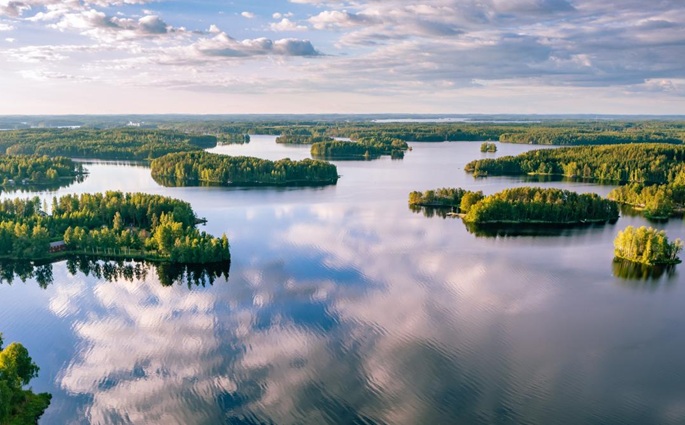
Finland’s new national report to the UN Convention on Biological Diversity showed that progress has been made in almost all sectors, but measures need to be upscaled in the protection, restoration and management of nature.
The report, however, said that the work to halt biodiversity loss is heading in the right direction, said the Ministry of the Environment in a press release on Wednesday referring to the report.
Finland’s 7th report on biodiversity contains information on how Finland has implemented the 23 objectives of the Kunming–Montreal Global Biodiversity Framework.
The report described the actions taken to promote nature conservation, the sustainable use of nature and access to genetic resources and the sharing of benefits derived from biodiversity.
According to the report, Finland has continued to expand the network of protected areas and to implement restoration measures and targeted protection of species.
Based on the report, protected areas account for 13 per cent of Finland’s surface area. The global target is that, by 2030, protected areas and other areas that support biodiversity would cover at least 30 per cent of the Earth’s surface area.
According to the report, the actions need to be upscaled especially outside the protected areas to halt biodiversity loss and turn the trend into recovery.
The resources targeted to nature actions are still insufficient relative to the targets. A key focus should be on economic steering instruments and positive incentives. In Finland the development of financing related to nature values is progressing fast. This is based on the idea that ecosystem services produced by nature – such as clean air, water resources and biodiversity – have an economic value.
“Halting biodiversity loss requires commitment from society as a whole. We need new funding solutions and concrete actions by different actors in society. I am very happy that Finland, among the first countries in the world, has included biodiversity commitments of companies, financial institutions and NGOs in its national report. The commitments show that taking care of biodiversity is now even more strongly incorporated into the operators’ strategies and practices,” said Minister of Climate and the Environment Sari Multala.
According to the report, the awareness of the importance of biodiversity has increased considerably in recent years. Research institutes, educational institutions, civil society organisations and municipalities and cities have made long-term efforts to cherish biodiversity and enhance the understanding related to it.
The indicators of the national report were compiled in broad-based cooperation with research institutes and expert organisations.
“Pressures on nature have to some extent been reduced as we have as a rule stopped taking certain measures that are the most harmful, such as the drainage of mires. However, the use of natural resources continues at a high level and comprehensively positive development that is an absolute necessity to reach biodiversity targets has not been achieved. Nature restoration measures should increase manifold from the present to put biodiversity on a path to recovery. The progress of climate change is inevitable, which makes it even more important to improve the state of biodiversity,” said researcher of the Finnish Environment Institute Ari-Pekka Auvinen.
National report provides for first time new information on genetic heritage of species and long-term establishment rate of invasive alien species
Biodiversity means the diversity of life, which comprises the entire spectrum of species, their genetic heritage and their habitats. The assessment covers 65 species and it lays an important foundation for monitoring in future. Genetic diversity is the foundation of nature’s adaptive capacity, and its systematic assessment is an important step forward both nationally and internationally.
“High-quality information is needed to make timely and effective decisions for the benefit of nature. Finland’s long-term work on developing the monitoring and reporting is well recognised in international contexts as well,” said Marina von Weissenberg, Senior Ministerial Adviser and coordinator of the work on the national report.
The national report also discusses other factors affecting biodiversity, including the use of natural resources, consumption, education, ecological footprint, positive incentives and harmful subsidies.
The report includes a stronger analysis of ecosystem services than before that combines the state of biodiversity, human wellbeing and health, and economic impacts.
The monitoring of equality and gender impacts has also been utilised in the process. In addition, the report contains information on the traditional knowledge and occupations of the Sámi people.
8 face arson charges for fire at Helsinki building hosting bicycle shop
2 drown in Joensuu, Iisalmi, 2 found dead in Rauma, Pargas
Man dies in police custody in Jyväskylä
Human trafficking network organises illegal entry of dozens of migrants into Finland
Finnish Border Guard supports Estonian border security
17 employees face trial for violation of company business secret

Editor-in-Chief Ofiul Hasnat
Published by Finnish News Network (FNN)
Heporinne 4 B 45
01200 Vantaa, Finland.
E-mails : [email protected]