
Sci-fi imagery linked to AI tells wrong story
Published : 26 Apr 2022, 01:30
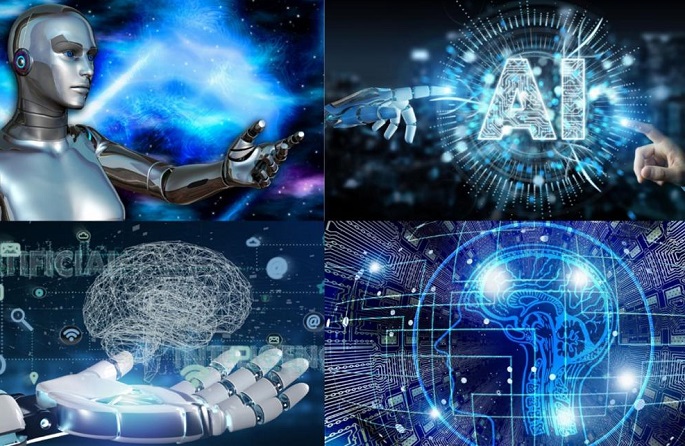
Humanoids and other illustrations inspired by science fiction in connection with stories about artificial intelligence may seem harmless, but using them year after year to illustrate the topic can be detrimental, said the University of Helsinki in a press release.
“Images associated with artificial intelligence have rubbed me the wrong way for a long time. When I first gave the Introduction to AI course more than a decade ago, I noticed that many students’ notions of artificial intelligence were based on stories by Isaac Asimov and other sci-fi authors. I think someone was even disappointed when, instead of focusing on what robots are allowed and not allowed to do, the course was largely about mathematics,” said Professor of Computer Science Teemu Roos, who heads AI-related education at the Finnish Center for Artificial Intelligence (FCAI).
Images of intelligent robots that potentially threaten humanity, which have their roots in the science fiction of the 1960s, persist in discussions about artificial intelligence.
The scope of the matter can be seen by using ‘artificial intelligence’ as a search term on Google.
The search produces a slew of very similar blue images: the brain connected to various blue circuits, robots and humanoids in environments associated with space. Image banks also offer similar blue-tinged images.
“The Terminator continues to keep me busy. Every time I see a terminator, I know I have to show a countless number of other kind of images to make people again forget about terminators,” Roos said, adding that his efforts to steer people away from using images that lead down the wrong paths.
“Then again, it's understandable. After all, none of us adults today studied artificial intelligence in school, and it’s still not widely taught even now,” Roos added.
According to Roos, clichéd images of artificial intelligence steer people’s thinking off track, which can cause a lot of harm.
“Clichéd images prevent people from seeing how artificial intelligence is already being used almost everywhere. AI solutions are reshaping our environment and affecting our public administration, politics and free time as well as how we encounter or do not encounter one another,” Roos said.
Images of humanoids can alienate potential experts in artificial intelligence and people whose voice should be heard in the discussion on artificial intelligence.
“If we see nothing but brains with electric circuits, such a catalogue of images excludes everyone except those who are into circuits. Sci-fi imagery evokes a lot of antipathy. For instance, my wife immediately changes the channel if she sees sci-fi on the television. She’s a doctor, and you would hope that doctors in particular would be interested in artificial intelligence,” said Roos.
Roos also highlighted legislation and points out that laws pertaining to artificial intelligence must be up to date.
Belarus to close embassy in Finland
15 to face trial for producing, selling cannabis in Helsinki
Russian reconnaissance aircraft suspected of violating Finnish airspace
Finland supports aviation safety in Indonesia
Misuse of funds, info most common suspected corruption cases in Finland: study
Espoo, Vantaa cities´ massive job cut moves put services at risk: JHL

Editor-in-Chief Ofiul Hasnat
Published by Finnish News Network (FNN)
Heporinne 4 B 45
01200 Vantaa, Finland.
E-mails : [email protected]