
Tightened criteria for social assistance enter into force
Published : 01 Feb 2026, 21:46
Updated : 01 Feb 2026, 21:49
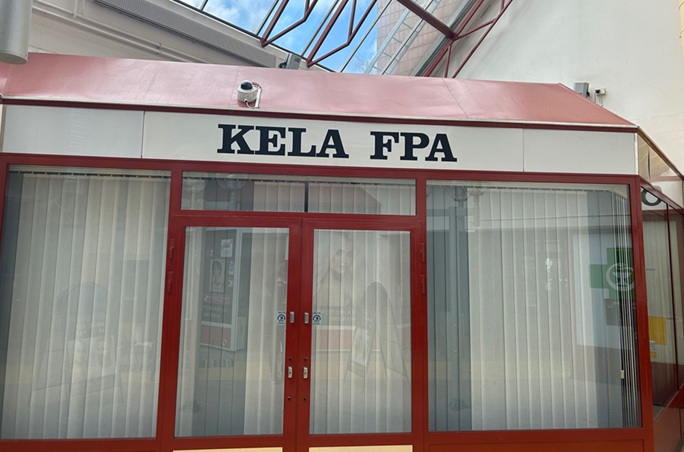
The new law, which tightened the criteria for social assistance entered into force on Sunday, said the Social Insurance Institution-Kela in a recent press release.
The changes will strengthen the obligations of recipients to apply for full-time work and primary benefits.
The four-party alliance government led by Kansallinen Kokoomus (National Coalition Party-NCP) moved to tighten and reduce the social assistance, the last-resort of assistance for the low- income people and the Parliament passed an amendment to the Act on Social Assistance imposing stricter requirements and criteria for receiving the benefit.
The President is scheduled to approve the bills on January 16 and most of the amendments entered into force on February 1.
The goal of the change is to reduce social assistance expenditure by EUR 70 million.
The amendments imposed a stronger obligation on social assistance applicants to apply for primary benefits instead of social assistance.
The primary benefits include unemployment security benefits and student financial aid.
If an adult applicant has not applied for a primary benefit payable, for example, on the basis of studies, unemployment, illness or incapacity for work before applying for social assistance, the Social Insurance Institution of Finland (Kela) must assess whether they qualify for such a benefit.
If, before applying for social assistance, the person fails to apply for primary benefits within one month of being requested to do so by Kela, the basic amount of social assistance will be reduced by 50 per cent, unless the individual-specific or family-specific consideration of reasonableness prevents this.
In future, the obligation to register as an unemployed jobseeker will mean seeking full-time work. The basic amount being reduced in cases where a person who has the capacity and ability to work does not work full-time, business activities are not profitable or a person is not entitled to receive student financial aid for their studies. If the applicant fails to do as requested within the set time limit, the basic amount of social assistance will be reduced by 50 per cent.
One of the aims of the amendments is for social assistance applicants to secure their livelihoods primarily by engaging in gainful employment, or if this is not possible, by applying for primary benefits before social assistance.
The basic amount can be reduced in the above-mentioned situations only if this does not endanger the means of support necessary for a life of dignity and if the reduction cannot be considered otherwise unreasonable.
If the payment of the unemployment security benefit granted to a social assistance recipient is suspended due to sanctions laid down in the Unemployment Security Act, the basic amount of social assistance will be reduced, unless the individual-specific or family-specific consideration of reasonableness prevents this.
The duration of the reduction will depend on how long the unemployment security benefit remains suspended, but it will not exceed six months.
The reduction will be 20 per cent for the first month and 40 per cent thereafter. These percentages remain unchanged from the current legislation.
The same reduction – 20 per cent for the first month and 40 per cent thereafter – will also apply to immigrants whose need for social assistance arises from failure to comply with their integration plan but who are not obligated to register as unemployed jobseekers with the employment authority. In these situations, the existing two-month time limit for the reduction period will remain in place.
To help prevent social exclusion among young people, the municipalities’ funding share of basic social assistance will rise from 50 per cent to hundred per cent for social assistance recipients aged 18–24 who do not have people of other ages living with them in the same household. This cost will be fully reimbursed to municipalities.
The aim is to encourage municipalities to help young people into employment as quickly as possible, so that support periods remain as short as possible. This change will take effect at the beginning of 2027.
Social assistance will no longer have the earned income allowance of EUR 150 for people aged 18 and over.
In future, all other small income and subsidies will also be fully counted as income for those aged 18 and over.
However, the earned income allowance of EUR 150 will continue to apply to the fees payable to informal caregivers and family carers until the end of 2027. For those under 18, earned income and gifts that are considered small will not be counted as income in the future either when calculating social assistance.
To achieve the savings target, the level of the basic amount of social assistance will also be cut 3 per cent for people aged 18 and over who live alone, 3 per cent for people aged 18 and over who live with their parents and about 2 per cent for other people aged 18 and over.
In 2024, Kela paid a total of about EUR 825 million in basic social assistance.
Earlier in May, 2025 the government took the initiative to tighten social assistance.
In April 2024, the government cut unemployment, housing, other benefits.
Finnish naval vessel joins NATO mine countermeasures group
1 stabbed in Helsinki in broad daylight
Helsinki reduces parking ticket machines as mobile payment rises
Finland for diplomatic resolution to Mideast situation
Finland to open consulate in Munich
Trump ´not happy´ with Google's Finland AI plan

Editor-in-Chief Ofiul Hasnat
Published by Finnish News Network (FNN)
Heporinne 4 B 45
01200 Vantaa, Finland.
E-mails : [email protected]