
Baltic Sea nutrient conditions deteriorate
Published : 20 Feb 2022, 23:35
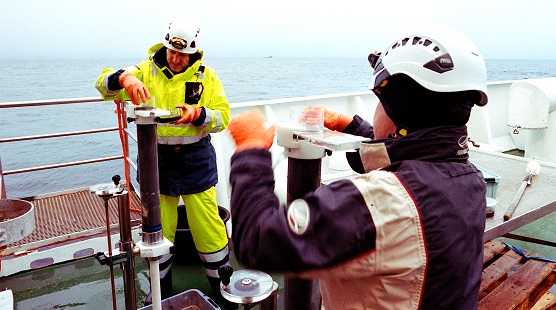
The oxygen situation was good in December-January in the Archipelago Sea and the Bothnian Sea, but oxygen problems continue in the Northern Baltic Proper and in the near-bottom water of the western Gulf of Finland, according to the Finnish Environment institute (SYKE).
The research vessel Aranda has returned from its annual winter monitoring cruise after investigating the current physical and chemical state of Finnish sea areas and the levels of harmful substances in the sea.
According to the monitoring report, Phosphorus levels were high in all of Finland's sea areas. The observed concentrations in the Bothnian Bay were the highest ever recorded, and exceptionally high in the Bothnian Sea.
Concentrations were also high in the Gulf of Finland, in some places almost reaching the highest levels ever recorded this time of year.
The near-bottom water of the Gulf of Finland contained less oxygen than a year ago. In the western part of the Gulf of Finland the water remains oxygen depleted, and toxic hydrogen sulphide appears locally. Phosphorus concentrations in the surface water of the Gulf of Finland were high for the time of year.
It appears that the phosphate content in the central part of the Gulf of Finland shifted to a permanently higher level as of 2005. The near-bottom water contained more phosphate than a year ago. Especially in the western part of the Gulf of Finland, phosphate concentrations were high in the near-bottom water.
“The nutrient situation of the Gulf of Finland is probably more affected by the exchange of water coming from the Baltic Proper than by changes in the land-based nutrient discharges. In addition, in the shallow Gulf of Finland, the bottom water often mixes with upper layers of water, which makes the nutrients available to blue-green algae in the summer”, said cruise leader Harri Kankaanpää of SYKE.
The oxygen conditions are good in the Archipelago Sea, but phosphorus concentrations were significantly higher than in the previous winter. The highest phosphorus concentrations were observed in the southern part of the Archipelago Sea, where more nutrient-rich water flows in from the Baltic Proper.
In the Bothnian Sea and especially in its north-western part the oxygen situation is clearly better than last year. However, phosphorus levels have increased.
The oxygen conditions in the Bothnian Bay have remained good. Concentrations of dissolved nutrients have increased in the Bothnian Bay in recent years.
Although nitrogen and phosphorus concentrations are low compared with other sea areas, record-high concentrations were recorded this winter in some parts of the region.
Observed oil concentrations in the surface water in the Baltic Sea were low, and at levels that are typical for the winter. The oil concentration in the Baltic Sea has decreased in recent decades. The most likely reasons are stricter legislation, international agreements, the effectiveness of Finland's aerial surveillance of its sea areas, and a general change in attitude.
Belarus to close embassy in Finland
15 to face trial for producing, selling cannabis in Helsinki
Russian reconnaissance aircraft suspected of violating Finnish airspace
Finland supports aviation safety in Indonesia
Misuse of funds, info most common suspected corruption cases in Finland: study
Espoo, Vantaa cities´ massive job cut moves put services at risk: JHL

Editor-in-Chief Ofiul Hasnat
Published by Finnish News Network (FNN)
Heporinne 4 B 45
01200 Vantaa, Finland.
E-mails : [email protected]