
Finnish gears ready to act in Perseverance
Published : 16 Feb 2021, 00:07
Updated : 16 Feb 2021, 00:26
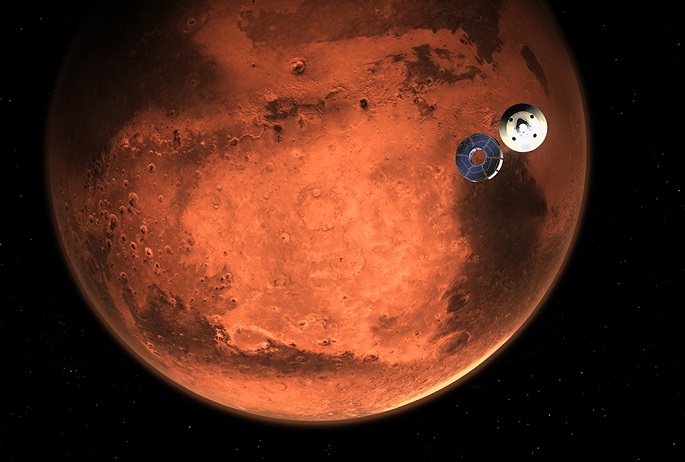
NASA’s Perseverance rover, launched in July 2020, is landing on Mars on 18 February. The Perseverance is carrying several scientific instruments on board, including Finnish-made humidity and pressure-measuring instruments, said the Finnish Meteorological Institute (FMI) in a press release on Monday.
The FMI has provided the Perseverance with measurement instrumentation. Equipped with Vaisala’s sensors, FMI’s instrumentation will be used to provide accurate and reliable pressure and humidity measurements in the extreme conditions of Mars.
The Perseverance will spend at least one Mars year, equal to around two Earth years, exploring the landing-site area.
The rover is expected to land on the ancient river delta in the Jezero Crater, which is the optimal place to find traces of ancient life. To collect data and samples from the Red Planet, NASA is working together with a group of trusted scientific partners.
The FMI’s instrumentation is part of the Spanish-led consortium’s Mars Environmental Dynamics Analyser (MEDA). The MEDA instrumentation kit is basically a Martian weather station that takes a wide range of atmospheric measurements: temperature, wind speed and direction, pressure, relative humidity, and the amount and size of dust particles. Vaisala’s pressure and humidity sensors on board the Perseverance are similar but more advanced to the ones sent to Mars on the Curiosity rover in 2012.
“The rover’s equipment needs to operate in the harsh Martian environment, with very low pressure conditions and cold temperatures, and it must be able to resist possible global dust storms. In addition to the environmental aspects and potential dangers of the landing itself, the distance between Mars and Earth makes the mission challenging. There is no one to fix the instrumentation, if something goes wrong,” said Maria Genzer, head of Planetary Research and Space Technology Group at the FMI.
When landing, the Perseverance and Mars science laboratory Curiosity will operate around 2,000 km from each other. Together they help creating a small-scale atmospheric observation network on Mars. It is the first step towards the wider observation network being planned for Mars in the future.
“Mars and Earth are like rocky sisters. They both have seasonal variation, ice caps, similar declination of axis, length of day, and rocky consistency. Mars offers us a basic model of Earth – without vegetation, water, human life, cities, and other ‘noise’ we encounter on Earth,” said Genzer.
“We are excited to provide our world-leading sensor technology to a Mars mission once again. Our accurate and durable HUMICAP® and BAROCAP® sensors will enable high-quality humidity and pressure data even on the Red Planet and lay the foundations for the atmospheric observation network on Mars,” said Vaisala Products and Technologies Vice President Samuli Hänninen.
Birth rate remains lower than death in Finland in Jan-July period
Online illegal wildlife trade poses risks to biodiversity: study
Finland to host Arctic summit of EU leaders in September
Woman killed in road mishap in Helsinki
Man to face charges for hoisting Swastika flag in yard
Belarus to close embassy in Finland

Editor-in-Chief Ofiul Hasnat
Published by Finnish News Network (FNN)
Heporinne 4 B 45
01200 Vantaa, Finland.
E-mails : [email protected]