
47 killed in Israeli strikes in Lebanon, new talks on US-Iran deal to plan
Published : 20 Jun 2026, 00:59
Updated : 20 Jun 2026, 01:01
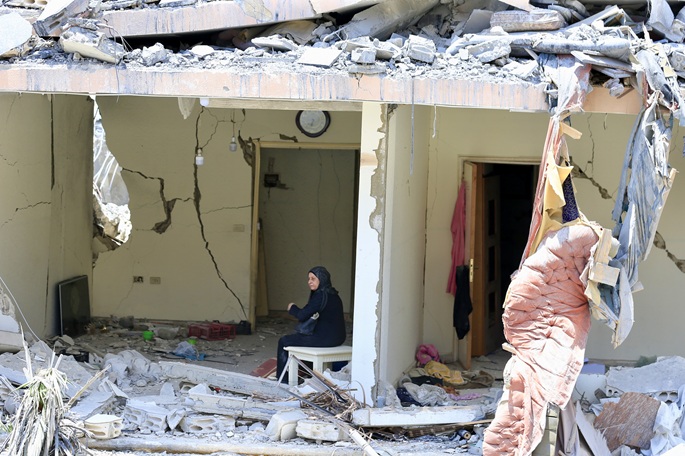
At least 47 people were killed and 97 others injured in intensive Israeli airstrikes across Lebanon from midnight until Friday afternoon, according to an updated toll released by Lebanon's Public Health Emergency Operations Center, reported Xinhua.
The strikes hit multiple areas in southern and eastern Lebanon, including the districts of Nabatieh, Tyre, Bint Jbeil, Jezzine, and Baalbek, the center said.
Among the dead were victims of an airstrike on Ain Bourday and another on a farm in the town of Jamaliyeh, both in the Baalbek district. Other casualties were reported from drone strikes in the town of Rihan in Jezzine and along the Deir al-Zahrani-Nabatieh highway.
The strikes came despite the recently signed U.S.-Iran memorandum of understanding (MoU), which stipulates an end to military operations on all fronts, including Lebanon.
In a statement, Iran's Foreign Ministry spokesman Esmaeil Baghaei strongly condemned Israel's continued attacks against Lebanon.
He stressed that ending the war in Lebanon has been explicitly considered an "integral" part of the U.S.-Iran MoU, adding the United States is directly responsible for the present circumstances in Lebanon.
Baghaei said Iran would adopt all necessary measures to protect its interests, security and rights as well as those of its allies.
Meanwhile, Israel's Channel 12 reported Friday, citing an Israeli official, that Israel and Hezbollah had reached a ceasefire agreement.
Meanwhile, Iran's Foreign Ministry spokesman Esmaeil Baghaei said on Friday that a scheduled meeting between Iranian and U.S. delegations in Switzerland has been postponed, and planning is underway for another one in the coming days.
Speaking to reporters, Baghaei explained that consultations for the next phase of talks are ongoing through mediators, and a new date will be announced once conditions are set, according to a statement by the Iranian Foreign Ministry.
He noted that under the recently signed memorandum of understanding (MoU) between Iran and the United States, the start of negotiations depends on the implementation of those provisions, including an end to the war and military operations on all fronts, including Lebanon, the removal of U.S. naval blockade, the reopening of the Strait of Hormuz for vessel passage free of charge for 60 days, U.S. issuance of waivers for Iran's exports of crude oil, petroleum products and derivatives, and the release of Iranian frozen assets.
Baghaei said that Friday's meeting was originally intended for signing the MoU and discussing arrangements for talks on the final agreement. However, it became "non-urgent," he explained, after Iranian President Masoud Pezeshkian and his U.S. counterpart Donald Trump electronically signed the document early Thursday.
Baghaei denied reports that Iran had invited the International Atomic Energy Agency (IAEA) to inspect its nuclear facilities, saying that under the MoU, negotiations on Iran's nuclear program are scheduled to take place within 60 days, provided prerequisites are met.
He said that under the MoU, Iran will maintain its current nuclear status quo, limiting IAEA inspections to facilities like the Bushehr Nuclear Power Plant. Access to sites previously denied due to the U.S. and Israeli attacks will hinge on the negotiation process and its outcome, he added.
Iran, the United States, and Pakistan early Monday announced the finalization of the MoU on ending the war in the region on all fronts, including Lebanon, following weeks of negotiations.
On Feb. 28, Israel and the United States launched joint attacks on Tehran and other Iranian cities. Iran responded with waves of missile and drone attacks targeting Israel and U.S. assets in the region, and tightened its grip on the Strait of Hormuz, barring passage of vessels belonging to or affiliated with Israel and the United States.
Cairo drums festival opens with call for peace
WHO warns funding cuts threaten HIV fight in Asia-Pacific
US-Iran deal negotiations on hold, Israeli airstrikes kill 18 in Lebanon
3 Palestinians killed in Israeli airstrike on vehicle in Gaza
Antarctica offers 30-50 year window to plan for sea level rise: study
DR Congo Ebola deaths top 200

Editor-in-Chief Ofiul Hasnat
Published by Finnish News Network (FNN)
Heporinne 4 B 45
01200 Vantaa, Finland.
E-mails : [email protected]