
DR Congo Ebola deaths top 200
Published : 19 Jun 2026, 03:22
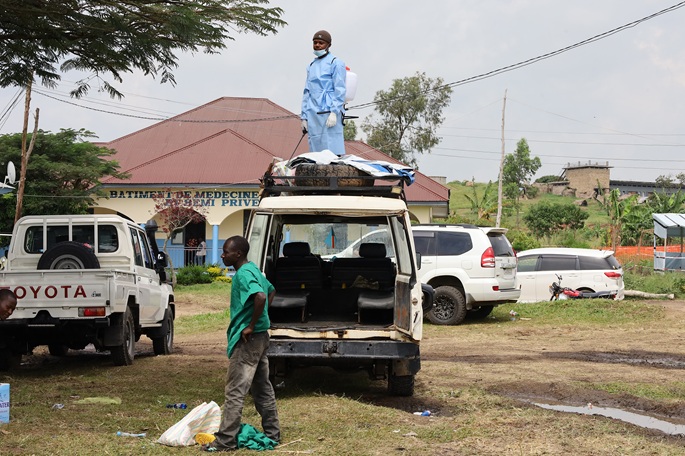
The death toll from the ongoing Ebola outbreak in the Democratic Republic of the Congo (DRC) has exceeded 200, as the Africa Centers for Disease Control and Prevention (Africa CDC) warned that the outbreak remains far from being brought under control, reported Xinhua.
According to a situation report released Thursday by the DRC Health Ministry, the country had recorded 875 confirmed Ebola cases, including 202 deaths, with a case fatality rate of 23.1 percent. A total of 67 recoveries had been reported, while 379 patients were in isolation or hospitalized.
Forty new confirmed cases, including four deaths, were reported in Ituri and North Kivu provinces. Two more health zones, Fataki in Ituri and Musienene in North Kivu, were newly affected, bringing the total number of affected health zones to 33 across Ituri, North Kivu, and South Kivu.
Ituri remains the epicenter of the outbreak, accounting for 799 confirmed cases, or 91.3 percent of the total, and 158 deaths. North Kivu has reported 73 confirmed cases and 43 deaths, while South Kivu has recorded three confirmed cases and one death.
The Africa CDC said at an online press briefing Thursday that only about 12 percent of expected contacts were currently under active follow-up, warning that "missed contacts sustain transmission."
The agency said around 35,000 contacts would be expected based on the current caseload, but only about 6,500 had been listed and over 4,100 were under active follow-up.
Wessam Mankoula, an official with Africa CDC, said the response remained far below what was needed to break transmission chains, noting that responders should be actively following 90 to 95 percent of expected contacts.
Mankoula said the outbreak is now among the most serious Ebola outbreaks on record. The ongoing outbreak, about four weeks after its declaration, had already become the largest Ebola outbreak on record by caseload at the same stage of an outbreak.
"For this Bundibugyo virus, we don't have a vaccine, we don't have treatment," Mankoula said, stressing that case identification and contact tracing were crucial to controlling the outbreak.
"Still far from controlling the situation of this outbreak," he added.
Mankoula also said testing capacity has improved significantly since the early stage of the outbreak, when testing backlogs ranged from five to eight days. Tests are now being conducted within 24 hours, with 21,000 tests delivered to the DRC, Uganda, South Sudan, and Burundi, and more than 27,000 more in the pipeline.
The DRC currently has nine Ebola treatment centers with about 433 beds, with occupancy at around 86 percent, and nine more treatment centers are being set up to expand capacity and meet the expected growth in cases in the coming weeks, according to Mankoula.
The DRC health ministry report also cited several major challenges, including reluctance to undergo post-mortem swabbing, insufficient capacity in Ebola treatment centers, weak contact tracing, shortages of infection prevention and control materials in North Kivu, weak alert reporting in South Kivu, and a funding gap of 21.5 million U.S. dollars.
On Tuesday, an African Union (AU)-led high-level meeting between African leaders and the international community over the Ebola outbreak in the DRC and Uganda was held virtually. According to a statement released on Thursday, donors have pledged 910 million dollars, including 80 million dollars from AU member states, to counter the outbreak.
According to the Africa CDC, Uganda has reported 19 confirmed cases, including two deaths and seven recoveries.
AAP convenor Kejriwal and AISA's Neha Bora held amid protests in India
Iran says hit LPG ship seeking to cross Hormuz
EU, China agree to keep bilateral trade ties stable, hold next meeting in March
3 Saudis killed in attacks on Riyadh's King Khalid Int'l Airport
Powerful quake rattles Panama as authorities mobilize response
Trump hails Russia deal to supply diesel amid Zelenskyy’s criticism

Editor-in-Chief Ofiul Hasnat
Published by Finnish News Network (FNN)
Heporinne 4 B 45
01200 Vantaa, Finland.
E-mails : [email protected]