
No truce in Lebanon:Israel
Iran warns US against letting Netanyahu kill diplomacy
Published : 10 Apr 2026, 02:29
Updated : 10 Apr 2026, 02:32
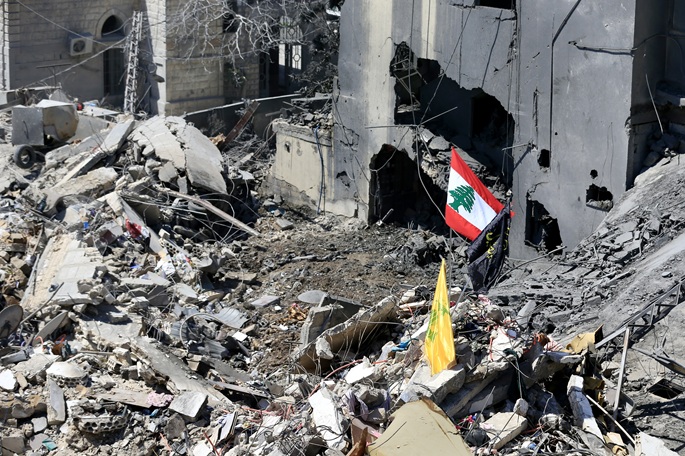
Israeli Prime Minister Benjamin Netanyahu said Thursday there would be no ceasefire in Lebanon, signaling that Israel will continue military operations while pursuing planned negotiations with Beirut, reported Xinhua.
"There is no ceasefire in Lebanon," Netanyahu said in a video address to residents of northern Israel. "We continue to strike Hezbollah with force and we will not stop until we restore your security."
He said he had instructed his cabinet to open direct talks with Lebanon following what he described as repeated requests from the Lebanese government.
The negotiations, expected to begin next week in Washington, aim to disarm Hezbollah and reach a "historic and lasting" peace agreement, Netanyahu added. Delegations will be led by the Lebanese and Israeli ambassadors to the United States.
The announcement came a day after Israel launched large-scale airstrikes across Lebanon, including about 100 strikes carried out within minutes against Hezbollah positions. Lebanon's Ministry of Public Health reported more than 300 killed and roughly 1,150 wounded.
Israel and Lebanon have no formal diplomatic relations and remain in a state of war.
Meanwhile, Israel's military said Thursday night that it has begun striking Hezbollah launch sites in Lebanon.
The strikes came hours after the military issued evacuation warnings for parts of Beirut and shortly after Israel announced plans to begin negotiations with the Lebanese government next week in Washington.
Speaking to troops in Bint Jbeil in southern Lebanon, Israeli military chief Eyal Zamir said the army's mission is to "continue deepening the damage and to continue weakening Hezbollah." He added that Lebanon is now Israel's "primary arena of fighting" and that the goal is to remove threats to residents of northern Israel.
Since March 2, Israeli attacks on Lebanon have killed 1,888 people and wounded 6,092, the ministry said. Wednesday's escalation included more than 100 airstrikes across Lebanon, causing widespread casualties and destruction.
Israel has said a U.S.-Iran ceasefire does not cover the conflict in Lebanon, a position disputed by Iran and mediator Pakistan, with Tehran calling Lebanon an "inseparable" part of the truce.
Meanwhile, Iranian Foreign Minister Seyed Abbas Araghchi on Thursday warned the United States against allowing Israeli Prime Minister Benjamin Netanyahu to "kill diplomacy," as a fragile ceasefire took hold following 40 days of fighting.
In a post on social media platform X, Araghchi said, "Netanyahu's criminal trial resumes on Sun(day). A region-wide ceasefire, incl(uding) in Lebanon, would hasten his jailing."
He added that if the United States lets Netanyahu "kill diplomacy, that would ultimately be its choice. We think that would be dumb but are prepared for it."
Meanwhile, Iranian Parliament Speaker Mohammad Baqer Qalibaf wrote on X that "time is running out," stressing that Lebanon and the "resistance axis" are "inseparable" parts of the ceasefire.
Also on Thursday, Araghchi discussed the ceasefire with his Russian, French, Spanish and German counterparts in separate phone calls, according to statements released by the Iranian Foreign Ministry.
Araghchi told Russian Foreign Minister Sergei Lavrov that Iran took a responsible approach, and that safe passage through the Strait of Hormuz, promised for two weeks under the ceasefire, will be provided if the United States adheres to its commitments.
In a call with French Foreign Minister Jean-Noel Barrot, Araghchi expressed regret over Israeli ceasefire violations and attacks on Lebanon, urging international action. Barrot welcomed the ceasefire and stressed the need to stop Israeli attacks against Lebanon.
Spanish Foreign Minister Jose Manuel Albares called the attacks on Iran "illegal," and urged all parties to remain committed to the diplomatic path.
More than 300 killed in recent Israeli strikes against Lebanon
The death toll from Israel's Wednesday attacks across Lebanon has risen to 303, with 1,150 injured, according to a preliminary toll released Thursday by the Lebanese Ministry of Public Health.
In a statement, the ministry's Emergency Operations Center said that search and rescue operations are still underway in multiple locations, with authorities working to retrieve bodies from under the rubble and identify victims, including through DNA testing.
The death toll from Israeli attacks on Lebanon since March 2 has risen to 1,888 dead and 6,092 injured, the ministry added.
The latest escalation followed more than 100 Israeli airstrikes across Lebanon on Wednesday, causing widespread casualties and destruction.
Cross-border violence continues amid ongoing exchanges of fire along the Lebanon-Israel border.
Trump threatens Iran over tanker transit fees in Hormuz
U.S. President Donald Trump on Thursday threatened Iran to stop charging fees to tankers passing through the Strait of Hormuz if the country is doing so.
"There are reports that Iran is charging fees to tankers going through the Hormuz Strait -- They better not be and, if they are, they better stop now!" Trump wrote on his social media platform Truth Social.
A day earlier, Trump told ABC News he is weighing to set up a "joint venture" with Iran to charge tolls from vessels passing through the crucial waterway through which about 20 percent of global oil is transported, calling it "a beautiful thing."
He also said on social media on Wednesday that "big money" could be made by the U.S. "helping with the traffic buildup in the Strait of Hormuz."
Iran demands oil tankers pay a transit toll of 1 U.S. dollar per barrel for passing through the strait, according to a report from The Wall Street Journal on Thursday.
Marine traffic in the strait remained at a trickle. For the first time since the ceasefire was reached on Tuesday, two non-Iranian oil tankers were tracked crossing the strait, The New York Times reported on Thursday, citing ship-tracking firm Kpler.
Hormuz transit remains low, strait still under tight control
Vessel traffic through the Strait of Hormuz remains low and tightly controlled following the announcement of a ceasefire between the United States and Iran, with no meaningful increase in activity observed, a London-headquartered maritime analytics firm said on Thursday.
According to a report released by Windward, the ceasefire has not led to a resumption of normal commercial shipping. Standard shipping lanes remain largely unused, and the current situation reflects not a recovery phase but a supervised pause, with operational control still firmly in place.
On April 8, only five bulk carriers were tracked outbound through the strait, all transiting via a corridor controlled by Iran's Islamic Revolution Guards Corps (IRGC) rather than standard commercial routes.
Limited additional vessel movements were observed on April 9, mainly involving smaller vessels or Iran-linked operations.
Elevated war-risk insurance premiums continue to be a key constraint preventing a broader return of mainstream commercial shipping, said the report.
Data shows that around 3,200 vessels remain stranded west of the Strait of Hormuz, including nearly 800 tankers and cargo ships.
The report identifies April 8 to 10 as a critical testing window. If transit volumes increase without incident, market participants may begin reassessing risk. A subsequent decision window between April 11 and 14 will depend on the stability of the ceasefire and enforcement conditions.
Even under a best-case scenario, clearing the backlog of stranded energy cargoes is expected to take weeks, while global trade flows may take months to return to pre-crisis levels, the report added.
4 soldiers killed in Israeli airstrikes across Lebanon
The Lebanese Army said on Thursday that four of its soldiers were killed in Israeli airstrikes across Lebanon on Wednesday, as Israeli Prime Minister Benjamin Netanyahu said strikes in Lebanon against Hezbollah will continue.
In a statement, the army command's Directorate of Orientation identified the victims as First Sergeant Hussein Khaled Yassin, killed in Sidon; First Class Soldier Mohammad Bassam Shheitli and recruit Ali Hassan Qassem, both killed in Shmustar in Baalbek; and student non-commissioned officer Ali Nassreddine, killed in Mansoura in Hermel, noting they were killed as a result of Israeli strikes.
Netanyahu wrote on his X account that "Whoever acts against Israeli civilians will be targeted," and "We will continue to strike Hezbollah wherever necessary until full security is restored for residents of the north."
Lebanese Health Minister Rakan Nasreddine said on Thursday that the death toll from Israeli strikes on Wednesday had risen to 203, with more than 1,000 people injured, after Israel launched large-scale strikes across the country.
Israel carried out on Wednesday its largest attack in Lebanon during this war, claiming that its fight against Hezbollah is not part of the two-week ceasefire deal with Iran. The attacks killed more than 200 people and wounded hundreds of others.
The ceasefire was announced early Wednesday by the United States and Iran. The office of Netanyahu said Israel would comply with the truce but would continue military operations in Lebanon.
US loses 24 MQ-9 Reaper drones in war with Iran
The United States has lost eight MQ-9 Reaper drones in the Middle East since April 1, bringing the total number of such devices lost in the Iran war to 24, CBS News reported Thursday, citing two U.S. officials.
The drones represent a loss of about 720 million U.S. dollars, according to the report, noting that depending on the variant, a single Reaper drone can cost 30 million dollars or more.
The MQ-9 Reaper, made by General Atomics Aeronautical Systems, is a remotely piloted aircraft used for intelligence, surveillance and reconnaissance missions. It can also deliver precision strikes.
The United States and Israel have struck more than 13,000 targets across Iran since they launched joint military attacks on Feb. 28, according to data compiled by CBS News.
During the conflict, targets in 12 countries across the region have been struck by Iran, according to the data.
A two-week ceasefire deal was announced Tuesday, but Israel continued striking targets in Lebanon.
Iran's supreme leader declares "decisive victory"
Iran's Supreme Leader Mojtaba Khamenei said Thursday that the Iranian people have achieved a "decisive victory" in the war against the United States and Israel, adding that Iran will move the management of the Strait of Hormuz into a new phase.
Khamenei made the remarks in a message carried by Iranian media on the 40th day after the death of former Supreme Leader Ali Khamenei, who was killed in U.S.-Israeli strikes at the start of the conflict.
"We have not sought and do not seek war, but we will not give up on our legitimate rights, and to this end, we consider the entire resistance front as a unified whole," he said.
The supreme leader urged Iran's southern neighbors to "stand in the right place," adding, "We are still waiting for an appropriate response from you to show you our brotherhood and goodwill."
He called the assassination of his predecessor one of the "biggest crimes" by Iran's "enemies" and one of the most "severe public sorrows" in Iran's history.
Iran's people will demand compensation for every damage in the country caused by the attacks of the "aggressors," he said.
He stressed that Iranians must continue their presence in the streets despite upcoming negotiations with the United States, as their "cries" will influence the outcome.
Also on Thursday, massive crowds across Iran attended rallies and ceremonies to mourn former Supreme Leader Ali Khamenei.
In Tehran, the rally, also attended by high-ranking officials such as President Masoud Pezeshkian and cabinet members and ministers, began at 9:40 a.m. local time (0610 GMT), the time when Ali Khamenei, along with a number of his companions and family members, was killed in his office in Felestin (Palestine) Street.
In a gloomy atmosphere, mourners carried pictures of the former leader and current Supreme Leader Mojtaba Khamenei, marching with Iranian and black flags from Jomhouri Square to Felestin Street.
Dressed in black, many marchers held and chanted slogans against the United States and Israel, voiced support for Iran and Lebanon, pledged allegiance to the supreme leader, and demanded a U.S. withdrawal from West Asia.
Mojtaba Khamenei, son of Ali Khamenei, was selected as Iran's new supreme leader on March 8.
Attacks halt operations at multiple Saudi facilities
Saudi Arabia's Ministry of Energy said Thursday that operations at several key energy facilities were suspended following recent attacks.
The ministry said vital installations across the kingdom, including oil and gas production, transportation, refining, petrochemical sites, and power facilities in Riyadh, the Eastern Province, and Yanbu Industrial City, have been repeatedly targeted, according to the Saudi Press Agency.
The attacks killed one Saudi industrial security worker and injured seven others at a Saudi energy company, while disrupting operations at multiple energy sector sites.
A pumping station on the East-West Pipeline was hit, causing a loss of about 700,000 barrels per day in throughput. The pipeline is a major route for supplying global markets. The Manifa oil production facility also suffered damage, reducing output by around 300,000 barrels per day.
Earlier strikes on the Khurais facility cut production by another 300,000 barrels per day, bringing the kingdom's total production loss to roughly 600,000 barrels per day.
Major refineries-including SATORP in Jubail, Ras Tanura, SAMREF in Yanbu, and the Riyadh refinery-were also affected, directly impacting refined product exports. Fires at processing facilities in Ju'aymah disrupted exports of liquefied petroleum gas and natural gas liquids.
The ministry warned that continued attacks could reduce supplies, slow recovery efforts, undermine energy security for consuming countries, and add volatility to global oil markets. It said the situation has already strained the global economy by depleting inventories, limiting available supply, and restricting the ability to respond to shortfalls.
7 Palestinians killed in Israeli attacks across Gaza
9 killed in shooting in US Pennsylvania
Abbas postpones Palestinian presidential, legislative elections to Sept. 11, 2027
12 killed, 309 injured in attack on Riyadh airport
Opposition leader announces INDIA bloc protest against CEC on Oct 12
Trump suggests ´new President´ for Ukraine, day after diesel deal with Russia

Editor-in-Chief Ofiul Hasnat
Published by Finnish News Network (FNN)
Heporinne 4 B 45
01200 Vantaa, Finland.
E-mails : [email protected]