
Tesla’s driver assistance system allowed on Finnish roads
Published : 11 Nov 2026, 18:44
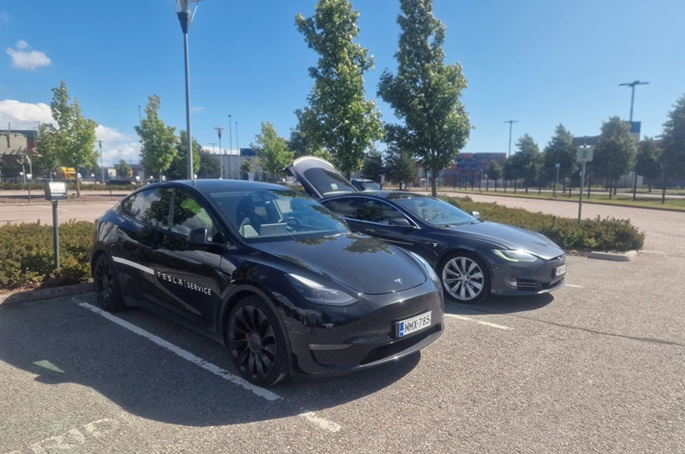
Finnish Transport and Communications Agency -Traficom on Tuesday recognised the provisional type-approval granted by the Dutch authority, allowing Tesla’s Assisted Driving system to be used as a driver assistance system in Finland, said Traficom in a press release on Wednesday.
This means that the driver assistance system can now be used on Finnish roads.
Finland is moving slightly faster than the EU-level process in introducing the system. The final EU-wide approval of the system is expected to be decided during the coming winter, as Tesla has been willing to make changes to the system that various Member States have requested and justified.
“The system’s design and approval assessment have taken winter conditions into account, but its operation may be subject to various limitations if the cameras become covered in snow, slush or other dirt, or if traffic conditions become more challenging than usual,” said Senior Specialist of Traficom Jukka Juhola.
According to Juhola, Traficom considers advances in the development of driver assistance systems to be a necessary part of progress towards automated transport.
“When used correctly and with appropriate technical limitations, automated and driver assistance systems have significant potential to reduce road accidents caused by human error, as well as less serious traffic-related problems,” Juhola said.
The most visible change to the system has been its name, which was previously FSD (Supervised). The abbreviation stands for Full Self-Driving (Supervised). References to self-driving have now been removed from the name, and the system is called Tesla Assisted Driving. The new name has also been adopted in the Finnish- and Swedish-language marketing and user guidance materials.
“The name change helps users and the market understand the true nature of the system. The new name also takes future developments into account, as genuinely self-driving cars, where responsibility for driving shifts away from the driver, will become available alongside driver assistance systems,” Juhola said.
Changes have also been made to the system’s features, including its speed control settings. Drivers can no longer encourage the system to continuously maintain an unnecessarily high speed above the speed limit (50 per cent). Furthermore, settings that allow speeding are now reset to default settings with no deviation from the speed limit whenever the vehicle is restarted, and the information provided to drivers about the speed settings selected by the system has been expanded and clarified.
“These changes ensure that drivers are aware of the decisions the car makes on their behalf and the settings that are currently active,” Juhola said.
Further changes to the system are expected before its EU-wide approval. These will not significantly affect how the system is used but will help drivers remain alert while driving.
The manufacturer is always responsible for providing detailed instructions and guidance on how to use its systems..
The driver remains fully responsible for driving, even though the driving experience provided by the system may resemble that of a self-driving car.
“The driver is still driving the car even if they are not physically touching its controls. They must therefore know how to use the system and remain appropriately alert while performing the driving task,” Juhola added.
Juhola also points out that driver assistance systems can make mistakes or operate inaccurately. Although a driver assistance system aims to maintain an appropriate driving speed on the driver’s behalf, the driver must remain aware of the speed settings currently in use and the vehicle’s actual speed.
Final approval of the system throughout the EU requires a successful vote in the European Commission’s Technical Committee – Motor Vehicles (TCMV). Following a successful vote, it takes approximately three weeks for the system’s approval to take effect throughout the EU.
However, national recognition of approvals allows new technologies to be introduced while this process is still ongoing.
Finland will continue to follow discussions between Member States on the system’s features when determining its position ahead of the vote.
Introducing Tesla Assisted Driving does not require a modification inspection if the vehicle has not been modified.
Finnair passengers´ data included in Amadeus data breach
Public transport fares in Helsinki to hike further
More passengers fly though Finnish airports in September
Airlines mull winter flight cut to and from Lapland due to fuel price hike
Use of e-scooter drops in Helsinki
Rail passengers, freight traffic drop in Finland in Q2

Editor-in-Chief Ofiul Hasnat
Published by Finnish News Network (FNN)
Heporinne 4 B 45
01200 Vantaa, Finland.
E-mails : [email protected]