
Democratic Autonomy advocated in Helsinki as a lasting solution to Sahara dispute and situation in Tindouf refugee camps
Published : 03 Nov 2026, 09:43
Updated : 04 Nov 2026, 05:49
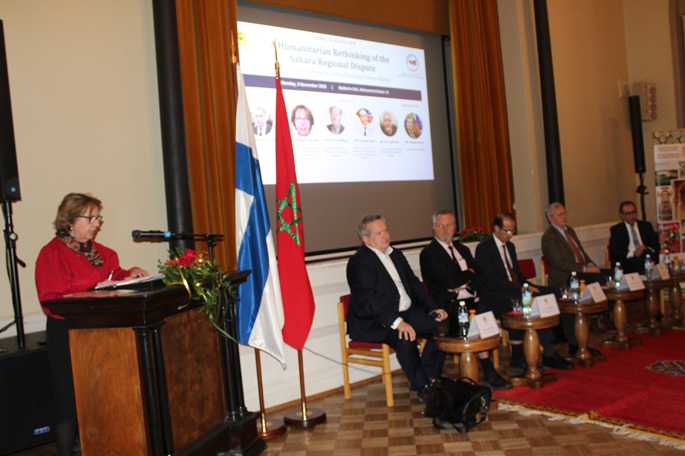
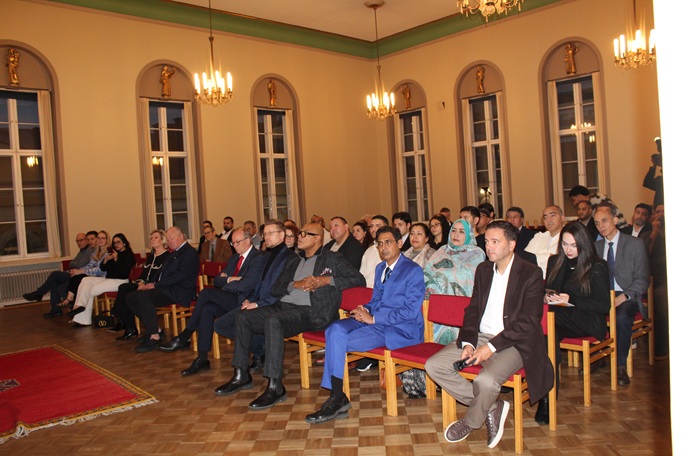
Helsinki hosted a round table on autonomy, jointly organised by the Embassy of the Kingdom of Morocco and the Finnish Friends of Morocco Association on Monday, as part of the celebrations marking the first anniversary of Unity Day and the 51st anniversary of the Green March.
Held under the theme “Rethinking the Regional Dispute over the Sahara: Autonomy as a Pathway to Lasting Regional Peace and Human Dignity,” the conference brought together Finnish, Moroccan and Norwegian experts to examine the political, institutional and humanitarian dimensions of Morocco’s Autonomy Initiative, with particular attention to the future of the populations living in the Tindouf refugee camps.
Addressing recent developments in the United Nations-led political process, Morocco’s Ambassador to Finland, Mohamed Achgalou, highlighted the political and legal significance of UN Security Council Resolution 2797, adopted on 31 October 2025, as well as the developments surrounding the vote of 30 October 2026 in the SC . He considered that, despite continuing differences within the Council, these developments reflected an international momentum increasingly centred on autonomy as the only viable political settlement to the dispute.
The Ambassador reaffirmed that autonomy under Moroccan sovereignty remains the only feasible, pragmatic and serious solution capable of bringing a lasting end to this regional political dispute. He stressed that autonomy represents the maximum Morocco can offer within a negotiated settlement and that this proposal should not be taken for granted indefinitely. He called on the other parties to assume their responsibilities, particularly in view of the future of the populations living in the Tindouf camps.
According to the Ambassador, the future of these populations requires a pragmatic approach that takes into account current political realities, the development momentum in Morocco’s Southern Provinces and the evolving international support for autonomy. He deplored the prolonged humanitarian situation, stressing that the dignity, rights and aspirations of the people concerned must no longer remain subordinate to outdated political and ideological considerations.
In this regard, he recalled that the humanitarian situation of the populations in Tindouf has consistently remained a major concern of Moroccan diplomacy.
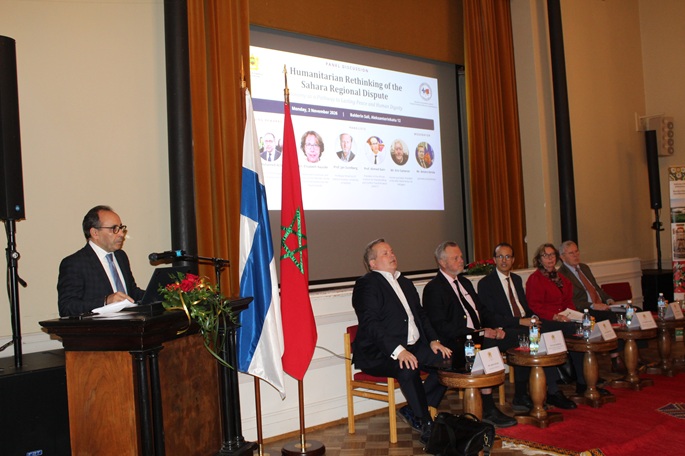
Ambassador Achgalou further emphasised that Morocco’s Autonomy solution , whose growing international support has become a fundamental element of the political process, goes beyond the settlement of a political regional dispute. It also offers a profoundly human-centred approach, reconciling national sovereignty with democratic self-government, socio-economic development and the protection of fundamental rights.
He underlined the importance of ensuring durable solutions for the populations of Tindouf, consistent with their freedom of choice and applicable international law, including voluntary return in safety and dignity, local integration in the host country or resettlement in a third country. He also reiterated the need for a census of the camp populations and full respect for the host state’s responsibilities regarding their protection.
Turning to the future of MINURSO, following the expiry of its mandate on 31 October 2026 without renewal by the Security Council, the Ambassador reaffirmed Morocco’s commitment to multilateralism, peacekeeping and cooperation with the United Nations. He stressed that the prospect of the mission ceasing its activities would in no way undermine Morocco’s commitment to peace, security and respect for the ceasefire, while safeguarding its sovereignty and protecting its citizens.
Other speakers contributed complementary perspectives on the political, institutional, economic and humanitarian conditions necessary for sustainable autonomy.
Elisabeth Nauclér, a Finnish former Member of Parliament and legal expert, shared insights from the autonomy arrangements of the Åland Islands, particularly regarding self-government, democratic safeguards and the protection of cultural and linguistic identities. While acknowledging the historical and legal differences between the two situations, she emphasised the essential role of women in negotiation and reconciliation processes, particularly in addressing humanitarian concerns.
Jan Sundberg, Professor Emeritus of Political Science at the University of Helsinki, examined the relationship between autonomy, governance and socio-economic development. He highlighted the institutional and economic advantages of autonomy within a well-established state, compared with the political and economic uncertainties that independence may entail for smaller entities, including greater vulnerability to external dependence and interference.
Professor Mohamed Ahmed Gain, President of the African Institute for Peacebuilding and Conflict Transformation (AIPECT), highlighted the development momentum in Morocco’s Southern Provinces and the opportunities that autonomy could provide for socio-economic integration, reconciliation and the reintegration of the populations concerned.
For his part, Eric Cameron, a former Norwegian journalist and President of the NGO World Action for Refugees, addressed the humanitarian consequences of prolonged displacement in the Tindouf camps. He advocated durable solutions grounded in human dignity, fundamental rights, voluntary return and family reunification, while also warning against the recruitment and use of child soldiers.
Moderated by Finnish politician Antero Eerola, the conference provided an opportunity to exchange comparative experiences and perspectives, highlighting the close relationship between autonomy, democratic safeguards, socio-economic development and reconciliation.
The discussions ultimately underscored the need to place the dignity, rights and future of the populations in the Tindouf refugee camps at the centre of efforts to achieve a lasting political settlement, while recognising democratic autonomy as a potential framework for regional stability, sustainable development and human reconciliation.

Editor-in-Chief Ofiul Hasnat
Published by Finnish News Network (FNN)
Heporinne 4 B 45
01200 Vantaa, Finland.
E-mails : [email protected]