
Need for elderly home care on rise in Finland
Published : 01 Oct 2026, 01:55
Updated : 01 Oct 2026, 02:35
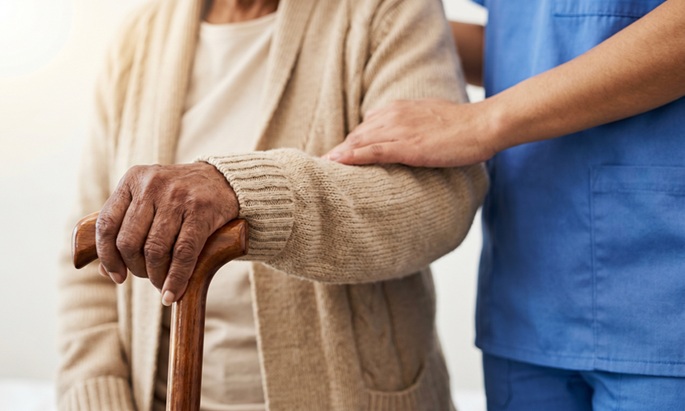
Home care is increasingly targeted at those who need a lot of services, according to the recent statistics published by the Finnish Institute for Health and Welfare (THL).
There are clear differences between wellbeing services counties in how many older people are offered home care, how much home care is provided and how care is delivered, said THL in a press release on Wednesday referring to the statistics.
In 2025, 13 per cent of people aged 75 or over in Finland, or 88,000 clients, received regular home care.
According to national policy, care for older people is always to be provided primarily through home care.
The differences in the proportion of older people receiving home care are more pronounced in the older age groups. In 2025, depending on the wellbeing services county, 23–40 per cent of people aged 85 or over and 38–70 per cent of those aged 95 or over received regular home care.
Some areas provide a small number of visits to a large group of clients (Central Ostrobothnia), while others provide a large number of visits to a smaller group (Central Uusimaa). In South Karelia, both the coverage of home care and the proportion of clients receiving a lot of home care are high.
The average length of a home care visit varied by area from 18 to 25 minutes.
“In practice, this means that a client receiving, for example, three visits a day in an area with longer visits receives the equivalent of one full visit more care time per day. Over a month, that amounts to 11 more hours of care time. It appears that in some areas home care has been fragmented into short visits, which increases the number of visits,” said Emma Tolonen, Senior Planning Officer at THL.
“Place of residence affects how easy it is to get home care and how much help can be offered to the client. The goal of equitable services is not being achieved. It is important to halt this divergence now. We know that the number of people needing home care will continue to grow, as will the number of people needing a lot of home care. In many areas, the provision of home care needs swift corrective action so that services can be increased when a client’s service need grows,” said Sari Kehusmaa, Chief Specialist of THL.
An increasing proportion of clients need home care several times a day. In 2025, more than half (60%) of regular home care clients received on average at least one visit per day, and 41 per cent received at least two. In 2014, the corresponding proportions were 44 per cent and 28 per cent.
Although clients receiving a lot of home care account for 41 per cent of regular home care clients, they receive 74 per cent of all visits.
According to the Resident Assessment Instrument (RAI) assessments of functional capacity and service needs carried out for older home care clients, clients’ need for assistance has increased since 2023, and the proportion of clients with impaired cognition has grown. Of the home care clients assessed with RAI, 44 per cent have a dementia diagnosis.
“Those who gain access to services are in poorer overall condition than before, and people are living at home for longer with ever greater needs for assistance. This places additional demands on the organisation and scope of services, so that clients receive services that are sufficient in relation to their needs,” said Johanna Edgren, Senior Researcher at THL.
There are also regional differences in the content of home care.
According to RAI assessment data, for example, a comprehensive medication review was missing for 9–34 per cent of clients depending on the area, and 5–14 per cent of clients received help from rehabilitation and other specialist staff. The frequency of emergency care visits also varied quite considerably between areas.
“In addition to differences in client composition, the regional variation can be assumed to reflect regional differences in the working practices of professionals and work communities,” Edgren said.
1 burnt to death in Mynämäki house fire
20 killed in road mishaps in Finland in August
Finland seeks €331m from EU under Recovery and Resilience Plan
Defence Minister faces no-confidence motion over Israel visit
Espoo to organise draw to allocate 53 plots for residents
Swedish vessel joins Finland’s territorial surveillance

Editor-in-Chief Ofiul Hasnat
Published by Finnish News Network (FNN)
Heporinne 4 B 45
01200 Vantaa, Finland.
E-mails : [email protected]