
94% found good or excellent
Excellent coastal bathing waters on wane in Finland
Published : 16 Jun 2026, 21:20
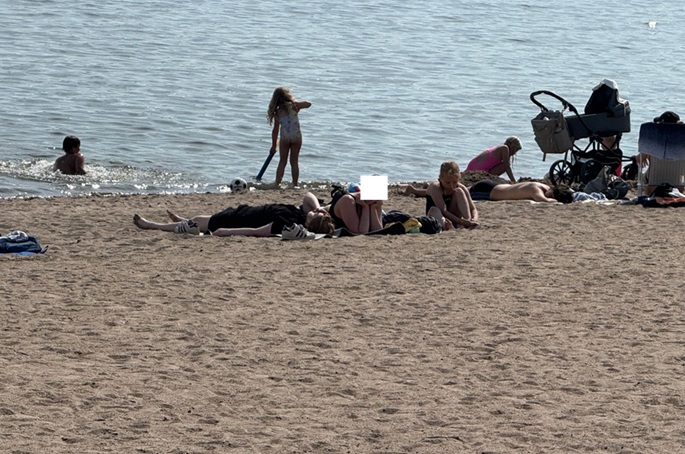
It is safe to swim at public bathing beaches in Finland, according to the European Environment Agency (EEA).
About 94% of Finland’s bathing waters were classified as being of excellent or good quality, said the National Institute of Health and Welfare (THL) in a press release on Tuesday, quoting the latest bathing water report published the EEA.
Meanwhile, compared with the previous monitoring period, the share of excellent bathing waters decreased by more than six percentage points, while the share of good bathing waters increased by nearly eight percentage points.
The proportion of excellent coastal bathing waters has now declined for three consecutive years.
“The proportion of excellent bathing waters along the Finnish coast has decreased in recent years. For example, wastewater entering bathing waters and faeces from wild animals can reduce water quality. However, it should be remembered that stricter quality standards apply to coastal bathing waters,” said Outi Zacheus, Senior Planning Officer of THL.
The report contains bathing water quality data from all public bathing beaches. In summer 2025, Finland had a total of 304 public bathing beaches, of which 226 were located inland and 78 along the coast.
Nine beaches (3%) were classified as having sufficient water quality, the lowest acceptable bathing water category, which is three fewer than the number beaches in the previous monitoring period.
At three beaches (1%), bathing water quality was classified as poor, the same number as during the previous monitoring period.
Of inland bathing waters, nearly 95% were classified as excellent and just over 2% as good. Along the coast, just over 55% of bathing waters were classified as excellent and nearly 30% as good.
Five new bathing beaches in Finland were not assigned a bathing water classification because water quality had not yet been monitored for a sufficiently long period. In addition, one beach had too few samples available to determine a classification.
The European bathing water report classifies water quality at beaches where concentrations of bacteria indicating faecal contamination have been monitored regularly over four bathing seasons. These bacterial levels can be used to assess, for example, the impact of wastewater discharges on bathing water quality. The occurrence or abundance of cyanobacterial (blue-green algae) blooms is not taken into account in the bathing water classification.
Each year, THL reports the results of bathing water monitoring carried out by municipal health protection authorities to the European Commission.
The report published now is based on monitoring conducted during the 2022–2025 bathing seasons. It includes country-specific summaries of bathing water quality as well as results from approximately 22,000 bathing beaches across Europe.
Foreign-language speakers in Uusimaa to double by 2045
Finland, Ukraine sign drone production deal
Drug poisoning deaths on rise in Finland: THL
Finland seeks EU aid to mitigate structural change in Äänekoski, Päijät-Häme
Man dies after falling from road bridge in Helsinki
Birth rate remains lower than death in Finland in Jan-Aug period

Editor-in-Chief Ofiul Hasnat
Published by Finnish News Network (FNN)
Heporinne 4 B 45
01200 Vantaa, Finland.
E-mails : [email protected]