
27% Ukrainians want to stay in Finland: survey
Published : 08 Sep 2022, 00:55
Updated : 08 Sep 2022, 00:57
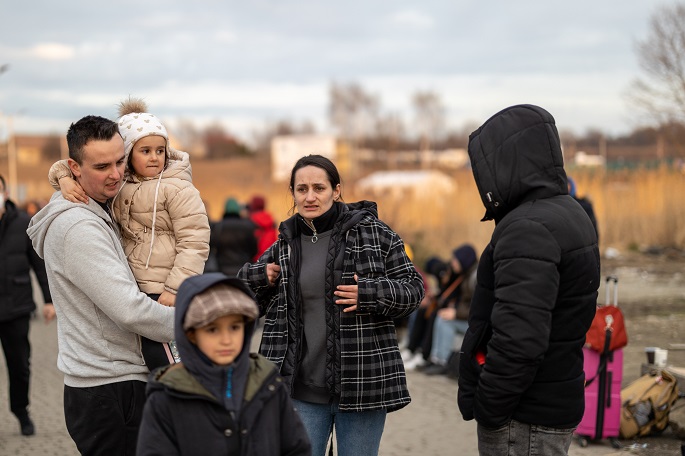
About 27 per cent of Ukrainians who have fled to Finland viewed that they no longer plan to return to Ukraine while one-third (33 per cent) have decided to return to Ukraine after the war has ended or sooner, according to a survey conducted by the Ministry of the Interior.
Almost 40 per cent of the respondents said that their plans were still open; finding employment in Finland and the development of the military situation in Ukraine are the key factors impacting their plans, said the survey result conducted in June-July through interviewing 2,136 people, said the ministry in a press release on Wednesday.
The responses do not give a comprehensive picture as close to 38,000 Ukrainians have arrived in Finland to apply for temporary protection or asylum.
However, the sample can be considered to provide good indications of their situation and needs, said the ministry.
“Whether living in Finland is temporary or permanent, it is important to ensure that the daily life of Ukrainians who have fled here would be as smooth as possible. According to the survey, many of the Ukrainians who took part in the survey are grateful for the way they have been received by Finns and Finnish authorities. This feedback is very positive, but it is equally valuable to hear what we can improve,” said Minister of the Interior Krista Mikkonen.
The results were analysed by visiting researcher Arseniy Svynarenko from the Finnish Youth Research Society and researcher Anastasiya Koptsyukh from Aalto University.
Nearly half of the respondents had come to Finland from parts of Ukraine most affected by the war: from the areas of Kharkiv, Kiyv or Donetsk.
The most common reasons for seeking entry to Finland were Finland’s good reputation (51 per cent), friends and relatives (43 per cent) and employment and study opportunities (18 per cent).
Ukrainians who responded to the survey were highly educated, and one in two respondents (48 per cent) had a Master’s degree.
The most common occupational groups among all respondents were experts (20 per cent), service and sales personnel (17 per cent), senior specialists (12 per cent) and office and customer service workers (12 per cent).
Ukrainians have settled practically across the entire country; respondents lived in as many as 273 different localities. Only 13% of them lived in the Greater Helsinki area.
Most of the respondents were bilingual and spoke both Ukraine and Russian. Around one in three (31 per cent) responded that their knowledge of English was good enough for working or studying. A total of 58 per cent of the respondents were interested in studying Finnish or Swedish.
Seventy-one per cent said they would like to work in Finland, and 39 per cent of the retired respondents would also like to find work.
However, language skills, bureaucracy and challenges in organising childcare were the top reasons given as obstacles to employment. It is estimated that only one in ten of working-age Ukrainians have registered as jobseekers.
About one in four respondents (23 per cent) reported that they had found employment. Based on the survey, the employment rate will increase over time: for example, nearly one in three of working-age respondents who arrived in Finland during the first month of the war had found a job. It is known, however, that many have found seasonal work on farms and therefore the employment situation may deteriorate towards the end of the harvest season.
Ninety-five per cent of the respondents had applied for temporary protection. Every person applying for or receiving temporary protection is registered at a reception centre even if they live in private or municipal accommodation. Almost all respondents (85 per cent) reported that they were reception centre clients, but only less than one-third (28 per cent) actually lived in a reception centre.
Belarus to close embassy in Finland
15 to face trial for producing, selling cannabis in Helsinki
Russian reconnaissance aircraft suspected of violating Finnish airspace
Finland supports aviation safety in Indonesia
Misuse of funds, info most common suspected corruption cases in Finland: study
Espoo, Vantaa cities´ massive job cut moves put services at risk: JHL

Editor-in-Chief Ofiul Hasnat
Published by Finnish News Network (FNN)
Heporinne 4 B 45
01200 Vantaa, Finland.
E-mails : [email protected]