
Finland to lift Covid restrictions after 80% people fully vaccinated
Published : 06 Sep 2021, 22:06
Updated : 06 Sep 2021, 22:08
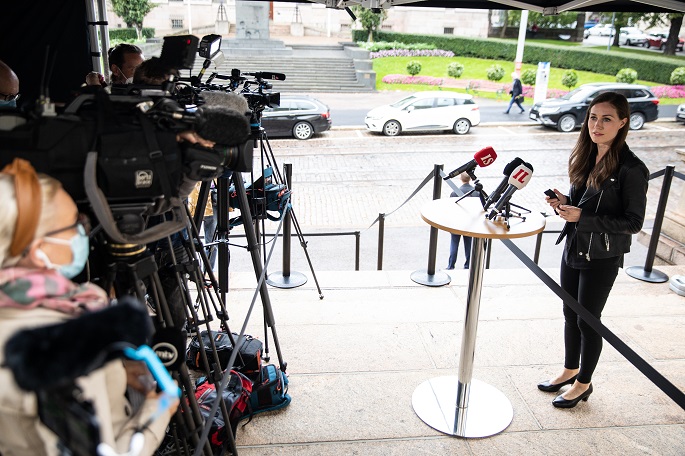
The government on Monday decided to lift the coronavirus restrictions across the country after at least 80 per cent of people over 12 years of age have been vaccinated twice or they have been offered the opportunity to get vaccinated twice.
The government at a meeting decided on measures to open up Finland and lift the ongoing restrictions imposed due to the COVID-19 pandemic, said an official press release.
A vaccination coverage of 80 per cent of all people over 12 years of age can be reached by mid-October, according to estimates at the turn of August and September.
The implementation of the revised hybrid strategy will begin in stages even earlier.
The Government will issue a resolution on an action plan implementing the revised hybrid strategy at the government plenary session on Thursday.
Restrictive measures can be lifted proactively even before reaching the target vaccination coverage.
The objective of the revised hybrid strategy to manage the COVID-19 crisis is to reopen society, promote measures to keep it open, support post-epidemic management and create conditions for economic growth and reconstruction.
The regional phases of the epidemic will be abandoned and the related recommendations will be dismantled.
All regions will adopt a uniform model for managing the COVID-19 epidemic, and further spread of the epidemic will be prevented primarily through local and regional measures under the Communicable Diseases Act.
As a rule, there will be no restrictions on any activities in society. Even if there were clusters of infection in the area, the recommendation is that no restrictions should be imposed on low-risk events and activities.
Targeted recommendations can be introduced for moderate-risk events and activities. Targeted and carefully selected restrictions are recommended only for high-risk activities. These should be based on administrative decisions as a response to local special situations. The primacy of the best interests of the child will continue to be implemented in all decision-making.
Online illegal wildlife trade poses risks to biodiversity: study
Finland to host Arctic summit of EU leaders in September
Woman killed in road mishap in Helsinki
Man to face charges for hoisting Swastika flag in yard
Belarus to close embassy in Finland
15 to face trial for producing, selling cannabis in Helsinki

Editor-in-Chief Ofiul Hasnat
Published by Finnish News Network (FNN)
Heporinne 4 B 45
01200 Vantaa, Finland.
E-mails : [email protected]