
Helsinki Pride Week ends
LGBTQ+ communities still face many challenges in Finland
Published : 03 Jul 2021, 20:11
Updated : 04 Jul 2021, 21:50
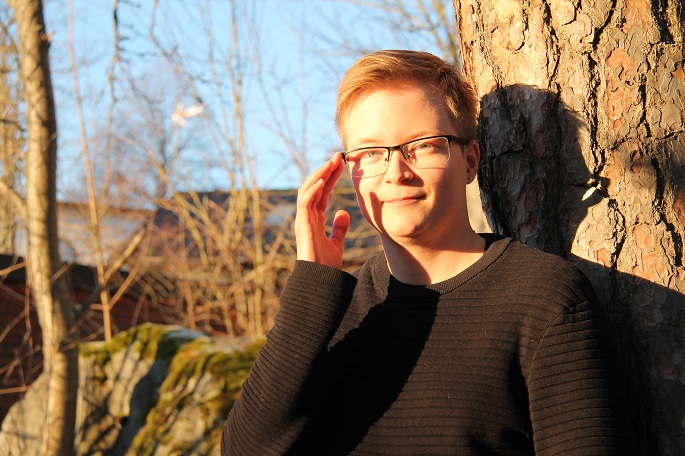
A significant improvement has taken place to ensure rights of the LGBTQ+ people but still, there are a lot of works to do for the acceptance of community in society, said Sakris Kupila, the chairperson of the Seta, LGBTI Rights in Finland.
A general acceptance within the Finnish society is, Kupila said, growing every year. “We have been taking breathtakingly fast steps for the past years. I am only 25. But when I was a child, it was a different world for the LGBTQ+ community.
Different sexualities and identifications have become more visible in society,” Kupila told the Daily Finland in an exclusive interview on the occasion of Helsinki Pride Week that ends on Sunday.
“The situation is generally good in comparison with other countries but it is still fragile,” he said, noting that the level of discrimination can differ a lot depending on the area. “Even though we have good laws, we are still behind.”
Homophobic and transphobic movements that recently took place in Poland or Hungary can influence the situation in Finland. Kupila sees that such ideologies travel across borders. “There has been a worrying increase in hate speech in Finland as well as in Europe.”
He also sees Finland falling behind other countries like Norway or Denmark when it comes to rights and the protection of transgender people. One possible explanation for this is that, as Kupila said, the public work of the LGBTQ+ communities in Finland does not have a long history yet. “Being gay was a crime until 1971 and classified as a disease until 1981. So, there was not so much time to build the communities. There have been some people of the community before but they needed to stay underground,” he said.
It is, therefore, no wonder for Kupila that discrimination and stereotyping still exist within the Finnish society because it had been a taboo for so long. Even today, there are no reliable numbers of how many people in Finland identify themselves as LGBTQ+ because many are still afraid of speaking out in public.
Kupila spoke about that diversity within the LGBTQ+ community in Finland. Even though Seta as an umbrella network combines 28 member organizations, people within different communities cannot be summarized by one single term. “Finland is a country of place having long distances between them and with diverse living realities,” Kupila said.
Most of the big cities such as Helsinki or Tampere have regional organizations but in many smaller communes, there are no local programs. For the people living there, it is, he said, fundamentally important to have a strong online community.
Covid-19 is in that sense a double-edged sword for the organization. The pandemic has, on the one hand, hit minorities within the LGBTQ+ community harder than the average society, Kupila said, as they are more likely to live in precarious situations and the community has, on the other hand, gone through a digital progress.
“We were able to reach more people than before. It made our work accessible to those who live farther apart or who move in other circles,” he said.
Even though real-life experiences cannot be replaced, Seta plans to continue online projects even after the end of the pandemic. One big challenge for Seta is, Kupila said, to become more diverse as an organization and build bonds with
other groups of minorities. “We need networks and allies with those who are discriminated against for other reasons, for example, disability or skin color. We must remember that we cannot ensure rights if we do not get them for everyone.”
Online illegal wildlife trade poses risks to biodiversity: study
Finland to host Arctic summit of EU leaders in September
Woman killed in road mishap in Helsinki
Man to face charges for hoisting Swastika flag in yard
Belarus to close embassy in Finland
15 to face trial for producing, selling cannabis in Helsinki

Editor-in-Chief Ofiul Hasnat
Published by Finnish News Network (FNN)
Heporinne 4 B 45
01200 Vantaa, Finland.
E-mails : [email protected]