
Parliament passes Sote reform bill
Published : 24 Jun 2021, 03:04
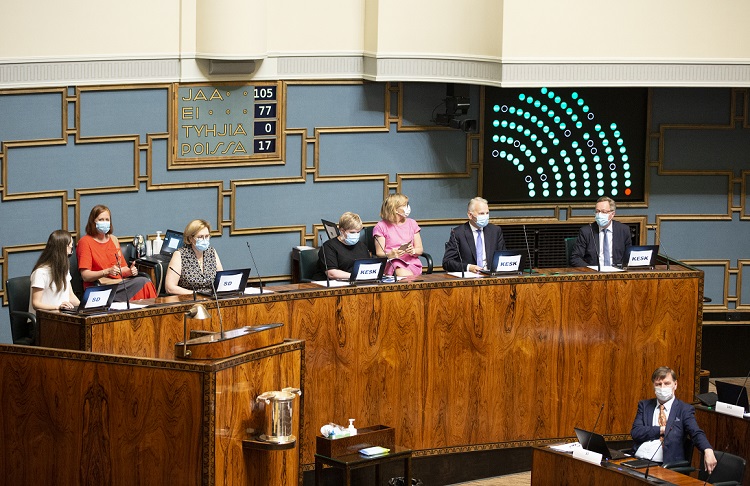
The parliament on Wednesday passed the social and healthcare (Sote) reform bill after a long process.
The legislation was passed by votes 105 votes to 77 with no abstention. Seventeen lawmakers, however, remained in the House.
The law will enter into force by early 2023. It will transfer the responsibility of providing health and social services to the provincial level from 293 municipalities. At the provincial level, there will be 21 welfare regions and the Helsinki Uusimaa region. The current government is planning a provincial tax system to finance the services. The overall taxation level would not increase, though.
The aim of the health, social and rescue services reform is to reduce inequalities in health and wellbeing; safeguard equal and quality health, social and rescue services for all; improve the availability and accessibility of services; ensure the availability of skilled labour; respond to the challenges of changes in society; curb the growth of costs; and improve safety.
A total of four wellbeing services regions would be established in the Uusimaa, based on the special arrangements made for Uusimaa. The City of Helsinki would also in the future be responsible for organising healthcare, social welfare and rescue services. In addition, the joint county authority for the Hospital District of Helsinki and Uusimaa would be responsible for organising specialised medical care in Uusimaa.
The responsibility for organising healthcare would be divided between the wellbeing services counties in the Region, the City of Helsinki and the joint county authority for the Hospital District of Helsinki and Uusimaa as separately laid down by law and in an agreement on the organisation of services.
In the wellbeing services counties, rescue services would be a separate sector working in parallel with the healthcare and social welfare sector.
The level of rescue services in the wellbeing services counties should correspond to national, regional and local needs and the counties should prepare for accidents and threats in their areas.
The operation of hospital districts and special care districts would be transferred to the wellbeing services regions.
Similarly, the responsibility for organising the services of school social workers and school psychologists would be transferred to the wellbeing services counties. Both the wellbeing services counties and the municipalities would be in charge of promoting health and wellbeing. The municipalities would assume responsibility for the organisation of environmental healthcare as a whole.
Efforts to amend the Finnish health and welfare system had continued since 2006, but no reforms had reached the parliamentary vote stage due to constitutional law problems or political disagreements.
Following Wednesday's parliamentary vote, Prime Minister Sanna Marin hailed in social media the reform as "historic."
However, the opposition criticized the reform for lack of incentives for the public sector to become more efficient.
Online illegal wildlife trade poses risks to biodiversity: study
Finland to host Arctic summit of EU leaders in September
Woman killed in road mishap in Helsinki
Man to face charges for hoisting Swastika flag in yard
Belarus to close embassy in Finland
15 to face trial for producing, selling cannabis in Helsinki

Editor-in-Chief Ofiul Hasnat
Published by Finnish News Network (FNN)
Heporinne 4 B 45
01200 Vantaa, Finland.
E-mails : [email protected]