
mRNA may be used as 2nd dose, if vaccination began with AstraZeneca
Published : 27 May 2021, 22:30
Updated : 27 May 2021, 22:33
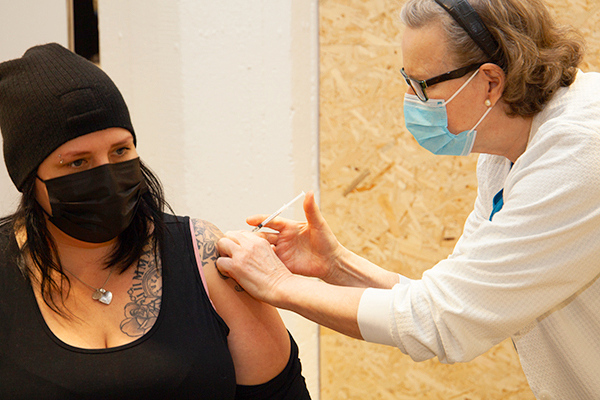
People will now be able to take an mRNA vaccine even, if the vaccination series began with the AstraZeneca adenovirus vector vaccine, said the Finnish Institute for Health and Welfare (THL) in its guidelines issued on Thursday.
The THL issued the guidelines for the use of different coronavirus vaccines. The policies apply to the targeting of mRNA and adenovirus vector vaccines to different age groups, and the intervals between the first and second doses of the vaccines.
Those over the age of 65 may be given two different vaccine preparations in exceptional cases.
“Our recommendation remains that those aged 65 and over should continue their vaccination series with the coronavirus vaccine they had received earlier if no medical impediment has emerged for its use. However, a person who was given the AstraZeneca vaccine and refuses to take a second dose of AstraZeneca, may be given an mRNA vaccine now as those who are in a high-risk group have mostly been vaccinated and as mRNA vaccines are now more easily available”, said Emma Kajander, Specialist Physician at THL.
“Taking a second dose of the vaccine is very important for ensuring that the protection afforded by the vaccine would be as strong and enduring as possible.”
About 365,000 people in Finland have received the AstraZeneca vaccine. A very rare blood coagulation disorder has been linked with the adenovirus vaccines which has been detected mainly among persons under the age of 65.
Already now everyone has the option to start their series of vaccines with the mRNA vaccine - either the Moderna or Biontech-Pfizer vaccine.
Those under the age of 65 will be given only the mRNA vaccines – the Moderna and Biotech-Pfizer vaccines. The mRNA vaccines are administered also to those under 65 who were given the AstraZeneca vaccine as their first dose.
“We are expecting research results in early June on administering different vaccines to the same person. We know that the use of different coronavirus vaccines back-to-back can cause more side-effects such as fever, muscle pains, and fatigue, which last a few days. However, available research results, experience, and prior immunological knowledge do not give cause for concern about the overall safety or effectiveness of the vaccines. Therefore, it is possible to give different vaccine preparations to the same recipient already now”, said THL Chief Physician Hanna Nohynek.
Persons under 65 may not get an adenovirus vector vaccine even if they want the AstraZeneca vaccine.
“The reason for this is that in today's epidemic situation there is no medical justification for giving an adenovirus vector vaccine to those under the age of 65. With them, the very small risk of blood coagulation linked with the AstraZeneca and Johnson & Johnson vaccines is greater than among those who are older”, Nohynek added.
The interval for mRNA vaccines remains at 12 weeks. The interval may be shortened only for medical reasons, such as the start of cancer treatment, or for well-founded personal reasons.
A long interval between doses reinforces the protective effect of the vaccine and provides the protection given by the first vaccination to as many people as possible.
The interval for the AstraZeneca vaccine will be 8-12 weeks. The interval can be shortened from 12 weeks, because it will not slow the progression of coronavirus vaccinations. Shortening the interval between doses of the mRNA vaccines will be reconsidered once all of those over the age of 16 have been given their first doses of the vaccine.
Meanwhile, the Johnson & Johnson coronavirus vaccine, which has been given a sales licence in the EU, is an adenovirus vector vaccine like AstraZeneca. It is not being included in the Finnish vaccine programme for now.
Online illegal wildlife trade poses risks to biodiversity: study
Finland to host Arctic summit of EU leaders in September
Woman killed in road mishap in Helsinki
Man to face charges for hoisting Swastika flag in yard
Belarus to close embassy in Finland
15 to face trial for producing, selling cannabis in Helsinki

Editor-in-Chief Ofiul Hasnat
Published by Finnish News Network (FNN)
Heporinne 4 B 45
01200 Vantaa, Finland.
E-mails : [email protected]