
Silver jubilee of dorniers aircraft observed
Published : 13 May 2020, 02:22
Updated : 13 May 2020, 10:08
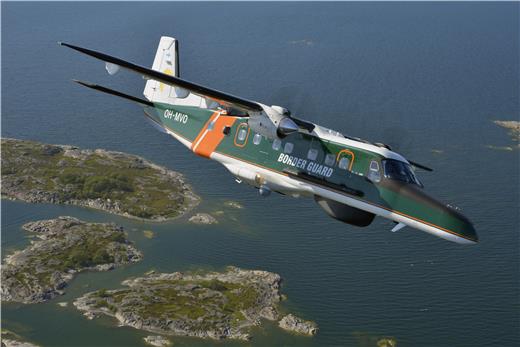
The Air Patrol Squadron of the Finnish of Border Guard received the first of its two Dornier 228 surveillance aircraft on the 12th of May 1995 when it landed in Turku after a ferry flight from Oberpfaffenhofen, Germany.
Over the past 25 years, OH-MVO and OH-MVN have flown for more than 20,000 flight hours, performing, in addition to Border Guard and Coast Guard duties, auxiliary flights for many authorities in missions where the capabilities of the aircraft and their surveillance equipment are invaluable.
Due to the exceptional circumstances, the 25th anniversary was celebrated at the Border Guard’s Turku base under special arrangements, but most of the personnel currently operating the equipment managed to celebrate it in one way or another, said the Finnish Border Guard in a press release.
The goal has already been set for the 30th anniversary celebrations, which it is hoped can be realized in a more traditional manner.
The main part of the flight hours of “November” and “Oscar” have been flowing on sea, performing border control and environmental surveillance.
No other Finnish aircraft has equipment specifically suitable for detecting, measuring and documenting oil spills, as well as trained crew. These unique capabilities can also be used to effectively implement land border control, search and rescue missions over land and at sea, fisheries control, passenger transport, and creating maritime situational picture of critical areas. The first flight missions in the aviation history of the Border Guard were related to the chasing of smugglers.
The Dorniers encounter smugglers mainly in the Mediterranean while participating in the Frontex joint operations. Even then, the aim is to stay as unobtrusive as possible, so that it doesn’t happen like it did in the 30s, when even shots were fired between smugglers and the aircraft! Rare, but even more interesting tasks have been, e.g., counting flights of gray seals, making surveys of spawning grounds for migratory fish, and a few ambulance flights, despite the aircraft not even having the special equipment required for that purpose.
The upcoming 30th anniversary celebrations in 2025 may also be a farewell party. Despite the mid-life update of the surveillance equipment installed in the early 2010s, these efficient workhorses are at the end of their lifecycle.
In all respects, the aircraft and equipment no longer meet today’s requirements. Aging equipment requires a lot of time-consuming and expensive maintenance, which consumes resources and impairs usability, said the press release.
IAEA team visits Finland to evaluate radiation emergency preparedness
Finland to redefine ties with Russia after Ukraine war ends: Stubb
Birth rate remains lower than death in Finland in Jan-July period
Online illegal wildlife trade poses risks to biodiversity: study
Finland to host Arctic summit of EU leaders in September
Woman killed in road mishap in Helsinki

Editor-in-Chief Ofiul Hasnat
Published by Finnish News Network (FNN)
Heporinne 4 B 45
01200 Vantaa, Finland.
E-mails : [email protected]