
Mandela Day inspires South Africans, migrants to promote unity against xenophobia
Published : 19 Jul 2026, 11:46
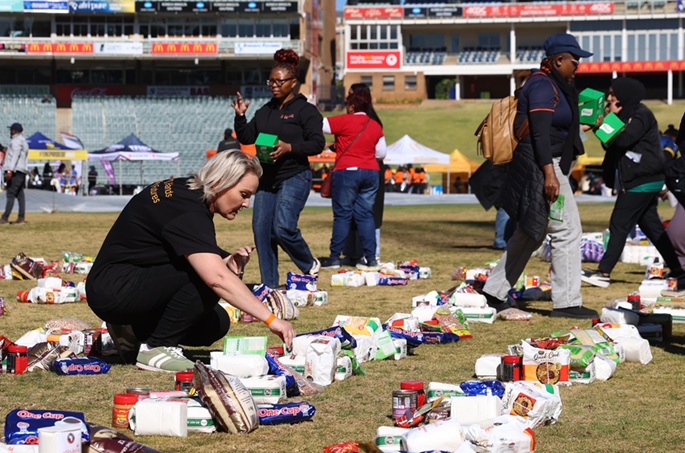
As volunteers swept litter from the streets of Johannesburg's Soweto on Saturday, South Africans worked shoulder to shoulder with migrants from across the continent, turning Nelson Mandela International Day into more than a day of community service, also a reminder of the values of solidarity, dignity and shared humanity, reported Xinhua.
Observed annually on July 18, Nelson Mandela International Day encourages people to devote at least 67 minutes to community service in honor of the 67 years the late anti-apartheid leader devoted to the struggle for justice, equality and human dignity.
Across South Africa, individuals, businesses, faith-based organizations and civic groups marked the occasion by cleaning neighborhoods, serving meals, donating clothing and supporting vulnerable communities. In many places, the activities also became opportunities to promote social cohesion and reject xenophobia at a time when migration remains a sensitive issue.
In Soweto, residents joined migrants from Zimbabwe, Malawi, Mozambique and other African countries to clean public spaces and distribute food in the neighborhoods.
"Mandela taught us that our shared humanity is greater than our differences. We honor his legacy by standing together as Africans and rejecting hatred," said Thandolwenkosi Maseko, a community volunteer from Soweto.
For Farai Chiweshe, a Zimbabwean electrician who has lived in Johannesburg for nearly a decade, Mandela Day is a reminder that ordinary people have the power to build stronger communities.
"When South Africans and migrants work side by side, we realize we have the same hopes for our families and communities. Unity begins with simple acts of kindness," he said.
In Alexandra township, Jean-Bosco Ilunga, from the Democratic Republic of the Congo, joined local volunteers to repaint classrooms and distribute food parcels.
"Days like this allow people to know one another beyond nationality. Once we build relationships, fear and prejudice begin to disappear," he said.
Raymond Rutendo Mafunga, director of Ruemaf Development Projects, a Johannesburg-based consultancy firm, said Nelson Mandela's legacy offers an important lesson as South Africa continues to grapple with migration-related tensions.
"Mandela envisioned a South Africa founded on human dignity, equality and respect for all people. Those values should continue to guide how we engage with migration today," Mafunga said.
He added that while governments have a responsibility to manage migration through lawful and orderly systems, communities also have a duty to reject violence and discrimination.
"Addressing illegal immigration is important, but it should never be used to justify xenophobia or attacks on innocent people," Mafunga said, adding that if communities know one another better and work together, fear and mistrust will gradually disappear.
"Building social cohesion is everyone's responsibility," he said.
South Africa has experienced periodic outbreaks of xenophobic violence over the years, often linked to economic hardship, unemployment and competition for limited resources.
For many participants, Mandela Day was not only a day of service but also a renewed commitment to the ideals of Ubuntu, reminding South Africans that the country's strength lies in its diversity and in the shared humanity that Mandela championed throughout his life.
"Today is about more than cleaning streets or serving food," said Maseko. "It was about proving that Ubuntu is alive and that we can overcome division through understanding, kindness and respect."
Iran says hit LPG ship seeking to cross Hormuz
EU, China agree to keep bilateral trade ties stable, hold next meeting in March
3 Saudis killed in attacks on Riyadh's King Khalid Int'l Airport
Powerful quake rattles Panama as authorities mobilize response
Trump hails Russia deal to supply diesel amid Zelenskyy’s criticism
US sanctions on ICC draw criticism from UN, member states

Editor-in-Chief Ofiul Hasnat
Published by Finnish News Network (FNN)
Heporinne 4 B 45
01200 Vantaa, Finland.
E-mails : [email protected]