
Israeli strike casting shadow
Iran not decided on MoU with US, Trump says deal ´very close´
Published : 14 Jun 2026, 22:19
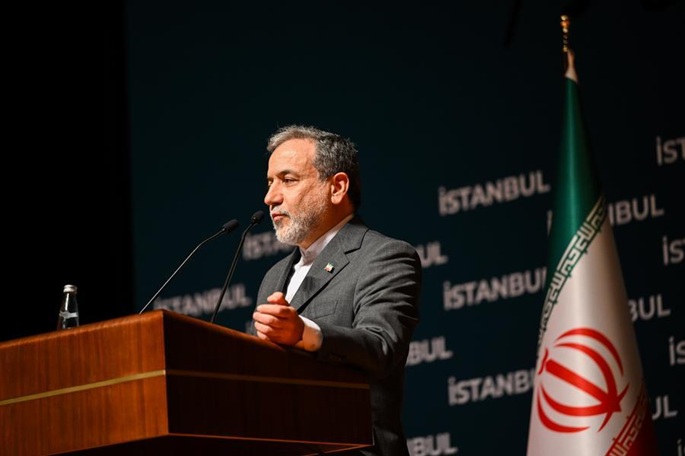
Iran has not yet made and announced its final decision on a proposed memorandum of understanding (MoU) with the United States and is still reviewing it, Iran's semi-official Fars news agency reported on Sunday, said Xinhua.
The political, legal and technical dimensions of the proposals are still under careful review by the country's experts and decision-makers, Fars reported, citing a source close to the Iranian negotiation team.
The source stressed that any decision on the potential MoU will be made based on safeguarding national interests, observing Iran's red lines and receiving the necessary guarantees.
Meanwhile, the news agency reported on Sunday that a Qatari delegation had traveled to Tehran for consultations with Iranian officials and to review the latest developments pertaining to the diplomatic process.
On Saturday, Pakistan's Prime Minister Shehbaz Sharif wrote on X that the peace deal between the United States and Iran was expected to be finalized within the next 24 hours.
U.S. President Donald Trump said on Saturday that a peace deal with Iran was scheduled to be signed on Sunday and that the Strait of Hormuz would reopen immediately afterward.
However, Iranian Foreign Ministry spokesperson Esmaeil Baqaei reportedly denied that a MoU would be signed on Sunday, citing what he described as "the other side's hesitation."
In an interview with state-run IRIB TV on Friday night, Iran's Foreign Minister Seyed Abbas Araghchi said the signing of the MoU could take place within the next few days.
He added that once finalized, the MoU would be signed digitally by both sides in their respective countries and then announced.
Araghchi noted that following the potential signing, both parties would commit not to initiate any further war and would begin a second stage of negotiations, scheduled within 60 days to reach a final agreement, focusing mainly on Iran's nuclear program and sanctions removal.
He also said the proposed MoU would include provisions to end the war on all fronts, including Lebanon, and would require Israel to withdraw from the occupied areas.
Other key issues in the MoU include reopening of the Strait of Hormuz, fully lifting the U.S. anti-Iran naval blockade, and releasing Iran's frozen assets, Araghchi said.
In recent weeks, Iran and the United States have exchanged several peace proposals through Pakistan's mediation and have been working to finalize an MoU aimed at ending the war.
Meanwhile, Trump claimed on Sunday a U.S.-Iran deal is "very close," urging all parties to stand down.
"We are very close to a Deal that will bring peace to the region, including to Lebanon, and all sides should stand down," Trump wrote on his Truth Social.
"This morning's attack on Beirut should not have happened, particularly on a special day when we are so close to a Peace Deal with Iran," said Trump, claiming the attack as "very small and meaningless" during which "nobody was hurt, injured, or killed" and "should not disrupt this important process."
"There should be no more attacks by Israel anywhere in Lebanon, but there should also be no more attacks by any other party, including Hezbollah, against Israel," he said.
Also on Sunday, U.S. Defense Secretary Pete Hegseth said that the United States and Iran were still on track to sign a memorandum of understanding (MoU) on Sunday, which would reopen the Strait of Hormuz and lift the U.S. blockade on Iranian ports.
"From all I know, we are on track. It's not a matter of if, it's a matter of when," Hegseth told CBS News.
"If the blockade comes off, then you pull back and you allow shipping to flow, just like Iran needs to allow shipping to go through the straits," Hegseth said. "But we can snap that blockade back at any point."
Iran has not yet made and announced its final decision on the proposed MoU with the United States and is still reviewing it, Iran's semi-official Fars news agency reported on Sunday.
Israel's strike in Beirut casting shadow over emerging US-Iran deal
The Israeli military struck a Hezbollah headquarters on Sunday in the Dahieh district, south of Beirut, triggering warnings of retaliation from Iran and casting new uncertainty over an emerging U.S.-Iran deal.
The Israel Defense Forces (IDF) said in a statement that Hezbollah militants used the headquarters to promote "terrorist" attacks against Israeli civilians and IDF forces operating in southern Lebanon.
Israeli Prime Minister Benjamin Netanyahu and Defense Minister Israel Katz said in a joint statement that the attack followed Hezbollah firing into Israeli territory, adding that "Israel will not tolerate firing into its territory."
Lebanon's National News Agency said the Israeli attack killed at least three people and injured 15 others.
The attack came after Israel carried out strikes in southern Lebanon earlier this month, prompting Iran to launch missile attacks against Israel and triggering the most serious escalation between the two sides since the ceasefire reached in April.
On Monday, Iran warned that any further Israeli "aggression and malicious acts," including in southern Lebanon, would trigger a much more "severe and crushing" response from Tehran.
Following the fresh Israeli attack on Sunday, Iranian Parliament Speaker Mohammad Bagher Ghalibaf said on social media platform X that Israel's new "aggression" against Beirut once again demonstrated that the United States lacks either the will or the ability to fulfil its commitments.
"The bad cop and good cop game has become outdated. If you lack the will and ability to fulfill your commitments, speaking of continuing the path is not possible," Ghalibaf added.
Reacting to the Israeli attack in an interview with Iran's Defa Press news agency, Mohammad-Jafar Asadi, deputy inspector of the country's main military command Khatam al-Anbiya Central Headquarters, said, "undoubtedly, these crimes will not go unanswered."
In a later statement, the IDF said it is preparing for possible fire into Israel within hours. The IDF remains on high alert, ready for both defensive and offensive scenarios, it added.
The developments occur as Iran and the United States are reportedly very close to signing a peace memorandum of understanding (MoU), while Tehran insists the agreement must bring an end to hostilities on all fronts, including Lebanon.
AAP convenor Kejriwal and AISA's Neha Bora held amid protests in India
Iran says hit LPG ship seeking to cross Hormuz
EU, China agree to keep bilateral trade ties stable, hold next meeting in March
3 Saudis killed in attacks on Riyadh's King Khalid Int'l Airport
Powerful quake rattles Panama as authorities mobilize response
Trump hails Russia deal to supply diesel amid Zelenskyy’s criticism

Editor-in-Chief Ofiul Hasnat
Published by Finnish News Network (FNN)
Heporinne 4 B 45
01200 Vantaa, Finland.
E-mails : [email protected]