
US military launches fresh strikes in Iran
Iran wants blockade lift in return for restoring Hormuz shipping
Published : 28 May 2026, 02:28
Updated : 28 May 2026, 10:21
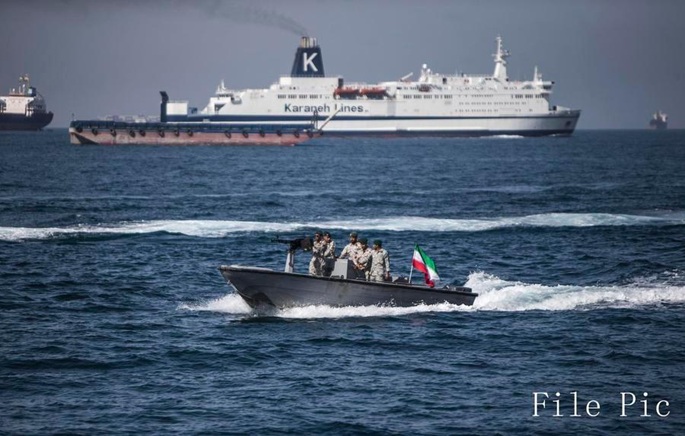
The U.S. military carried out fresh overnight strikes in Iran, targeting a military site that Washington said posed a threat to U.S. forces and commercial vessels in the region, multiple U.S. media outlets reported on Wednesday, reported Xinhua.
U.S. forces also intercepted drones launched from Iran, according to CBS News, citing a U.S. official.
The official described the strikes as defensive, asserting the U.S.-Iran ceasefire is still considered to be holding.
Meanwhile, Iran has a draft of an initial, unofficial framework for a memorandum of understanding (MoU) with the United States, which demands U.S. military withdrawal and naval blockade lift, several media outlets reported Wednesday, citing Iran's state-run IRIB TV, said Xinhua.
In return, Iran has committed to restoring commercial shipping through the Strait of Hormuz to pre-war levels within one month and managing ship traffic through the strait with Oman, the reports said, adding military vessels are not included in the agreement.
According to the reports, the United States has agreed to lift its naval blockade of Iranian ports, recognize Iran's management of maritime traffic through the Strait of Hormuz in cooperation with Oman, accept Tehran's designated transit routes for vessels, and withdraw U.S. forces from areas surrounding Iran.
Any final U.S.-Iran agreement reached within a 60-day negotiation period would be approved in the form of a binding United Nations Security Council resolution, the reports said.
Under the deal, Iran will take no action without "tangible verification," the reports added
Iranian Foreign Ministry spokesman Esmaeil Baghaei confirmed on Saturday that Iran and the United States are working to finalize an MoU on ending the war.
"Our intention has been first to agree on an MoU consisting of 14 clauses," Baghaei told IRIB TV, adding that the two sides aimed to reach a final agreement "within a period of 30 to 60 days" covering issues such as the cessation of U.S. maritime attacks and the release of Iranian frozen assets.
Meanwhile, The White House on Wednesday dismissed an Iranian state media report on a framework deal between the United States and Iran as "a complete fabrication."
"Nobody should believe what Iranian state media is putting out," the White House said on its Rapid Response account on X.
"As President (Donald) Trump has said, negotiations are proceeding nicely and he has made his redlines clear. President Trump will only make a good deal for the American people, which must ensure that Iran can never have a nuclear weapon," White House spokeswoman Olivia Wales also told Fox News.
During a cabinet meeting currently underway on Wednesday at the White House, Trump said the United States is "not satisfied" with the deal yet with Iran.
US sanctions Iran's Persian Gulf Strait Authority
The Persian Gulf Strait Authority, an Iranian authority overseeing shipping control in the Strait of Hormuz, has been added to the Specially Designated Nationals List in a fresh sanction move under the U.S. Economic Fury campaign, the U.S. Treasury Department said on Wednesday, reported Xinhua.
In a press release posted on its website on Wednesday, the department's Office of Foreign Assets Control claimed the strait authority sought to impose illegitimate tolls on commercial traffic and force vessels to follow Iranian direction in return for safe passage.
It also warned that anyone cooperating with the authority may be exposed to sanctions risk.
"The Iranian military's latest attempt to extort global maritime trade is proof that Economic Fury has left the regime desperate for cash," said U.S. Secretary of the Treasury Scott Bessent.
On May 18, Iran launched the Persian Gulf Strait Authority, a new body to manage the Strait of Hormuz. In a statement posted on X on May 20, the authority defined its supervisory jurisdiction over the strait, noting that vessels transiting the area through the Strait of Hormuz are required to coordinate with Iranian authorities and obtain authorization.
Trump rules out sanctions relief for Iran uranium handover
U.S. President Donald Trump said on Wednesday that Iran would not receive sanctions relief in exchange for giving up its stockpile of highly enriched uranium.
"No, no, not at all. Not sanctions relief, no," Trump said when asked if the current framework would mean Iran giving up its highly enriched uranium in exchange for sanctions relief in a brief phone interview with PBS News.
"They're gonna give up their highly enriched uranium not for sanctions relief. No, no, not at all," the president added.
Speaking during a cabinet meeting at the White House on Wednesday, Trump said he will not rush into a deal with Iran because of midterm political concerns, warning that Washington remains prepared to resume military action if ongoing negotiations fail to produce an agreement favored by the United States.
Trump warns Oman not to interfere amid fragile U.S.-Iran talks
U.S. President Donald Trump on Wednesday warned Oman not to interfere as fragile talks with Iran continue, claiming the United States will "watch over" the Strait of Hormuz.
Asked if he would accept a short-term deal that would allow Iran and Oman to control the strategic waterway, Trump told reporters during a cabinet meeting at the White House: "No, the strait's going to be open to everybody."
"It's international waters. Nobody's going to control it. We're going to watch over it. We'll watch over it, but nobody's going to control it," he said. "That's part of the negotiation that we have."
"Oman will behave just like everybody else or we'll have to blow 'em up," Trump warned.
Trump's remarks came after Iranian state TV reported that it had obtained an unofficial draft of a Iranian-U.S. agreement that would restore commercial shipping through the Strait of Hormuz to prewar levels within a month, with Iran and Oman jointly managing traffic. The framework also would see the United States lift its blockade of Iranian ports and withdraw military forces from Iran's vicinity.
The U.S. side has dismissed the Iranian report as "a complete fabrication."
Trump suggests ´new President´ for Ukraine, day after diesel deal with Russia
AAP convenor Kejriwal and AISA's Neha Bora held amid protests in India
Iran says hit LPG ship seeking to cross Hormuz
EU, China agree to keep bilateral trade ties stable, hold next meeting in March
3 Saudis killed in attacks on Riyadh's King Khalid Int'l Airport
Powerful quake rattles Panama as authorities mobilize response

Editor-in-Chief Ofiul Hasnat
Published by Finnish News Network (FNN)
Heporinne 4 B 45
01200 Vantaa, Finland.
E-mails : [email protected]