
US, Israel discuss possible renewed fighting against Iran
US refuses to offer ´tangible´ concession to Iran's proposal
Published : 17 May 2026, 23:00
Updated : 17 May 2026, 23:07
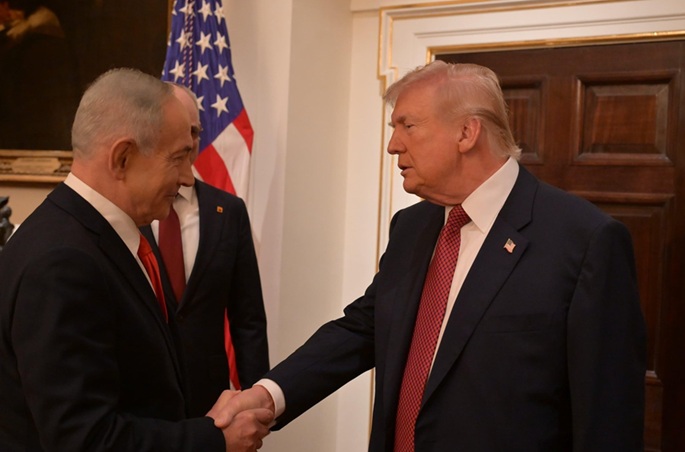
Israeli Prime Minister Benjamin Netanyahu and U.S. President Donald Trump on Sunday discussed the possibility of renewing fighting against Iran over phone, reported Xinhua, quoting Israel's state-owned Kan TV news.
The broadcaster, citing a senior Israeli official, said the United States is expected to carry out attacks jointly with Israel if it resumes the war against Iran.
Later in the evening, Netanyahu convened a cabinet meeting, during which the multiple fronts on which Israel is fighting were discussed, a government official told Xinhua.
The developments came after Trump signaled that Washington could escalate its confrontation with Iran, warning in a post on his social media platform that "for Iran, the clock is ticking, and they better get moving, fast, or there won't be anything left of them."
Iran, the United States and Israel reached a ceasefire on April 8 after 40 days of fighting that started with U.S. and Israeli attacks on Iran on Feb. 28.
Following the truce, Iranian and U.S. delegations held one round of peace talks in Pakistan's Islamabad on April 11 and 12, which failed to yield an agreement.
Over the past weeks, the two sides have reportedly exchanged several proposed plans outlining conditions for ending the conflict through Pakistani mediation.
US refuses to offer "tangible" concession to Iran's peace proposal
Iran's semi-official Mehr news agency reported on Sunday the United States has put forward "maximalist" conditions in response to Tehran's latest peace proposal, refusing to offer any "tangible" concession.
Mehr said the United States seeks to obtain the concessions it failed to get from Iran during the 40-day war against the country without offering any tangible ones in return.
It added Iran will only begin talks with the United States if Washington takes trust-building steps, including ending the war on all fronts, especially Lebanon, lifting sanctions, releasing Iranian frozen assets, paying reparations for war damages and recognizing Iran's sovereignty over the Strait of Hormuz.
Mehr reported that in response to Iran's proposal, the United States demanded "maximalist" terms -- rejecting any reparations or asset releases, and insisting Iran transfer its entire 400 kg enriched uranium stockpile to the United States.
According to the report, Washington has also demanded long-term restrictions on Iran's nuclear sector, and has tied any halt to fighting to the start of negotiations.
Iran sent its response to the latest U.S. proposed text for ending the war to the Pakistani mediator on May 10.
In a post on social media platform X on Friday, Iranian newspaper Tehran Times said the United States has rejected Iran's 14-point peace proposal, once again reiterating its "coercive stance, particularly regarding the nuclear issue."
Iran, the United States and Israel reached a ceasefire on April 8 after 40 days of fighting that started with U.S. and Israeli attacks on Tehran and other Iranian cities on Feb. 28.
Following the truce, Iranian and U.S. delegations held one round of peace talks in Pakistan's capital Islamabad on April 11 and 12, which failed to yield an agreement.
Over the past weeks, the two sides have reportedly exchanged several proposed plans outlining conditions for ending the conflict through Pakistan.
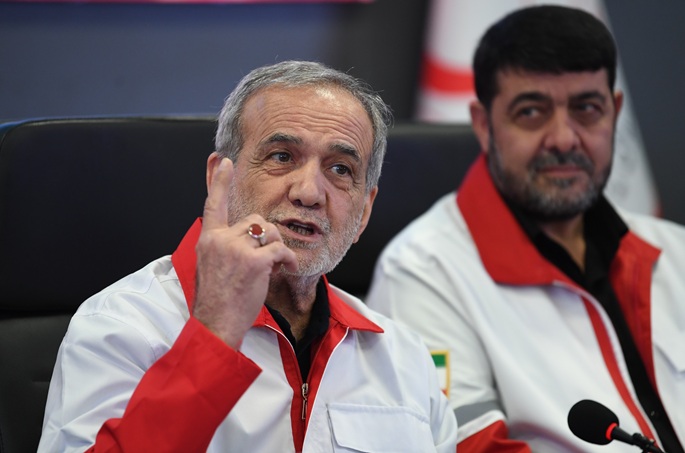
Iran President slams US-Israeli strikes for targeting internal stability
Accusing Western powers and their regional allies of orchestrating a coordinated campaign of subversion, Iranian President Masoud Pezeshkian has stated that the direct military actions launched against the country were specifically calibrated to disrupt domestic order and destabilise the governing establishment, reported ANI.
According to a report by Iranian state media Press TV, the president positioned the external military operations as a direct threat to the core architecture of the nation's leadership.
Elaborating on what Tehran perceives as the strategic intent behind the recent hostilities, the Iranian president explicitly defined the underlying motives driving the offensive.
"The primary objective of the United States and the Zionist regime in attacking Iran was to create internal instability and attempt to weaken and overthrow the Islamic system," President Pezeshkian said.
This overarching objective of structural disruption, according to Tehran, is heavily influencing the current diplomatic deadlock, with Iranian media reporting on Sunday that the United States had failed to make any concrete concessions in its latest response to Iran's proposed agenda for negotiations to end the war.
Detailing the specific terms of the American proposal that triggered this assessment, the Fars news agency said Washington had presented a five-point list, which included a demand for Iran to keep only one nuclear site in operation and transfer its stockpile of highly enriched uranium to the United States.
Furthermore, the US also refused to release "even 25 per cent" of Iran's frozen assets abroad or pay any reparations for the damage inflicted on Iran during the war, which broke out on February 28, according to Fars.
The state-aligned media outlet added that the US had conditioned the cessation of hostilities on all fronts on the start of negotiations, a prerequisite that Tehran views as a strategic manoeuvre rather than a genuine peace overture.
Offering a similarly critical assessment of this diplomatic deadlock, the Mehr news agency, meanwhile, said, "The United States, offering no tangible concessions, wants to obtain concessions that it failed to obtain during the war, which will lead to an impasse in the negotiations."
This media backlash comes after Tehran put forward its own comprehensive framework aimed at regional de-escalation, which stands in stark contrast to Washington's terms.
In its proposal, Iran had called for an end to the war on all fronts, including Israel's campaign in Lebanon, as well as a halt to the US naval blockade on Iranian ports in place since April 13.
Additionally, Iran demanded a complete dismantling of the economic restrictions imposed by Washington.
It also called for lifting all US sanctions and the release of Iranian assets frozen abroad under longstanding US sanctions, according to the Iranian foreign ministry in a press conference last week.
On the highly sensitive question of vital maritime trade corridors, Fars said the Iranian proposal had emphasised that Tehran would continue to manage the strategic Strait of Hormuz, a vital energy conduit which it has largely kept closed since the start of the war.
As diplomatic channels stalled and the impasse deepened, Tehran accompanied its media messaging with sharp military warnings directed at the White House to signal its readiness for a prolonged standoff.
On Sunday, Iranian armed forces spokesman Abolfazl Shekarchi warned US President Donald Trump against restarting attacks on Iran.
Delivering a stern message via official broadcast networks, the military representative indicated that any further external aggression would meet a catastrophic domestic response.
"The desperate American president should know that if his threats are carried out and Islamic Iran is attacked again, his country's resources and military will be confronted with unprecedented, offensive, surprising and tumultuous scenarios," he said, according to state television.
7 Palestinians killed in Israeli attacks across Gaza
9 killed in shooting in US Pennsylvania
Abbas postpones Palestinian presidential, legislative elections to Sept. 11, 2027
12 killed, 309 injured in attack on Riyadh airport
Opposition leader announces INDIA bloc protest against CEC on Oct 12
Trump suggests ´new President´ for Ukraine, day after diesel deal with Russia

Editor-in-Chief Ofiul Hasnat
Published by Finnish News Network (FNN)
Heporinne 4 B 45
01200 Vantaa, Finland.
E-mails : [email protected]