
Israel kills 16 in Lebanon
Vessels breach US blockade on Iranian ports, US claims zero traffic
Hezbollah agrees to ceasefire with caution
Published : 16 Apr 2026, 02:33
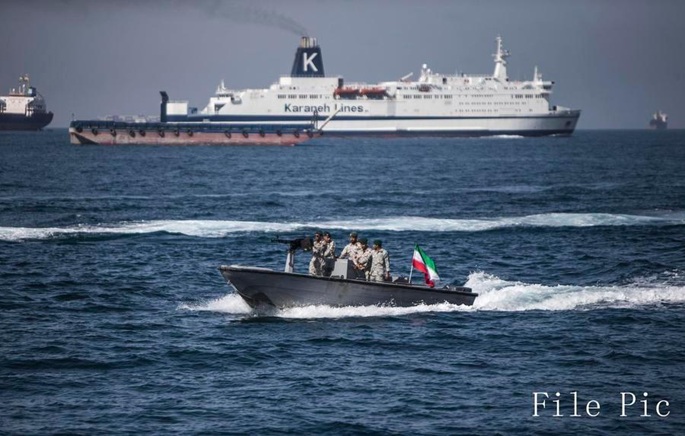
Some vessels have breached a U.S. blockade imposed on ships entering and exiting Iranian ports, a London-headquartered maritime analytics firm said in a report released on Wednesday, reported Xinhua.
According to Windward, an Iran-flagged landing craft departed Bandar Abbas on Tuesday, transited the Strait of Hormuz, and entered the Gulf of Oman, representing a clear example of a successful blockade breach.
The report also said that between Tuesday and Wednesday, an empty, falsely flagged and U.S.-sanctioned very large crude carrier was observed entering the Strait inbound via Iranian territorial waters. The vessel likely used coastal routing to reduce exposure and was similarly assessed as a blockade-breaking movement.
Despite growing enforcement, the report said the U.S. blockade has begun to shape vessel behavior in real time but has not yet halted movement through and around the Strait of Hormuz.
According to Windward, transit through the Strait remained active on Tuesday, with a total of 19 vessels crossing, including five inbound and 14 outbound. Seven of these vessels were Iran-flagged.
Inbound traffic consisted of two tankers and three cargo vessels, while outbound traffic included two tankers, one bulk carrier and 11 cargo vessels.
It added that vessel behavior shows a fragmented response to the blockade, including turnarounds, drifting and dark activity, indicating hesitation and real-time adaptation rather than uniform compliance.
However, the U.S. military claimed Wednesday that no vessels have made it past U.S. forces to enter or exit Iranian ports in the first 48 hours of the U.S. blockade.
U.S. President Donald Trump announced a blockade of the Strait of Hormuz starting Monday following stalled talks between Washington and Tehran in Islamabad over the weekend.
Meanwhile, the U.S. military claimed Wednesday that no vessels have made it past U.S. forces to enter or exit Iranian ports in the first 48 hours of the U.S. blockade.
"During the first 48 hours of the U.S. blockade on ships entering and exiting Iranian ports, no vessels have made it past U.S. forces," U.S. Central Command said in a post on social media platform X.
"Additionally, 9 vessels have complied with direction from U.S. forces to turn around and return toward an Iranian port or coastal area," it said.
U.S. naval vessels are on patrol in the Gulf of Oman as the blockade continues, according to the command.
Meanwhile, Mahmoud Qomati, deputy head of Hezbollah's political council, said on Wednesday that the group has agreed to a ceasefire with Israel but remains cautious about its implementation.
Speaking to Al Jadeed TV, Qomati said Hezbollah would not accept a return to the 2024 arrangement, under which one side complied while Israel evaded its obligations.
He added that any effort toward reaching a ceasefire is appreciated, while warning of potential Israeli breaches.
Qomati also advised residents to avoid traveling to southern Lebanon for the time being, citing ongoing security risks.
Israel has been discussing a possible ceasefire, with its Security Cabinet set to review the option, while parallel U.S.-mediated talks involving Lebanon have made a ceasefire one of the key issues under negotiation.
A previous ceasefire in Lebanon, which had been in place since November 2024, was characterized by near-daily Israeli strikes in the country. The fragile truce collapsed on March 2, when Hezbollah launched rockets toward Israel in support of Iran, triggering intensified Israeli airstrikes across Lebanon.
16 killed in Israeli airstrikes on S. Lebanon
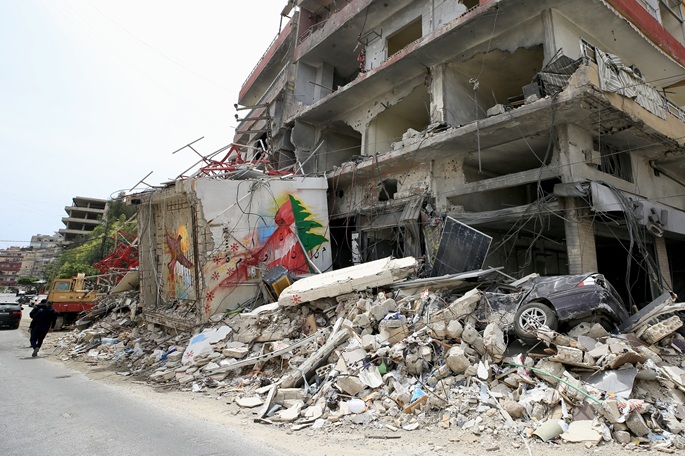
At least 16 people were killed and 12 others injured in a series of Israeli airstrikes across southern Lebanon overnight Tuesday to Wednesday, according to Lebanon's official National News Agency.
A strike on a home in the town of Jbaa killed four members of the same family. In the Qadmous area, another strike left four dead and three wounded.
Five were killed in a dawn airstrike on the town of Ansariyeh, while two others were killed and one injured in a strike on the town of Abbasiyeh. In the coastal city of Tyre, a strike on a vehicle killed a woman and wounded eight.
Meanwhile, Hezbollah said it struck Israeli soldiers and settlements along the Lebanon-Israel border with drones and rockets. It also launched attack drones at Israeli military positions in the occupied Golan Heights.
The group said the attacks were in response to Israeli ceasefire violations and ongoing strikes on southern Lebanon, vowing to continue its response until they stop.
Also on Wednesday, United Nations High Commissioner for Refugees (UNHCR) Barham Salih urged increased international support for Lebanon, warning of escalating mass displacement and humanitarian needs.
Salih said the UN launched an urgent 308-million-U.S. dollar appeal, and UNHCR requested 61 million dollars. He said some funds have been secured and distributed, with efforts underway to mobilize more.
On Wednesday, the Israeli military said it has struck over 200 Hezbollah targets in southern Lebanon in the past 24 hours.
Cross-border fighting has continued along the Lebanon-Israel border since March 2, when Hezbollah launched rockets toward Israel for the first time since a ceasefire agreed on Nov. 27, 2024, triggering intensified Israeli airstrikes across Lebanon.
On Tuesday, Israel and Lebanon held talks in Washington, where they laid out different expectations on a peace deal, according to a U.S. State Department statement. Israel insisted on Hezbollah's disarmament, while Lebanon called for a ceasefire and measures to ease the humanitarian crisis. All sides agreed to launch direct negotiations at a future time.
US, Iran edge closer on framework deal to end war: report
The United States and Iran made progress in talks on Tuesday, edging closer to a framework agreement to end the war, Axios reported Wednesday, citing U.S. officials.
As the two-week ceasefire nears its April 22 expiration, a deal is not yet guaranteed, officials said, noting that significant gaps remain between the two sides, and that reaching a full agreement will require broader consensus within Iran.
"We want to make a deal. And parts of their government want to make a deal. Now the trick is to get the whole of government over there to make the deal," a U.S. official was quoted as saying.
If a framework agreement is reached, the ceasefire would need to be extended to negotiate the details of a comprehensive deal, said the report. However, it cautioned that the details "are complicated -- you can't do that in two days," citing another U.S. official.
Both Iran and the United States on Wednesday denied reports that the two sides had reached an "in principle agreement" to extend the ceasefire.
Washington's naval blockade, cutting off Iran's oil exports, and the country's deepening economic crisis are increasing pressure on Tehran to reach a deal, said the U.S. officials.
U.S. President Donald Trump told FOX Business in an interview aired on Wednesday that the U.S.-Israeli war with Iran is "very close to being over." He has repeatedly suggested the war is nearing an end, while offering no clear timeline.
US-Iran ceasefire extension not true at this moment: WH
White House Press Secretary Karoline Leavitt said Wednesday an extension of the current U.S. ceasefire with Iran is "not true at this moment."
Leavitt said at a White House press briefing that the Trump administration is optimistic the continued negotiations could yield a deal to end the weeks-long war.
"We feel good about the prospects of a deal," she said.
Leavitt also did not confirm when talks with Iran would resume, but said if there were talks, they would continue to be held in Pakistan following stalled talks in Islamabad over the weekend.
U.S. President Donald Trump said Tuesday that fresh U.S.-Iran talks "could be happening over next two days" in Pakistan. Also, he said earlier on Wednesday that the U.S.-Israeli war with Iran is "very close to being over," without providing a clear timeline.
The two-week ceasefire is set to expire next week.
Pakistani delegation leaves for Iran to mediate next Iran-US talks
A high-level Pakistani delegation departed for Iran on Wednesday to convey key messages related to ongoing diplomatic efforts between the United States and Iran, as Islamabad intensifies its role in facilitating dialogue between the two sides, official sources told Xinhua.
Media reports citing Iranian state media that the Pakistani team, led by the army chief Asim Munir, has landed in Tehran.
The sources added that the delegation included representatives from the Ministry of Foreign Affairs, security institutions and technical experts, reflecting the multidimensional nature of the engagement.
The visit comes amid renewed diplomatic activity following earlier talks hosted in Islamabad and ongoing efforts to arrange a possible next round of negotiations between Washington and Tehran.
Russian, Saudi FMs call for immediate end to hostilities in Persian Gulf
Russian Foreign Minister Sergei Lavrov and Saudi Arabian Foreign Minister Faisal bin Farhan Al Saud stressed the need for an immediate end to all hostilities affecting coastal states of the Persian Gulf, especially attacks targeting civilian infrastructure, during a phone call on Wednesday.
The two sides exchanged views on the situation in the Strait of Hormuz following U.S.-Israeli joint military strikes against Iran and Tehran's reciprocal measures, the Russian Foreign Ministry said in a statement.
They shared the view that political and diplomatic efforts between the United States and Iran, with Pakistan's mediation, should continue.
The two ministers also spoke in favor of an inclusive dialogue involving all stakeholders, designed to work out arrangements that guarantee long-term stability and security in the region based on a balance of interests among all regional states.
Russia and Saudi Arabia stand ready to help facilitate such a dialogue, the statement said.
UAE to resume full in-person schooling from April 20
The United Arab Emirates (UAE) announced on Wednesday that full in-person education will resume across all nurseries, kindergartens, and public and private schools starting April 20.
According to a statement from the Ministry of Education, the move aims to ensure the continuity of the education process and enhance learning outcomes by returning students to classroom-based instruction.
Since early March, the UAE has shifted to distance learning across schools and universities amid regional developments.
The resumption of in-person classes comes as a temporary ceasefire between Iran and the United States has taken effect, with efforts ongoing to ease regional tensions.
Iran claims arrest of 35 "Mossad-linked" suspects
Iranian authorities claim to have apprehended 35 individuals on various charges ranging from espionage to illegal trafficking, reported ANI.
According to the Iranian state media Islamic Republic News Agency (IRNA), the group includes suspects described by the Intelligence Ministry as being "Mossad-linked," alongside arms smugglers and affiliates of separatist organisations.
The ministry confirmed that the security operations were widespread, stating that the arrests were made "in six provinces of the country." The statement, carried by IRNA, noted that the sweep targeted multiple threats to national security simultaneously.
These arrests coincide with high-level admissions regarding the extent of foreign intelligence penetration within Iran. Mossad Director David Barnea recently disclosed that the agency operated "in the heart of Tehran" during the recent military campaign involving the United States and Israel.
US confirms loss of $240m MQ-4C Triton surveillance drone
The United States has confirmed the loss of an MQ-4C Triton unmanned aerial vehicle, according to a recent mishap summary released by the United States Naval Safety Command, reported ANI.
The US high-altitude, long-endurance (HALE) maritime aircraft reportedly crashed in the Persian Gulf, with officials now confirming the incident.
Under the classification system used by the United States Department of War, any incident involving damage exceeding USD 2.5 million is categorised as a Class A mishap. Media reports citing CBS estimate the value of the reconnaissance aircraft involved in the latest incident at around USD 240-250 million.
Initial reports suggested that Iranian forces had destroyed the drone during confrontations. However, US authorities have now confirmed that the drone has "crashed.".
The United States Naval Safety Command's latest publicly available mishap summary report includes the following brief entry: "9 Apr 2026 (Location Withheld - OPSEC) MQ-4C crashed; no injury to personnel."
In a separate report, Xinhua News Agency, citing CBS News, stated that the United States has lost 24 MQ-9 Reaper drones to Iran amid escalating tensions around the Strait of Hormuz since April 1. The report added that these losses amount to an estimated USD 720 million. Depending on the variant, a single MQ-9 Reaper drone can cost USD 30 million or more.
The MQ-9 Reaper, manufactured by General Atomics Aeronautical Systems, is a remotely piloted aircraft used primarily for intelligence, surveillance and reconnaissance missions. It is also capable of carrying out precision strikes.
The drone involved in the recent crash is believed to be the MQ-4C Triton, a high-altitude, long-endurance unmanned aircraft developed by Northrop Grumman.
The platform is derived from the RQ-4 Global Hawk and is designed for maritime intelligence, surveillance and reconnaissance operations.
The MQ-4C Triton operates at altitudes above 50,000 feet for over 24 hours and has a range of approximately 7,400 nautical miles. As per Northrop Grumman, it carries a 360-degree multi-intelligence sensor suite that enables wide-area surveillance and rapid threat detection.
The aircraft can share real-time data with other military assets, which helps in coordinated operations across different domains. It provides up to four times the ISR coverage of other autonomous systems while maintaining high altitude and endurance.
According to Northrop Grumman, the platform delivers 33 per cent greater effectiveness with 60 per cent fewer flight hours at roughly half the operational cost of medium-altitude aircraft.
7 Palestinians killed in Israeli attacks across Gaza
9 killed in shooting in US Pennsylvania
Abbas postpones Palestinian presidential, legislative elections to Sept. 11, 2027
12 killed, 309 injured in attack on Riyadh airport
Opposition leader announces INDIA bloc protest against CEC on Oct 12
Trump suggests ´new President´ for Ukraine, day after diesel deal with Russia

Editor-in-Chief Ofiul Hasnat
Published by Finnish News Network (FNN)
Heporinne 4 B 45
01200 Vantaa, Finland.
E-mails : [email protected]