
Israel, Lebanon talks in US
10,000 US troops enforce blockade on vessels to and from Iranian ports
Trump says talks with Iran could begin in next 2 days
Published : 15 Apr 2026, 01:54
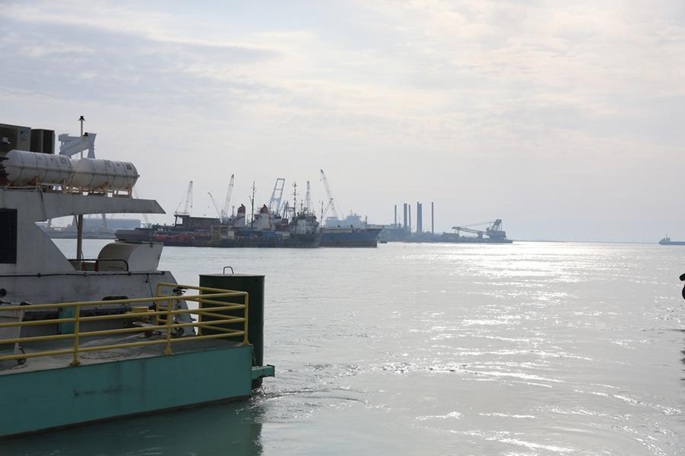
The U.S. Central Command said Tuesday that more than 10,000 troops are executing the mission to blockade ships entering and departing Iranian ports, impartially targeting vessels of all nations, reported Xinhua.
Six merchant vessels have complied with the direction from U.S. forces to turn around to re-enter an Iranian port on the Gulf of Oman, the command said on X.
"During the first 24 hours, no ships made it past the U.S. blockade," it said, noting that over 10,000 sailors, marines and airmen, along with over a dozen warships and dozens of aircraft, are executing the blockade.
The blockade covers Iranian ports and coastal areas, including all Iranian ports on the Arabian Gulf and the Gulf of Oman, it said.
At least nine commercial vessels have crossed the strait since Monday, according to the maritime data firm Kpler.
On Monday, CNN reported that there were at least 15 U.S. ships in the region that could participate in the blockade, though it was unclear where specifically the ships were.
U.S. President Donald Trump threatened on Monday that the U.S. military will "eliminate" any ship of Iran if it comes close to the U.S. blockade in the Strait of Hormuz.
"Warning: If any of these ships come anywhere close to our BLOCKADE, they will be immediately ELIMINATED, using the same system of kill that we use against the drug dealers on boats at Sea," Trump wrote on Truth Social.
Daily traffic in the strait has fallen to below 10 percent of pre-conflict levels, from more than 100 vessels before the United States and Israel launched joint military strikes against Iran on Feb. 28.
Meanwhile, Trump said Tuesday that talks with Iran could resume in Pakistan within the next two days, according to media reports.
"Something could be happening over the next two days, and we're more inclined to go there (Pakistan)," Trump told a New York Post reporter.
"It's more likely, you know why? Because the field marshal is doing a great job," Trump said, referring to Pakistani Field Marshal General Asim Munir, the country's chief of army staff, who attended the previous talks between the U.S. and Iranian negotiators on Saturday.
Washington has proposed a 20-year suspension of Iran's nuclear activities and Iran, for its part, has countered with a proposal to suspend its nuclear program for up to five years during their stalled talks in Pakistan on Saturday, according to a report from The New York Times on Monday.
Washington is not seeking a permanent ban on Iran's uranium enrichment, a compromise that would allow Tehran to argue it has not permanently relinquished its right under the Nuclear Non-Proliferation Treaty to produce nuclear fuel, the newspaper cited sources familiar with the talks as saying.
Other issues looming over the negotiations include restoring free passage in the Strait of Hormuz and ending Iran's support for proxy groups like Hamas and Hezbollah, said the report.
Meanwhile, Lebanon and Israel held their first direct talks in decades on Tuesday, with Lebanon's Ambassador to the United States, Nada Hamadeh Moawad, saying that details regarding the next round of negotiations would be announced "in due course," following what she described as a "constructive" preliminary meeting, reported ANI.
In a statement issued after the historic engagement, Moawad underscored the need for de-escalation and urgent humanitarian relief amid the ongoing conflict.
"I called for a ceasefire and the return of displaced persons to their homes," CNN quoted her as saying.
"I also called for the adoption of practical measures to alleviate the severe humanitarian crisis that Lebanon continues to endure as a result of the ongoing conflict," she added.
The envoy reiterated calls for a ceasefire, return of displaced persons, and urgent humanitarian measures, while reaffirming Lebanon's sovereignty and thanking the US for hosting the discussions.
The ambassador stated that she "reaffirmed the urgent need for the full implementation of the cessation of hostilities announcement of November 2024" and "I underscored the need to preserve our territorial integrity and state sovereignty."
Moawad further stated that she used the meeting in Washington with her Israeli counterpart, Israeli Ambassador to the United States Yechiel Leiter, to reaffirm Beirut's demand for a ceasefire between the Israel Defence Forces and Hezbollah, The Times of Israel reported.
Speaking to reporters after the talks, she described the discussions as constructive and expressed gratitude to the United States for facilitating the meeting.
"I reiterated the urgent need for the full implementation of the November 2024 cessation of hostilities agreement," the Lebanese envoy said as quoted by CNN, further referring to the earlier truce between Israel and Hezbollah that aimed at the Iran-backed group's disarmament and withdrawal from southern Lebanon.
"I emphasised the integrity of our territory and the full sovereignty of the state over all Lebanese land," she said. "I called for a ceasefire and for displaced persons to return to their homes."
Meanwhile, Israeli Ambassador to the United States Yechiel Leiter declined to commit to a ceasefire in southern Lebanon after calling his meeting with the Lebanese ambassador a "wonderful two-hour exchange" in Washington, DC.
"As for a ceasefire, we are dealing with only one thing, and I made this very clear, we are focused on the security of the residents of the State of Israel," Leiter said.
The Israeli envoy noted that both Israel and the Lebanese government are effectively on the "same side of the equation" regarding Hezbollah, and hinted at the possibility of formal and friendly ties between the two countries in the future.
However, he stressed that Israel has no plans to halt its military campaign against the militant group, which he said is "as weakened as they've ever been."
"Israelis don't wake up in the morning and look to fire missiles across the border," Leiter continued, "The missiles are being fired at our civilians - that will be put a stop to. We will not allow (Hezbollah) to continually fire missiles into our population centres," CNN quoted.
Leiter further revealed that the discussions produced "several proposals and recommendations," adding that both sides are expected to present these to their respective governments and may "reconvene in the coming weeks to continue the discussions" in Washington.
14 killed in Israeli airstrikes in Lebanon
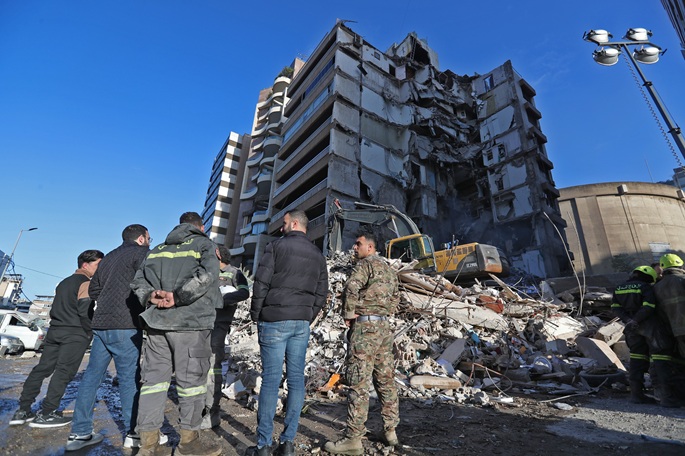
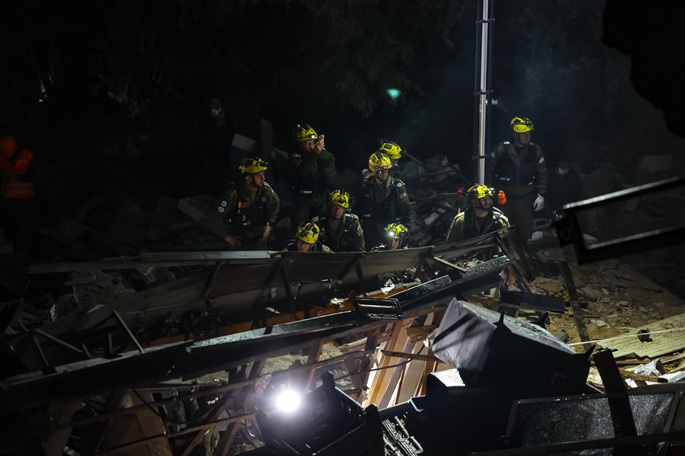
At least 14 people were killed and five others injured in Israeli airstrikes across southern and eastern Lebanon since early Tuesday, according to local reports, reported Xinhua.
In the south, Israeli warplanes hit multiple areas, killing three in the coastal town of Adloun, two people in the municipality of Arab Salim, one person in the village of Shabriha, and another two in a drone strike targeting a car shortly after midnight near Nabatieh. Three more were killed in a pre-dawn strike in the Bint Jbeil district.
In eastern Lebanon, three members of the same family were killed and another wounded in a pre-dawn airstrike on the town of Sohmor in the western Bekaa. The strikes continued into the early morning hours, destroying more than 10 homes.
An Israeli warplane also struck residential buildings in central Housh, near Tyre, causing extensive damage to homes, electricity networks, and shops. Ambulances and civil defense teams rushed to the site.
Hezbollah said that it carried out multiple drone and rocket attacks on Israeli troop positions and gatherings along the border.
Cross-border fighting has continued along the Lebanon-Israel border since March 2, when Hezbollah launched rockets toward Israel for the first time since a ceasefire on Nov. 27, 2024, triggering intensified Israeli airstrikes across southern and eastern Lebanon.
Hezbollah fries rockets toward Israel
Hezbollah said it fired rockets toward the Upper Galilee region in northern Israel on Tuesday, in response to Israeli violations of a ceasefire agreement and continued attacks on villages in southern Lebanon.
The group said in a statement that the strikes were carried out at 18:15 local time (1530 GMT), targeting 13 Israeli settlements. The attacks come amid the first ongoing talks in Washington between the Lebanese and Israeli governments.
Lebanese President Joseph Aoun said Tuesday he hopes the ongoing talks in Washington will mark the beginning of an end to the suffering of the Lebanese people, particularly in the south, as the death toll from ongoing Israeli attacks rose to 2,124, with 6,921 injured since March 2, when Hezbollah started firing rockets toward Israel in support of Iran.
Speaking during a meeting with visiting Chief of the Italian Defense Staff Luciano Portolano, Aoun also noted stability will not return to southern Lebanon as long as the Israeli army maintains a presence on Lebanese territory.
Aoun added that the only viable solution lies in the full deployment of the Lebanese army up to internationally recognized borders, making it the sole authority responsible for security in the south.
The Lebanese government has been seeking to extend state authority over all its territory, including efforts to address the issue of arms held by non-state actors such as Hezbollah. However, progress has remained slow and complex, amid continued Israeli strikes and internal political sensitivities.
US, Israel may use talks to prepare for Iran ground operation: Russia
The United States and Israel may use peace talks to prepare for possible ground military action against Iran, Russian media reported Tuesday, citing the Russian Security Council.
According to reports by TASS news agency, the council said this could happen as the Pentagon continues to build up the U.S. troop presence in the region.
The council warned that if U.S.-Iran talks fail to achieve their intended goals, hostilities may resume with greater intensity after two weeks.
The council also said the Iranian government remains in control of the domestic situation, with no signs of the unrest expected by Washington and Tel Aviv, and various political and social groups in Iran have rallied around the central authorities.
7 Palestinians killed in Israeli attacks across Gaza
9 killed in shooting in US Pennsylvania
Abbas postpones Palestinian presidential, legislative elections to Sept. 11, 2027
12 killed, 309 injured in attack on Riyadh airport
Opposition leader announces INDIA bloc protest against CEC on Oct 12
Trump suggests ´new President´ for Ukraine, day after diesel deal with Russia

Editor-in-Chief Ofiul Hasnat
Published by Finnish News Network (FNN)
Heporinne 4 B 45
01200 Vantaa, Finland.
E-mails : [email protected]