
IRGC Intel chief killed
Iran rejects ceasefire offer amid Trump´s threats
Israel, Iran continue attacking each other
Published : 07 Apr 2026, 00:15
Updated : 07 Apr 2026, 00:55
Iran's Islamic Revolution Guard Corps (IRGC) said on Monday that Majid Khademi, head of its intelligence organization, has been killed in a U.S. and Israeli attack, reported Xinhua.
In a statement on its official news outlet Sepah News, the IRGC said Khademi "attained martyrdom in a terrorist attack by the U.S. and Israeli enemies" early Monday.
It described Khademi as a "powerful and educated" general, who had "sincerely and bravely" protected Iran and its 1979 Islamic Revolution by serving in different intelligence and security positions.
He was named the IRGC intelligence chief in June last year, after his predecessor, Mohammad Kazemi, was killed during the 12-day war with Israel.
Meanwhile, the Israeli military said in a statement it killed the IRGC's head of intelligence in an airstrike in Tehran.
It described Khademi as "one of the IRGC's most senior commanders and had accumulated extensive military and security experience over many years."
Meanwhile, Iran has rejected a U.S.-proposed 15-point peace plan, calling instead for a permanent end to the conflict, the official news agency IRNA reported Monday, said Xinhua.
Tehran delivered its response via Pakistan in a 10-point document, citing past experiences as the reason it would not accept a ceasefire.
The response outlines Iran's demands, including ending regional conflicts, establishing safe passage through the Strait of Hormuz, reconstructing war-affected areas, and lifting international sanctions.
The IRNA claimed the text was presented following recent developments in Iran's western and central regions and the unsuccessful outcome of a U.S. heliborne operation, with U.S. President Donald Trump extending a previously set deadline again and adjusting earlier threats.
In a press conference on Monday, Trump called Iran's 10-point response a "significant step" but said it was "not good enough."
Also on Monday, Iran's Foreign Ministry spokesperson Esmaeil Baghaei said a ceasefire would only give opponents time to regroup and commit further crimes, and "no sane" person would accept it.
In late March, U.S. media reported that Washington sent a 15-point plan to Iran through Pakistan to try to end the war. Iran later rejected the plan, calling it "excessive and disconnected from the realities on the battlefield."
The Islamic Republic set several preconditions for peace. These include ending U.S. and Israeli aggression, creating mechanisms to prevent future attacks, compensating for war damage, stopping fighting across all fronts in West Asia, and recognizing Iran's sovereignty over the Strait of Hormuz.
Meanwhile, U.S. President Donald Trump said Monday that Iran could be "taken out" in one night and that night "might" be Tuesday evening, the deadline Trump set for Iran to make a deal and reopen the Strait of Hormuz.
"The entire country could be taken out in one night, and that night might be tomorrow night," Trump told a press conference at the White House.
Trump said that Iran is an "active, willing participant" in the negotiations over the deal, claiming that the talks via intermediaries are "going well."
"I can't talk about ceasefire, but I can tell you that we have an active, willing participant on the other side. They would like to be able to make a deal. I can't say any more than that," Trump said.
"Essentially they have till 8 p.m. tomorrow night, Eastern Time, but we are dealing with them. I think it's going well," he said.
Trump also said at the press conference that his administration has a plan to strike and destroy bridges and power plants across Iran by midnight Tuesday.
"I mean complete demolition by 12 o'clock. And it will happen over a period of four hours if we wanted to. We don't want that to happen," Trump claimed.
Earlier on Monday, the president said that the 8 p.m. Eastern Time Tuesday deadline he has set for Iran is final.
U.S. Defense Secretary Pete Hegseth said at the press conference that U.S. forces will launch the largest strikes on Iran since the start of the war on Feb. 28.
"Per the president's direction, today will be the largest volume of strikes since Day One of this operation. Tomorrow, even more than today. And then Iran has a choice," Hegseth told reporters.
Meanwhile, the Israeli military said on Monday it had carried out large-scale strikes on airports in Tehran, targeting dozens of Iranian air force aircraft.
The overnight attacks struck "dozens" of aircraft and helicopters at Tehran's Mehrabad Airport in the west and Azmayesh Airport in the southeast, the military said.
The strikes were aimed at "degrading the Iranian Air Force and the Islamic Revolution Guard Corps Air Force at airports in Tehran," it added.
The developments came amid heightened regional tensions following joint U.S.-Israeli strikes on Iran starting on Feb. 28, to which Iran and its regional allies responded with attacks on Israeli and U.S. interests across the Middle East.
Meanwhile, the Israeli military said on Monday it killed the chief of the special operations unit of Iran's Islamic Revolution Guard Corps Quds Force.
Asghar Bagheri, who served as the commander of the undercover unit since 2019, was killed in an airstrike in Tehran on Sunday, the military said in a statement.
"Under his command, the unit advanced operations targeting IDF (Israel Defense Forces) soldiers on the Syrian-Israel border ... and advanced the transfer of weapons from Iran into the State of Israel," it said.
His assassination joins dozens of other senior Iranian commanders and officials killed by Israel since the beginning of its joint attack with the United States late in February, including Iran's previous Supreme Leader Ali Khamenei, which sparked a regional conflict in the Middle East.
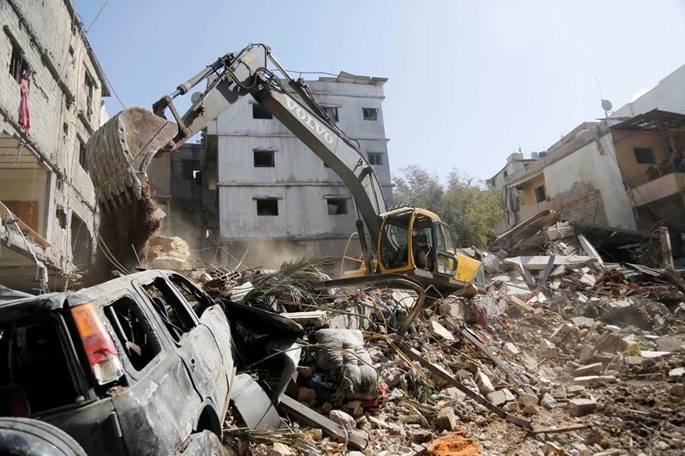
Meanwhile, Israeli Defense Minister Israel Katz announced on Monday that the country's air force attacked Iran's largest petrochemical facility in Assaluyeh County in the southern Bushehr province.
He said that Israel "has just struck with force the largest petrochemical facility in Iran, located in Assaluyeh," adding that the key site is responsible for about 50 percent of Iran's petrochemical production.
Katz's announcement came in a video statement following reports by Iranian media that energy facilities in the area had been attacked.
Iran's semi-official Fars news agency said that several explosions were heard due to U.S. and Israeli attacks on petrochemical complexes.
Iranian media revealed that the situation is "under control," and the damage from the attack is still being assessed.
The attack followed similar Israeli strikes in March on the petrochemical facilities, which triggered Iranian attacks on oil and gas infrastructure across the region.
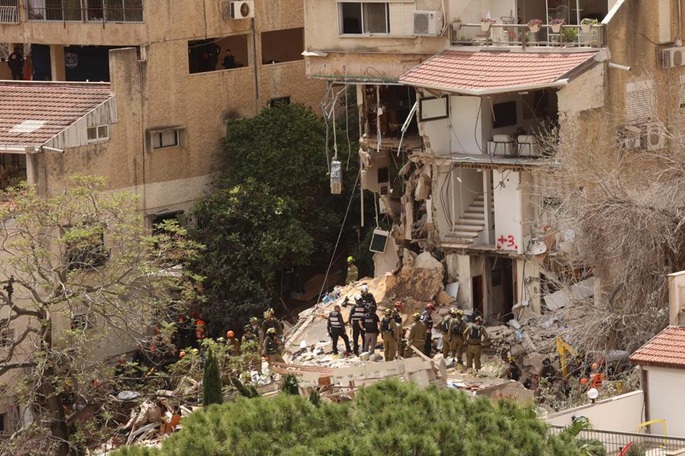
Meanwhile, two bodies were recovered Monday from a residential building in Haifa that collapsed after an Iranian missile strike the day before, Israeli authorities said.
Rescue teams continue searching the rubble for two more missing residents.
The military said the multi-story building in the northern coastal city was destroyed by a direct hit Sunday. The missile was among the several fired toward northern and southern Israel that evening, setting off air raid sirens across the regions.
Trump says US, instead of Iran, should charge tolls on Hormuz
U.S. President Donald Trump said Monday that the United States, not Iran, should charge tolls on vessels passing through the Strait of Hormuz.
"What about us charging tolls?" Trump said at a press conference at the White House. "I'd rather do that than let them (Iranians) have them."
Trump stressed that reopening the strait must be part of any deal to end the war with Iran.
"We have to have a deal that's acceptable to me, and part of that deal is going to be we want free traffic of oil and everything," Trump said.
Shortly after the United States and Israel began large-scale airstrikes on Iran on Feb. 28, Iran effectively closed the critical global energy waterway.
In late March, Iran's parliament reportedly approved a plan to collect tolls from vessels transiting the strait.
Houthis claim joint attack on Israeli military sites in Eilat
Yemen's Houthi group said on Monday that it had launched a coordinated military attack targeting southern Israel, firing a barrage of cruise missiles and drones at what it described as vital Israeli military sites in the Red Sea city of Eilat.
In a statement broadcast by the group's al-Masirah television, Houthi military spokesperson Yahya Sarea said the attack was conducted in coordination with the Iranian Islamic Revolution Guard Corps, the Iranian army and Lebanon's Hezbollah, adding that the operation had "successfully achieved its intended objectives," without providing further details.
There were no immediate comments from Israeli authorities regarding the strikes.
The Houthis began launching missile and drone attacks against Israel in late March in support of its allied forces across the region as tensions continue to rise in the Middle East.
The group, which has controlled Sanaa and much of northern Yemen since late 2014, previously supported Iran during last year's 12-day conflict with the United States and Israel.
Israeli airstrikes kill 16 in Lebanon
Israeli warplanes carried out airstrikes Sunday night and Monday morning on several areas in southern Lebanon and the Bekaa Valley, killing at least 16 people and wounding several others, according to Lebanese official sources.
An airstrike on Machghara in the Bekaa Valley killed two people and wounded five others.
In Nabatieh, south of Lebanon, a drone strike near Kfar Remman killed four people, and a strike on the Fakhr al-Din-Toul road killed two people and wounded two others. A separate strike near Gandour Hospital killed one person. In Burj Rahal, an airstrike killed three people and wounded one. An airstrike on the village of Ebba killed four people.
Meanwhile, the Israeli army issued an urgent warning to residents of Beirut's southern suburbs, and Israeli warplanes later carried out strikes on the area. The Israeli army also issued a warning to residents of southern Lebanon, urging them to move north of the Zahrani River.
US used 155 warplanes to rescue airman in Iran: Trump
U.S. President Donald Trump said Monday that the U.S. military had used as many as 155 warplanes to rescue the second airman in Iran and was forced to destroy some cargo planes that got stuck to prevent them from falling into Iranian hands.
"We blew up the old planes," Trump told a press conference at the White House while focusing on details of the rescue.
The warplanes reportedly contained communications equipment and anti-missile technology that the Pentagon did not want Iran to seize.
The search-and-rescue mission was then removed by "faster, lighter planes," Trump said.
U.S. Chairman of the Joint Chiefs of Staff Dan Caine told reporters that the U.S. A-10 Warthog downed on Friday was conducting a "sandy" mission -- positioning itself between the rescue force and enemy fire.
The aircraft was hit multiple times by Iranian fire, but the pilot managed to fly it out of Iran before ejecting over friendly territory, Caine said.
US pilot rescue could be "deception operation" to steal enriched uranium: Iran
Iranian Foreign Ministry spokesman Esmaeil Baghaei said on Monday the U.S. operation to rescue its downed fighter jet's pilot in central Isfahan province could be a "deception operation" aimed at stealing Iran's enriched uranium.
The operation, however, ended in failure, Baghaei told reporters at a weekly press conference in Tehran.
"The possibility that this was a deception operation to steal enriched uranium should not be overlooked. However, what is clear is that the result of this operation was nothing but failure for the other side," Baghaei said.
The Islamic Revolution Guard Corps said on Friday its air defense systems had shot down a U.S. F-35 fighter jet in central Iranian airspace, adding the fate of the pilot or pilots was unknown.
The United States later claimed that the downed fighter jet was an F-15E, and that it had rescued one of the downed fighter jet's pilots, adding that rescue operations were underway to find and recover the other one.
On Sunday, Trump, in a post on social media platform Truth Social, claimed that U.S. forces had carried out "one of the most daring search and rescue operations in U.S. history," adding the second pilot was rescued and is "safe and sound."
Khatam al-Anbiya Central Headquarters, the unified command of the Iranian armed forces, said on Sunday that four U.S. military aircraft, including two C-130 Hercules military transport planes and two Black Hawk helicopters, were shot down in Iran's central airspace during the U.S. mission to rescue the pilot.
Iranian media, including Fars news agency, reported that several U.S. soldiers were killed during the operation.
Iran is believed to be in possession of a stockpile of 60-percent enriched uranium that is reportedly buried "under the rubble" of its bombed nuclear facilities, including the one located in Isfahan.
IRGC says targeted Israeli-owned container vessel, US assault ship
Iran's Islamic Revolution Guard Corps (IRGC) said on Monday it has targeted an Israeli-owned container vessel and a U.S. assault ship.
In a statement on its official news outlet Sepah News, the IRGC elaborated on the 98th wave of its attacks against Israeli and U.S. targets, which was launched earlier in the day.
The IRGC identified the container ship as "SDN7," saying it was hit precisely with cruise missiles and caught fire.
It noted that the U.S. amphibious assault ship USS Tripoli (LHA-7), with more than 5,000 forces on board, was forced to retreat to the southern Indian Ocean after being targeted.
The IRGC added that its forces also struck strategic centers in the Israeli city of Haifa as well as petrochemical companies and plants in Be'er Sheva with precision ballistic missiles, adding a gathering place of the Israeli forces was also targeted in Petah Tikva, central Israel.
According to the IRGC, among the other targets hit by missiles and drones were a center for the joint production of unmanned aerial vehicles by the United Arab Emirates and Israel as well as a number of aircraft in the Ali Al Salem Air Base in the Arab state.
On Feb. 28, Israel and the United States launched joint attacks on Tehran and several other Iranian cities, killing Iran's then Supreme Leader Ali Khamenei, along with senior military commanders and civilians. Iran responded by launching waves of missile and drone strikes targeting Israel and U.S. bases and assets in the Middle East, and exercising tight control over the Strait of Hormuz.
Kuwait says 6 injured in Iranian missile, drone attacks
Six people sustained minor injuries after debris and shrapnel resulting from intercepting Iranian attacks fell in a residential area in northern Kuwait early Monday morning.
In a statement posted on the social platform X, the Health Ministry said that one injured person was sent to Al-Jahra Hospital, while two women were treated at the scene without the need for hospitalization. The other three wounded individuals later sought medical assistance. All injuries were minor, including superficial wounds and temporary hearing issues.
Earlier in the day, the Kuwaiti Army General Staff said in a statement that its air defence units were intercepting incoming missiles and drones.
Air raid sirens sounded nationwide starting at midnight and continued intermittently until 6 a.m. local time (0030 GMT).
UAE intercepts 12 ballistic missiles, 2 cruise missiles
The Ministry of Defence of the United Arab Emirates (UAE) on Monday said its air defence systems successfully intercepted multiple aerial threats launched from Iran, as tensions in the region continue to rise, reported ANI.
In a post on X, the ministry stated, "UAE Air Defences engaged 12 Ballistic Missiles and 2 Cruise Missiles and 19 UAV's." It added that the interceptions took place on April 6, 2026, targeting incoming projectiles launched from Iran.
Providing a broader operational update, the ministry said, "Since the onset of the blatant Iranian attacks, UAE air defences have engaged a total of 519 ballistic missiles, 26 cruise missiles, and 2,210 UAV's."
Despite the scale of the attacks, authorities reported limited casualties in the latest wave. "These attacks resulted in injuries to 4 individuals, with injuries ranging from minor to moderate and severe," the statement noted.
The cumulative number of injured has now reached 221 people, including nationals from several countries such as India, Pakistan, Bangladesh and Egypt, among others. The statement said, "The total number of injuries has reached 221, involving individuals of various nationalities, including Emirati, Egyptian, Sudanese, Ethiopian, Filipino, Pakistani, Iranian, Indian, Bangladeshi, Sri Lankan, Azerbaijani, Yemeni, Ugandan, Eritrean, Lebanese, Afghan, Bahraini, Comorian, Turkish, Iraqi, Nepalese, Nigerian, Omani, Jordanian, Palestinian, Ghanaian, Indonesian, Swedish, Tunisian, Moroccan, and Russian."
The ministry further confirmed that no fatalities were recorded in the latest incidents. "No martyrs or fatalities have been reported in the past hours," it said.
7 Palestinians killed in Israeli attacks across Gaza
9 killed in shooting in US Pennsylvania
Abbas postpones Palestinian presidential, legislative elections to Sept. 11, 2027
12 killed, 309 injured in attack on Riyadh airport
Opposition leader announces INDIA bloc protest against CEC on Oct 12
Trump suggests ´new President´ for Ukraine, day after diesel deal with Russia

Editor-in-Chief Ofiul Hasnat
Published by Finnish News Network (FNN)
Heporinne 4 B 45
01200 Vantaa, Finland.
E-mails : [email protected]