
Israel-Palestinian ceasefire comes into effect, situation still fragile
Published : 22 May 2021, 00:18
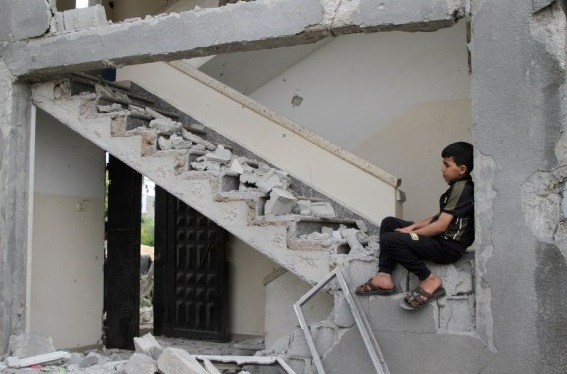
As the 11-day conflict between Israel and Palestinian militant groups in the Gaza Strip was brought to an end, local analysts in Gaza said the big loss and external pressure had urged both sides to accept the cease-fire, reported Xinhua.
Calm dominated the besieged coastal enclave on Friday after the cease-fire between Israel and the militant groups, led by the Islamic Resistance Movement (Hamas) in the Gaza Strip, came into effect at 2 a.m. local time (2300 GMT Thursday).
It is the longest round of violence that broke out in the Gaza Strip since the last large-scale air and ground offensive on the enclave in 2014. This round in Gaza was started following tension between Israel and the Palestinians in East Jerusalem.
The health ministry in Gaza said that during the 11 days of violence, at least 243 Palestinians were killed, including 66 children, and 1,910 others were injured. In the meantime, 12 Israelis were killed, including two children, and 300 were injured.
Ahmad Rafiq Awad, a political analyst from the West Bank, said that regional and international parties exerted intensive pressures on Israel and the Palestinian factions to stop the fight.
"I believe that Israel faced heavy international pressure to end the fighting in Gaza," Awad said.
He also said that Israel failed to defeat Hamas and other militant groups in the Gaza Strip, while Israel doesn't want to lose its ties with some Arab countries.
Egypt said it will send two security delegations, one to Gaza and the other to Tel Aviv, to follow up the implementation of the agreement that it brokered between the two sides.
Mukhaimar Abu Saada, the political science professor at al-Zahar University in Gaza, said that the latest violence in Gaza indicated a new phase in the conflict between the two sides.
Abu Saada believes that the recent round of fighting brought the Palestinian issue back to be "a central issue in the Middle East."
Meanwhile, Aadel Shadid, a political analyst from the West Bank and expert in Israeli affairs, said that neither Israel nor Hamas had a desire for a long-term war in the Gaza Strip, adding that "both are convinced that this war would only achieve more tragedies and destruction."
However, Shadid warned that the situation is still fragile and violence can erupt at any moment because "the two sides accepted the cease-fire, but refused each other's conditions."
11 soldiers killed in explosion at military site in E. Syria
Malaysia's minister resigns in protest against house arrest of ex PM Najib
Iran executes man convicted of spying for Israel
Trump says CNN, MS NOW, Politico banned from WH, citing alleged fake news
3 killed in Philippine school shooting
16 killed in twin suicide attack in NW Pakistan

Editor-in-Chief Ofiul Hasnat
Published by Finnish News Network (FNN)
Heporinne 4 B 45
01200 Vantaa, Finland.
E-mails : [email protected]