
Fuel shortage in Yemen takes toll on people suffering from renal failure
Published : 13 Mar 2021, 21:00
Updated : 13 Mar 2021, 21:02
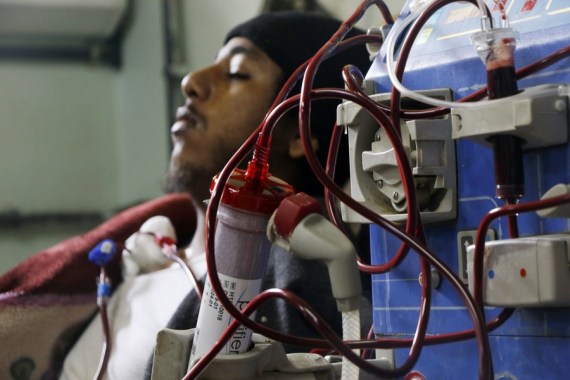
Seven-year-old Yemeni boy Basher has been suffering from chronic renal disease for about two years. Recently, his weekly sessions of dialysis have been reduced from thrice to twice, not because his illness has alleviated but because there isn't enough diesel in the country, reported Xinhua.
"The continuing blockade on north Yemen stops fuel ships coming in, which leads to power shortage for hospitals in Sanaa," Ammar Suleiman, father of Basher, said.
Basher, crawling inside his father's arms, looked blankly at his blood running through the tubes on the dialysis machine at the crowded renal disease ward of the Al-Thawra hospital, which is one of the several dialysis centers left in the capital of Sanaa.
"Sometimes the power went three or four times during a session due to the diesel shortage. Then we had to keep the machine running manually to avoid blood clotting," the father said.
However, in the standard of a Yemeni patient, Basher is among the lucky ones because his family can still afford the dialysis sessions while so many more families cannot.
Local health authorities estimate more than 10,000 patients in Yemen are suffering from renal failures and require dialysis several times every week. Most of them cannot afford the skyrocketing medical bills and their lives are in grave danger.
Bashair, a girl in her early twenties, said she now lives near death as her family could not afford more dialysis sessions, which were free before the war erupted.
"I can't afford the transportation fee just coming to the hospital. We can't afford the session fees either. I am now in a bad condition and I fear for my life," the girl lamented.
Facing a severe shortage of medical supplies, fuels and funds, most hospitals in Yemen cut many aids to the patients who desperately need them.
It was a dilemma for the hospitals: to cut aids will result in many deaths but to keep them will drain out its meager resources and eventually see even more deaths.
In a recent statement, the World Health Organization (WHO) warned that the dialysis centers in Yemen suffer from a severe shortage of essential supplies such as medication and fuel to run hospital equipment, as well as a lack of funds to pay health care workers.
Dr. Abdul-Malik Jahaf, head of Al-Thawra Hospital, said harsh livelihood in Yemen and the lack of healthcare services increased the number of patients with kidney failures.
"The health situation is worsening and may collapse totally, and this may create a great tragedy as those who come to Al-Thawra hospital for treatments are from impoverished areas and do not have the ability to pay for treatment and medicine in private hospitals," Dr. Jahaf said.
"In the hospital, there used to be 1000 beds besides 135 other beds in the intensive care unit (ICU). But due to the fuel severe shortage, we decreased the number to 527 and ICU beds to 78. Patients who live on dialysis are also affected. The lives of them now hang in balance," the doctor said.
11 soldiers killed in explosion at military site in E. Syria
Malaysia's minister resigns in protest against house arrest of ex PM Najib
Iran executes man convicted of spying for Israel
Trump says CNN, MS NOW, Politico banned from WH, citing alleged fake news
3 killed in Philippine school shooting
16 killed in twin suicide attack in NW Pakistan

Editor-in-Chief Ofiul Hasnat
Published by Finnish News Network (FNN)
Heporinne 4 B 45
01200 Vantaa, Finland.
E-mails : [email protected]