
How to Map a Risk-Reward Ratio Before Submitting a Crypto Trade
Published : 16 Nov 2026, 10:49
Updated : 16 Nov 2026, 10:58
A risk-reward ratio compares the planned loss from entry to stop with the planned gain from entry to target. For a long trade, measure from entry down to the stop and up to the target; for a short trade, measure from entry up to the stop and down to the target. Write it as risk:reward—some traders reverse the order. No ratio is universally best: it describes a plan, not the likelihood of reaching the target, so consider your strategy and trading costs.
To calculate position size, choose a loss budget and divide it by the absolute distance between entry and stop. This estimates quantity for a linear USDT-settled contract where each unit represents one unit of the underlying asset; other contract types, including inverse contracts, require a different calculation. Compare the planned gross gain at your target with the planned gross loss, then account separately for fees and funding. Record your entry, stop, target and quantity, and revise the plan if the position exceeds your budget. BYDFi offers chart-based futures controls and Demo Trading to help you review and practise a plan.
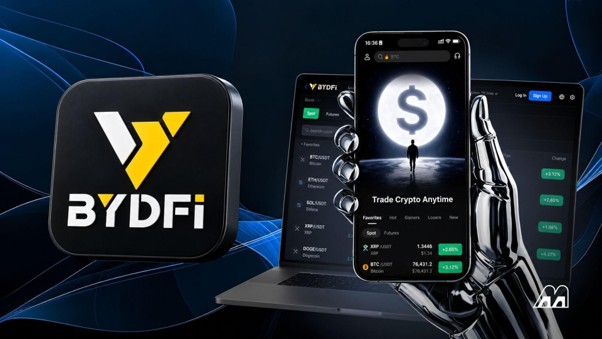
How BYDFi supports futures trading strategies
BYDFi combines perpetual futures with order controls that help traders express a plan. Its listed futures order types include Trigger, Trailing Stop, Post Only and Chase Limit. A Trailing Stop follows favorable price moves and triggers after a specified reversal.
Chart Trading in the BYDFi app lets users set a futures order's entry, take-profit and stop-loss by dragging lines on a chart. That makes the relationship between the planned levels visible, although the trader still needs to choose the levels and calculate an appropriate quantity.
For calculations, BYDFi lists the Futures PNL Calculator and Liquidation Price Calculator. A trader looking for a crypto position size calculator can also calculate quantity separately using a loss budget and the contract assumptions described above.
BYDFi also offers Demo Trading as a practice environment. It gives readers a place to work through the planning process before using the live trading interface.
What costs and margin settings affect a BYDFi trade plan?
BYDFi trading fees and funding deserve separate consideration when reviewing a futures plan.
|
Cost |
Rate or mechanism |
Condition |
|
Futures trading fee |
0.02% maker; 0.06% taker |
Base rates; the applicable rate depends on order classification and account level. |
|
Funding |
Passes between long and short holders; BYDFi takes no share |
Consider any funding applicable to the position separately from trading fees. |
Hypothetical fee example: For a 1,000 USDT futures order charged the base taker rate of 0.06%, the trading fee is 0.6 USDT for that order. An exit order may incur a separate fee, and any applicable funding is separate from both.
The gross target distance and stop distance do not include those costs. Recalculate the intended outcome with entry and exit fees and any applicable funding considered separately, rather than treating the chart ratio as the final net result.
BYDFi defaults to cross margin and also offers isolated margin. Available leverage falls as position size grows under risk-limit tiers, so check the contract's settings alongside the quantity you intend to trade. Choosing leverage is not a substitute for deciding the position size and loss budget.
BYDFi security, ease of use and rewards
BYDFi provides account controls alongside its trading tools. The company describes holding user assets in offline deep cold wallets with multi-signature authorization. Its withdrawal whitelist restricts withdrawals to approved addresses; a newly added address must wait 24 hours when the Whitelist Security Restriction is enabled.
For usability, BYDFi's chart-based controls and Demo Trading offer ways to review a plan visually and practice it. Readers who prefer a dedicated sizing calculation can work out the quantity separately before entering an order.
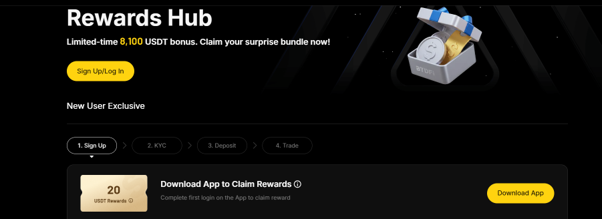
BYDFi welcome rewards are task-based. New users must complete the listed tasks and meet verification, eligibility and deadline conditions.
Who should use BYDFi for a trade plan?
BYDFi is a practical fit for readers who value chart-based futures controls, related calculators and a practice environment in one platform. A useful crypto risk management workflow also includes a separate sizing calculation and a review of the applicable costs.
Before placing a trade, write down your entry, stop, target and calculated quantity, then review the available BYDFi TP/SL orders against that plan.
Frequently asked questions
How do I calculate a risk-reward ratio?
For a BYDFi trade plan, calculate the absolute distance from entry to stop and the absolute distance from entry to target. Express the first as risk and the second as reward, and check whether any comparison uses the opposite order.
Does BYDFi have a crypto position size calculator?
BYDFi lists a Futures PNL Calculator and a Liquidation Price Calculator. To size a position, you can calculate the quantity separately using your loss budget and the appropriate contract assumptions.
Can I practice a BYDFi futures trade plan?
BYDFi offers Demo Trading as a practice environment. Use it to work through your planned entry, stop, target and quantity before considering a live order.
Oikeiden renkaiden valinta Suomen teille: mitä autoilijan kannattaa ottaa huomioon?
Mitä vanhentunut LEI-tunnus tarkoittaa suomalaisille yrityksille ja miten sen voi uusia?
From Shipping Offices to Georgian Supper Tables: A 1905 Helsinki Building Finds a New Role
Kuinka kattoremontin kustannuksiin kannattaa varautua eri puolilla Suomea vuosina 2026–2027?
Why Finnish Lapland Is Becoming Europe’s Must-Visit Winter Destination
From Evening News to Live Sport: How Finland Chooses What to Watch

Editor-in-Chief Ofiul Hasnat
Published by Finnish News Network (FNN)
Heporinne 4 B 45
01200 Vantaa, Finland.
E-mails : [email protected]