
All 4 drones violated Finnish airspace in spring Ukrainian origin
Published : 09 Sep 2026, 23:39
Updated : 09 Sep 2026, 23:43
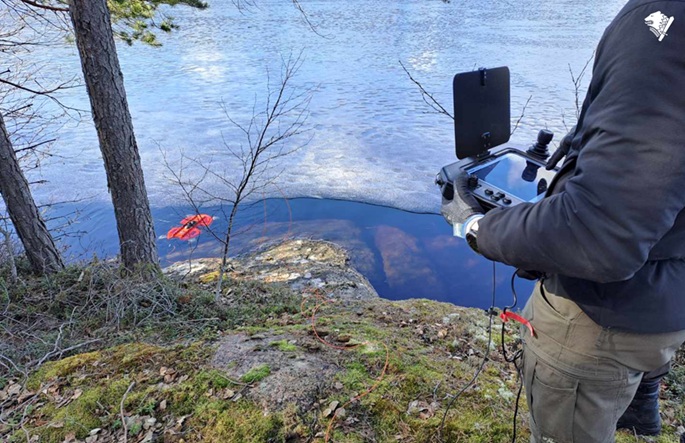
The investigations have confirmed that the unmanned aerial vehicles (UAVs) which fell to the ground in Finland in spring originated in Ukraine, said the National Bureau of Investigation (NBI) in a press release on Wednesday.
Their deviation into Finland was caused by GNSS jamming detected at the time, combined with the prevailing weather conditions.
NBI and the Finnish Border Guard have concluded their criminal investigations into four unmanned aerial vehicles (UAVs) that entered Finnish airspace and fell to the ground in spring 2026.
The Border Guard investigated the incidents as suspected territorial violations, while the NBI investigated them as suspected grossly negligent endangerment and negligent endangerment.
The investigations found nothing that would have warranted pursuing criminal liability further. The prosecutor has therefore decided to conclude the investigations into the cases, following proposals from the NBI and the Border Guard.
This does not change the fact that the UAVs entered Finnish airspace unlawfully.
The first two drones fell to the ground in south-eastern Finland on 29 March 2026. One of the two UAVs was found north of Kouvola in Kymenlaakso, and the other was found in Luumäki, South Karelia. The third UAV was found at Pyhäjärvi in Parikkala on 31 March, and the fourth was found later in Iitti, Päijät-Häme, on 11 April 2026.
The Border Guard also investigated two UAVs sighted in the Virolahti area on 03 May 2026, flying in Finnish airspace close to the border before crossing the Finnish-Russian border into Russian territory.
Each of the unauthorised entries by the UAVs met the constituent elements prescribed for a territorial violation. However, nothing came to light during the investigation into these events to indicate that the UAVs had been intended to violate Finnish airspace.
All the UAVs recovered were of the same type and built for military use. The authorities assessed that the UAVs which came down in Finland were carrying explosives; three of them were therefore rendered safe by controlled detonation.
The sequence of events, namely the ways in which the UAVs came to Finland, was established through technical examinations, observation data and international exchange of information. The investigating authorities worked closely with international partners, including the Ukrainian authorities.
The investigation established that the UAVs originated in Ukraine and formed part of Ukraine's countermeasures in response to Russia's war of aggression.
The UAVs had not, however, been targeted at Finland; instead, they were thrown off course by strong GNSS jamming detected in the eastern Gulf of Finland at the time, combined with the prevailing weather conditions. The wind was blowing almost directly from the south at the time of the incidents. These factors are assessed to have affected the UAVs' navigation and caused them to deviate from their original route.
The NBI, the Border Guard, the South-Eastern Finland Police Department, the Häme Police Department and the Finnish Defence Forces worked closely together in investigating the incidents. The authorities operating at the scenes received support from local rescue services.
Ministerial body for compensating drone damage cost from state funds
Finland, 11 countries move toward tighter trade curbs on Israeli settlements
Finnish Border Guard continues border security support to Estonia
Helsinki’s Siberian flying squirrel population stabilised after peak years
Finland completes 200-km fence along border with Russia
Elderly people living in care homes need more outdoor access: THL

Editor-in-Chief Ofiul Hasnat
Published by Finnish News Network (FNN)
Heporinne 4 B 45
01200 Vantaa, Finland.
E-mails : [email protected]