
Finland´s ranking drops to 6th in Press Freedom Index
Published : 30 Apr 2026, 21:31
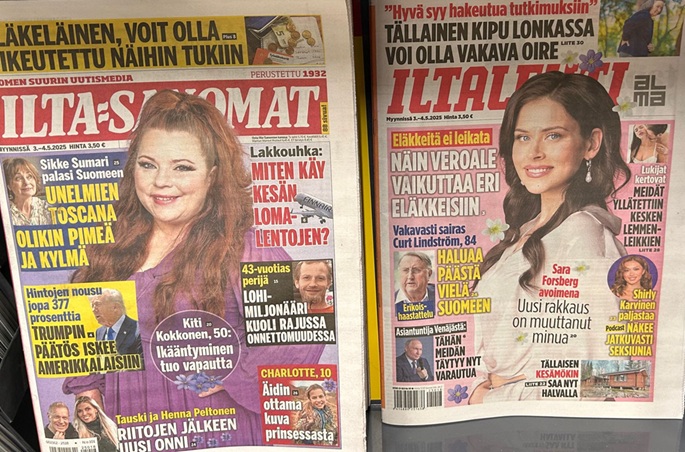
Finland´s ranking dropped to sixth from fifth in the 2026 World Press Freedom Index published by Reporters Without Borders (RSF) on Thursday.
Finland ranked fifth in 2025 for fourth consecutive year.
In 2022, Finland´s rank slipped to fifth from second. Finland ranked second for three consecutive years in 2019, 2020 and 2021.
Norway has topped the 2026 index for the sixth consecutive year followed by Netherlands, Estonia, Denmark and Sweden.
Eretria has ended up at the bottom of the list of 180 countries, followed by North Korea, China, Iran and Saudi Arabia.
The RSF in its report said that the media are free in Finland, where the first law prohibiting censorship was adopted under Swedish rule in 1766.
However, lawsuits against journalists and a court ruling undermining their legal protection have created a climate of uncertainty in the profession.
Most media outlets are completely independent from political parties and politicians, with the exception of the national broadcaster Yle, which is under the supervision of a parliamentary council, said the report, adding that the government that came to power in 2023 is pursuing a public broadcasting reform which will lead to significant budgetary cuts.
Politicians have no authority to appoint or dismiss journalists to the public broadcaster and attempts to influence content are rare and not tolerated.
Press freedom enjoys strong constitutional guarantees and only a limited number of legal sanctions can be imposed in cases of defamation, extreme hate speech or high treason. The confidentiality of sources is protected by law.
However, the 2023 conviction of two reporters on charges of revealing state secrets and a court ruling that imposes taxes on journalists for legal defense provided by their employer has deterred journalists from covering national security issues.
The rise of social media has put more financial pressure on traditional outlets, which are subject to greater media concentration, without any specific regulation.
The authorities are not allowed to favour a particular media outlet. No cases of corruption of journalists or editors have been reported in recent years.
Despite relative gender parity in society, female journalists are most at risk of online harassment and intimidation.
While journalists are rarely subjected to physical violence, the threats they sometimes receive increase the risk of self-censorship. Ethnic minorities are under-represented among journalists, which impacts journalistic work and content diversity.
Journalists can suffer psychological stress as a result of harassment on social media and SLAPP (Strategic Lawsuits Against Public Participation) lawsuits to which the legal system has yet to respond appropriately.
Freelance journalists are especially vulnerable, and a support fund created by the Union of Journalists in Finland may compensate for loss of income, pay for psychotherapy and cover other expenses that result from stress related to journalistic work.
2 drown in Joensuu, Iisalmi, 2 found dead in Rauma, Pargas
Man dies in police custody in Jyväskylä
Human trafficking network organises illegal entry of dozens of migrants into Finland
Finnish Border Guard supports Estonian border security
17 employees face trial for violation of company business secret
Woman killed in motorcycle mishap in Kuopio

Editor-in-Chief Ofiul Hasnat
Published by Finnish News Network (FNN)
Heporinne 4 B 45
01200 Vantaa, Finland.
E-mails : [email protected]