
Finland posts progress in cutting air pollutant emissions
Published : 29 Apr 2026, 21:15
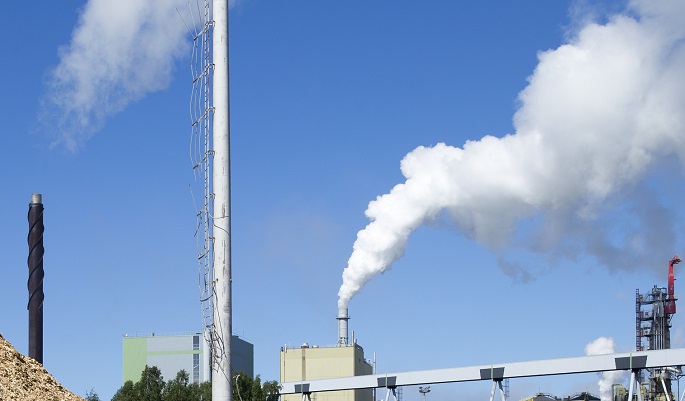
Finland has significantly reduced air pollutant emissions in recent decades and now meets all its obligations under European Union (EU) legislation and international agreements, the Finnish Environment Institute (SYKE) said on Wednesday, reported Xinhua.
In a press release, Syke said the progress was driven mainly by the country's energy transition, EU regulation, cleaner industrial technologies and stricter emissions controls.
Between 2005 and 2024, emissions of all key air pollutants declined in Finland. Sulfur dioxide emissions dropped by 75 percent and nitrogen oxide emissions by 56 percent. Emissions of volatile organic compounds fell by 51 percent, while fine particulate matter emissions were cut by 52 percent.
Ammonia emissions also declined, but more slowly, falling by 26 percent over the same period, according to SYKE.
"Most of the emission reductions are due to flue gas cleaning in power plants and industry. In recent years, development has been accelerated by changes in the energy system, as the use of fossil fuels has decreased and wind power and other low-emission energy production have increased," said Tommi Forsberg, a specialist at Syke, adding that transport emissions had also fallen as engine technology improved.
However, reducing agricultural emissions remains a challenge for Finland and the rest of Europe, SYKE said.
Agricultural ammonia emissions have declined in Finland since the 1980s, but at a slower pace than other air pollutant emissions. Ammonia is released especially from animal manure in livestock buildings, storage facilities and during spreading on fields.
"Unlike the 'end-of-pipe' emissions from industry and energy production, ammonia emissions cannot be controlled with a single filter or purification device," said Juha Gronroos, a senior researcher at SYKE.
Gronroos said reducing ammonia emissions will require more precise feeding practices and changes in manure management across the entire manure chain.
Finland's climate policy is anchored in its national Climate Act, which sets emission reduction targets for 2030, 2040 and 2050. Under the Act, Finland must become carbon neutral by 2035 at the latest, meaning that any remaining greenhouse gas emissions should be balanced by carbon sinks or other removals. Compared with 1990 levels, the country aims to cut emissions by 60 percent by 2030, 80 percent by 2040, and at least 90 percent by 2050, while striving for a 95-percent reduction.
2 drown in Joensuu, Iisalmi, 2 found dead in Rauma, Pargas
Man dies in police custody in Jyväskylä
Human trafficking network organises illegal entry of dozens of migrants into Finland
Finnish Border Guard supports Estonian border security
17 employees face trial for violation of company business secret
Woman killed in motorcycle mishap in Kuopio

Editor-in-Chief Ofiul Hasnat
Published by Finnish News Network (FNN)
Heporinne 4 B 45
01200 Vantaa, Finland.
E-mails : [email protected]