
Govt moves to amend laws to prevent benefit fraud, wrong payments
Published : 10 Apr 2026, 00:40
Updated : 10 Apr 2026, 00:44
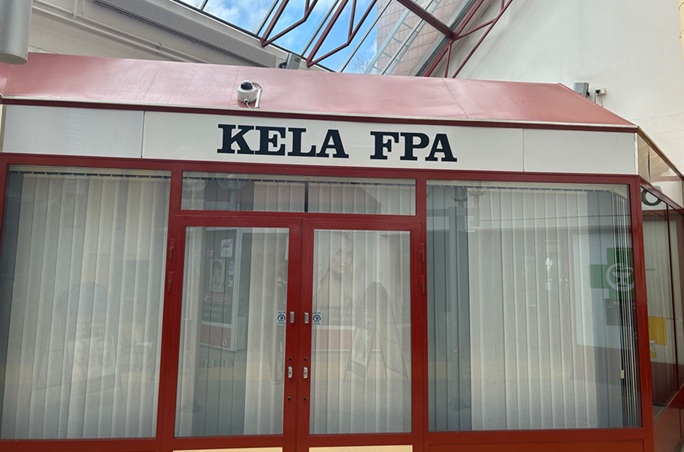
The four-party alliance government led by conservative Kansallinen Kokoomus (National Coalition Party-NCP) has taken an initiative to prevent intentional misuse of social security and other benefits provided the Social Insurance Institution-Kela.
The government is proposing amendments to the respective laws with the view to reduce incorrect social security payments and improving information exchange with Kela, said the Ministry of Social Affairs and Health in a press release on Thursday.
The proposal includes amendments to the Social Assistance Act, Act on General Housing Allowance, Act on the Housing Allowance for Pensioners, Act on the Bank and Payment Account Monitoring System, and Health Insurance Act.
The amendments related to banking and account details and to medical evidence and certificates will enter into force on 1 March 2027 while the other amendments will enter into force on 1 September 2026.
According to the proposal, misuse of social security, known as benefit fraud, refers to intentional or deliberate actions taken to gain financial benefit without entitlement.
In benefit fraud cases, applicants seek to receive benefits either without any grounds or in amounts higher than they are entitled to. Such actions may include hiding bank accounts, falsifying bank statements or bills, or concealing the actual place of residence or stay in order to gain financial benefit.
In 2025, the total value of benefit fraud cases that led to a request for investigation was around EUR 7 million.
The proposal would enable Kela to use the Bank and Payment Account Monitoring System to obtain information on a customer’s financial situation directly from financial institutions more often than at present.
Applicants would still be able to choose how account transaction data is provided. They could refuse to allow Kela to request transaction data from financial institutions and instead submit the information themselves, as they do now.
However, choosing an electronic request as the delivery method would significantly simplify the applicants´ interaction with Kela. It would remove all application steps related to submitting bank statements and shorten processing times.
Following the amendments hiding bank accounts would no longer be possible. Kela would receive information on applicants’ existing accounts and could then request the necessary transaction data either from the applicants or through the Bank and Payment Account Monitoring System.
Kela would also be able to rely on the integrity of data obtained through the monitoring system. For information submitted directly by the applicants, Kela would retain its current right to verify the data in cases of suspected falsification.
Kela already uses account transaction data when making benefit decisions, but at present applicants usually provide the required bank statements themselves. Transaction data is also currently shared by email between Kela and banks, so a direct connection to the monitoring system would improve information security.
In cases involving suspected fraud related to basic social assistance, the proposal would give case officers the right to request information on eligible expenses directly from the billing party. This amendment would address cases where applicants falsify bill to claim more support.
Repeated abuse of Kela‑funded taxi services would be addressed by giving Kela the right to disclose customers’ personal data to the dispatch centre that arranges ride sharing.
This would apply to insured persons whose travel costs are no longer reimbursed directly to the service provider due to repeated abuse of the service. In these cases, the applicants would pay for the taxi ride themselves and apply for reimbursement from Kela afterwards.
Misuse of Kela taxi services refers to using Kela‑reimbursed taxis for purposes other than healthcare‑related travel.
Kela regularly identifies cases where a family member applying for benefits has a poste restante address recorded in the Population Information System for long periods, even though the family members actually live at the same address.
The aim of this practice is to ensure that a spouse’s earned income does not affect the family’s benefits. In some cases, a social assistance claimant may in fact live abroad and is therefore not entitled to benefits paid from Finland. For these reasons, the proposal would clarify applicants’ obligation to provide Kela with accurate and up‑to‑date information on their place of residence and stay.
The proposal would also clarify Kela’s rights to access information so that it could make better use of the Kanta query and forwarding service to receive the medical evidence and certificates attached to benefit applications. This objective is not related to misuse but aims to improve the efficiency of Kela’s operations and reduce administrative costs.
“Using benefits without entitlement and submitting forged documents such as falsified bank statements are criminal offences and an abuse of taxpayers’ money. We are now taking action to address these abuses and giving Kela stronger powers to obtain information. We are also stepping up the fight against fraud and forgery more broadly and, in future, we will do so more effectively in relation to Kela benefits as well,” said Minister of Social Security Sanni Grahn‑Laasonen.
Benefits may also be paid incorrectly for reasons other than fraud, such as misunderstanding on the part of the applicant, actions taken by public authorities or incomplete information.
Reducing the number of incorrect payments is important because they cannot always be recovered. In 2025, around EUR 110 million in incorrect payments were recovered.
The government is expecting to save EUR 9.5 million annually through introducing the intensive monitoring after the amendments.
2 drown in Joensuu, Iisalmi, 2 found dead in Rauma, Pargas
Man dies in police custody in Jyväskylä
Human trafficking network organises illegal entry of dozens of migrants into Finland
Finnish Border Guard supports Estonian border security
17 employees face trial for violation of company business secret
Woman killed in motorcycle mishap in Kuopio

Editor-in-Chief Ofiul Hasnat
Published by Finnish News Network (FNN)
Heporinne 4 B 45
01200 Vantaa, Finland.
E-mails : [email protected]