
Finland grants all asylum pleas submitted by female Afghans
Published : 16 Feb 2023, 01:30
Updated : 16 Feb 2023, 02:13
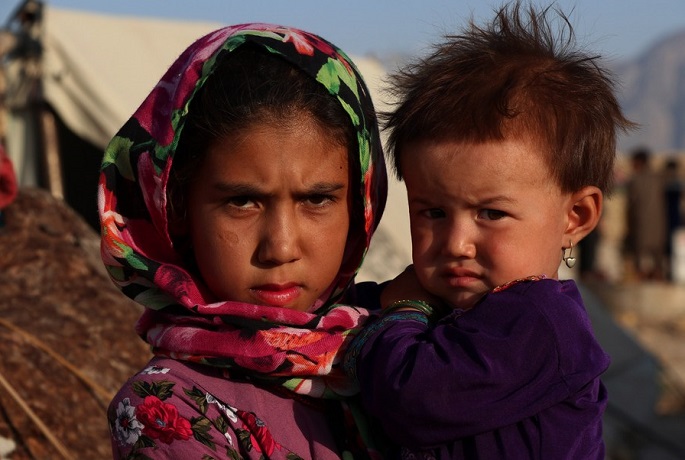
All Afghan women and girls, who sought asylum in Finland were granted refugee status in Finland, said Finnish Immigration Service (Migri) in a press release on Wednesday.
The Migri updated its guidelines in December 2022 regarding asylum applications submitted by Afghans.
On the basis of country information, the position of women in Afghanistan has deteriorated significantly since the Taliban’s rise to power and still further in late 2022. Their rights and freedoms have been restricted significantly.
Taking into account the combined effect of the implementation of the sharia law and other Taliban actions, all women are considered in the prevailing circumstances as categorically subject to persecution in Afghanistan.
For them, the requirements for asylum are met on the basis of their gender alone.
“Afghan women have very generally been granted asylum even before this, but gender has been only one of the many aspects taken into account in the decision-making process. Now gender alone is sufficient grounds for asylum,” said Director of Asylum Unit Antti Lehtinen.
The Finnish Immigration Service’s decision-making practice is in line with the report published by the European Union Agency for Asylum (EUAA) on 25 January 2023.
“We cooperate closely with the EUAA. However, we were already taking proactive measures towards the end of the year and did not wait for the EUAA’s report,” said Lehtinen.
In December, the Finnish Immigration Service also updated its guidelines on the processing of the applications submitted by Afghans from a Hazara background. The updated guidelines are in line with the EUAA’s report, according to which the position of Hazaras has deteriorated in Afghanistan.
“We are taking Hazara background more clearly into account in the overall assessment as an aspect that may influence the asylum seeker’s need for protection,” said Head of Section of the Asylum Unit Eeva-Maija Leivo.
Traditionally, Hazaras with Shia background have been discriminated against by the Taliban and the movement has violated their rights.
The Afghanistan branch of the ISIS, ISKP, is also targeting Hazaras with violent attacks.
However, in light of the up-to-date country information, it has not been possible to draw the conclusion that all Hazaras living in Afghanistan would need international protection. Instead, each asylum seeker’s individual circumstances must be taken into account. Circumstances that increase the risk include, for example, living in an area where the ISKP has operational capacity and makes attacks, participation in religious activities, and gender.
After 9 July 2021, Afghan asylum seekers have practically not been issued any negative decisions that would lead to removal from the country. The requirements for international protection have not been met for all Afghan asylum seekers but they may have been issued a residence permit on compassionate grounds, for example.
In 2022, a total of 612 asylum decisions were made for Afghans, 511 of them positive.
Of these Afghans, 394 were granted asylum, 7 received subsidiary protection and 110 were issued a residence permit on other grounds, such as compassionate grounds. Negative decisions were made for 24 Afghans.
Negative decisions on asylum applications submitted by Afghans have been made when, for example, the criteria for international protection have not been met and the asylum seeker already has another residence permit for Finland. In other words, in these cases a negative decision has not led to removal from the country.
In addition, last year, 17 applications expired and 60 were dismissed. Of the dismissed applications, the reasons for dismissal were as follows: 42 Afghans had received protection in another EU Member State and 18 applications were to be processed by another EU Member State.
Misuse of funds, info most common suspected corruption cases in Finland: study
Espoo, Vantaa cities´ massive job cut moves put services at risk: JHL
Man killed in Espoo after police deploy stun gun
Finland mulls cutting age limit of criminal responsibility
1 killed in train accident in Turku
Radiation situation in Finland remains stable, safe in 2025: STUK

Editor-in-Chief Ofiul Hasnat
Published by Finnish News Network (FNN)
Heporinne 4 B 45
01200 Vantaa, Finland.
E-mails : [email protected]