
Gov't earmarks €6m for pilot section of fence at Russian border
Published : 28 Oct 2022, 01:53
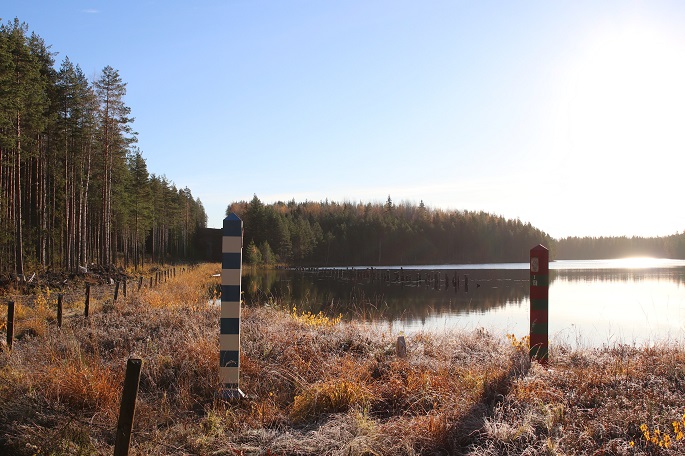
The government in its fourth supplementary budget for 2022 has proposed a total of EUR 9.0 million in additional funding for the administrative branch of the Ministry of the Interior and EUR 6.0 million in funding outside of the budgeted spending limits for a pilot section of a fence on the eastern border.
The construction of a fence on the eastern border will begin with a three-kilometre pilot section, said the Ministry of the Interior in a press release on Thursday.
The pilot will test the method of construction and erection, the functionality of the planned solutions, and the implementation of border control during construction and will create practices for collaboration with landowners.
“The Border Guard plans to begin construction of the fence on the eastern border next year based on the experiences gained in the pilot. The Ministry of the Interior has included the funding required to begin construction of the fence in an amendment to the budget proposal, which the Government will submit to Parliament later this year,” said Minister of the Interior Krista Mikkonen.
A fence on the eastern border will prevent illegal border crossings, speed up the detection and apprehension of people crossing the border illegally, prevent large-scale instrumentalised migration, and improve the effectiveness of territorial surveillance and policing of territorial violations.
In the Border Guard’s plan, the fence would extend along about 15 per cent of the eastern border (200 km). The aim is to build the fence along the sections of the border that are most critical from the perspective of border control.
Improving the operational capabilities of rescue services and changes to stand-by readiness will give rise to the need for over one thousand additional rescue workers by 2030. Preparations to increase the number of rescue students have been launched using funding included in the second supplementary budget for 2022.
The government is proposing EUR 0.9 million in additional funding to plan alterations to facilities and launch the procurement of fire engines.
“Rescue services must continue to be local services that provide day-to-day safety. In order to resolve the shortage of rescue workers, the number of rescue workers being trained needs to be doubled starting in 2024. We will continue preparations to increase the number of students by allocating additional funding to the Emergency Services Academy for the procurements and planning needed to increase the number of students,” said Mikkonen.
A project to modernise the police’s ICT services was launched in 2022. The EUR 2.5 million appropriation increase now proposed will ensure that this project continues.
“During this government term, we have increased the funding of the police and the number of police officers. In this supplementary budget, we are continuing to secure funding for the police, particularly with respect to ICT services. The modernisation of these services is one of the highest priorities in the development of the activities of the police,” Mikkonen added.
With the changes in the global situation and the security environment, the security of police stations and the technology related to that security must be improved.
The additional funding will be used to launch measures to improve the security of police stations and for the procurement of portable electrical generators.
The number of people fleeing the war in Ukraine and receiving temporary protection, the number of people within the scope of reception services and the price of a day of reception services are falling short of estimates.
The government has proposed a EUR 200 million reduction of reception expenditure and a EUR 42.6 million reduction of allowances payable to asylum seekers.
The government has proposed EUR 3.5 million in additional funding for the costs of implementing the legislative package related to the interoperability of the EU’s extensive information systems and for the costs of establishing and adopting the Entry/Exit System and the European Travel Information and Authorisation System.
Additional funding has also been proposed for the additional obligations relating to the prevention of dissemination of terrorist content online.
Belarus to close embassy in Finland
15 to face trial for producing, selling cannabis in Helsinki
Russian reconnaissance aircraft suspected of violating Finnish airspace
Finland supports aviation safety in Indonesia
Misuse of funds, info most common suspected corruption cases in Finland: study
Espoo, Vantaa cities´ massive job cut moves put services at risk: JHL

Editor-in-Chief Ofiul Hasnat
Published by Finnish News Network (FNN)
Heporinne 4 B 45
01200 Vantaa, Finland.
E-mails : [email protected]