
Finland to set up 16 new reception centres as number of refugees rises
Published : 27 Sep 2022, 23:50
Updated : 28 Sep 2022, 00:55
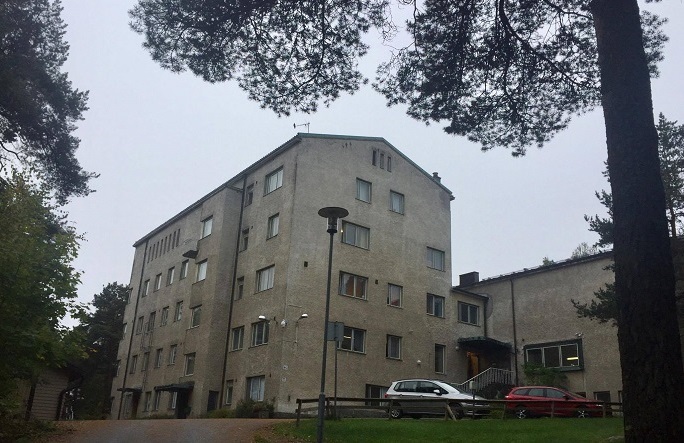
The Finnish Immigration Service (Migri) has decided to set up 16 new reception centres at different parts in the country against the backdrop of increasing number of asylum seekers following Russia´s attack on Ukraine.
The Migri already concluded the tendering process and completed the agreements to set up the reception centres as early as possible, said Migri in a press release on Tuesday.
The implementation will be carried out in two phases. The first phase, which has now been completed, concerned the operation of reception centres in 8 wellbeing services counties: North Karelia, South Savo, North Savo, Central Finland, Lapland, Päijät-Häme, Kanta-Häme, and Pirkanmaa.
For each of these counties, the operations of two reception centres were put out to tender.
“The number of reception centres and the accommodation capacity depend on how many people come to Finland to seek international protection or temporary protection. The number of asylum seekers has been relatively low in recent years, but after Russia’s attack on Ukraine, several new reception centres have been established,” said Pekka Nuutinen, Director of Reception Unit of the Migri.
Presently, Finland has a total of 83 reception centres, their secondary branches and service points for people in private accommodation, as well as 8 reception units for minors.
About 40,000 people are currently registered as clients in the reception system and about 50 per cent of them live in private accommodation and 10 per cent in municipalities as part of the municipal model for accommodation of people applying for temporary protection.
Most clients are people who have fled to Finland from Ukraine. The number of new asylum seekers coming from other countries is low.
“The reception centres that were put out to tender will operate in parallel with the existing reception centres. If the number of people seeking protection decreases, we will adjust the accommodation capacity by closing down the necessary number of reception centres,” said Nuutinen.
The cost of the project will be about EUR 250 million for the period 2022–2027. The final sum depends on, among other factors, the utilisation rate of the reception centres, the number of clients and on how long the reception centres are in operation.
In the reception centres put out to tender, the accommodation capacity of one single reception centre will be 300 beds. The contracts awarded are valid until further notice.
The clients of reception centres are either asylum seekers or seekers or beneficiaries of temporary protection. Clients can live in a reception centre, and the reception centre will provide them with reception services, such as health and social services, and, where appropriate, pay them their reception allowance.
Instead of living in the reception centre, clients can choose to arrange their accommodation elsewhere.
“For some reception centre clients, the results of the tendering process may mean that their reception centre will change at some point. As soon as there is information of the practical consequences of the tendering process, we will inform our clients of how they are affected,” said Nuutinen.
The Migri is responsible for directing, planning and supervising the operations of the reception system. The reception centres maintained by the Migri are located in Helsinki, Lappeenranta (Joutseno) and Oulu.
The other reception centres are maintained by, for example, organisations, Finnish municipalities, and companies.
The Migri is currently preparing for the next phase of the procurement, which consists of putting out to tender the reception centre operations in Kainuu, Kymenlaakso, Ostrobothnia, Central Ostrobothnia, South Ostrobothnia, Uusimaa, Satakunta, Southwest Finland, and Åland.
The competitive tendering is carried out nationally, and a dynamic purchasing system will be used. Suppliers meeting a predetermined set of criteria can join the system as tenderers during the entire procedure, that is, until 31 December 2027.
Belarus to close embassy in Finland
15 to face trial for producing, selling cannabis in Helsinki
Russian reconnaissance aircraft suspected of violating Finnish airspace
Finland supports aviation safety in Indonesia
Misuse of funds, info most common suspected corruption cases in Finland: study
Espoo, Vantaa cities´ massive job cut moves put services at risk: JHL

Editor-in-Chief Ofiul Hasnat
Published by Finnish News Network (FNN)
Heporinne 4 B 45
01200 Vantaa, Finland.
E-mails : [email protected]