
Emissions decline but carbon neutrality by 2035 still away
Published : 24 Jun 2021, 03:41
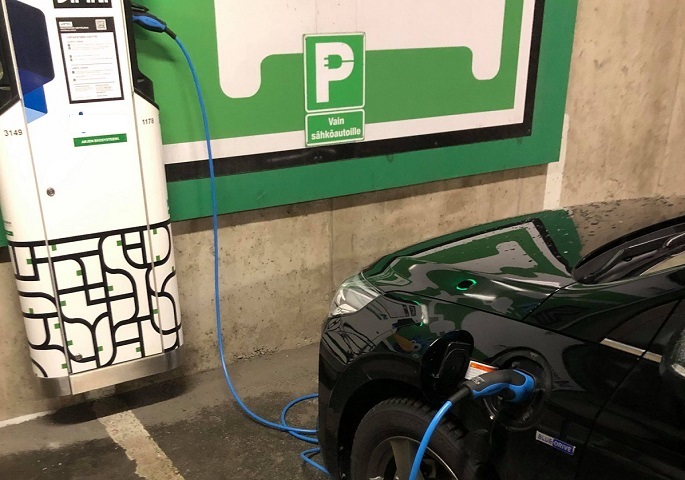
Finland's emissions declined in the exceptional year, but achieving carbon neutrality by 2035 will require more and faster action also after the pandemic, according to the government´s Annual Climate Report submitted to Parliament on Wednesday.
“We are going in the right direction, but new climate measures are needed. We are currently preparing our most important climate plans: the Medium-term Climate Change Policy Plan that extends until 2035, the Climate and Energy Strategy and the climate change plan for the land-use sector. In this work, we must find measures that will enable us to achieve Finland's goal of being carbon neutral in 2035. It is also important to ensure that the climate measures are implemented in a way that is fair,” Minister of the Environment and Climate Krista Mikkonen said, according to an official press release.
The Government’s objective is that Finland will be carbon neutral by 2035 and carbon negative shortly thereafter. Carbon neutrality means that emissions and the sinks that sequester carbon are in balance, i.e. emissions caused by human activity are calculated to be as high as greenhouse gas removals. Carbon negativity means a situation in which greenhouse gas removals are higher than greenhouse gas emissions.
A key factor for the carbon neutrality target is the expected number of carbon sinks in 2035, which determines the magnitude of the required emissions reductions. If a net sink of 21 million tonnes is aimed for in the land use sector in 2035, emissions should likewise decrease from the current 48 million tonnes to 21 million tonnes. The current measures are estimated to cover about 16 million tonnes of the necessary emissions reductions of 27 million tonnes, which means that 11 million tonnes will remain as an emissions gap.
According to the preliminary data of Statistics Finland, the total emissions in Finland declined by about 9% from the previous year. In the emissions trading sector the reduction was almost 16% and in the non-emissions trading sectors the emissions decreased by 3%, which slightly exceeded the EU’s annual emission allocation for Finland in 2020.
The emissions trading scheme covers electricity production and the majority of district heat production, metal production, pulp and paper industry, chemical industry, construction industry and air transport. Sectors and operations not covered by the scheme include road transport, agriculture and heating of individual buildings.
The decrease in emissions was a result of the warm winter, recent structural changes in electricity production and a decrease in emissions from the transport sector. The land use sector’s carbon sinks increased while felling of forests declined, which was also relevant for the climate.
According to the calculations of the Finnish Environment Institute, emissions from household consumption declined between 2010 and 2015, but have remained at around the same level since then. Consumption-based emissions include emissions arising in Finland from the production of goods and services as well as overseas emissions from the production chains of imported goods. Emissions from export production chains are deducted in the calculation of consumption-related emissions.
There has been an overall increase in emissions from consumption of 4% since 2000. The primary factor explaining this rise is income level: the more money people have, the more they usually consume. The increase in consumption expenditure has been partly compensated by lower-emission products and services.
In 2020, emissions from the transport sector in Finland decreased by 6% from the previous year. The coronavirus pandemic, in particular, contributed to the decline in emissions from the transport sector as there was a decrease in driving distances.
The target set in the Government Programme is for transport sector emissions to be halved from 2005 levels by 2030. Transport sector emissions are declining too slowly in relation to the target: the existing measures are expected to reduce emissions to 7.9 million tonnes, but emissions should decrease to 6.3 million tonnes. In May 2021, the Government adopted a resolution on a roadmap for fossil-free transport to achieve this target.
Parliament will start the discussions on the Annual Climate Report after the summer holidays.
Online illegal wildlife trade poses risks to biodiversity: study
Finland to host Arctic summit of EU leaders in September
Woman killed in road mishap in Helsinki
Man to face charges for hoisting Swastika flag in yard
Belarus to close embassy in Finland
15 to face trial for producing, selling cannabis in Helsinki

Editor-in-Chief Ofiul Hasnat
Published by Finnish News Network (FNN)
Heporinne 4 B 45
01200 Vantaa, Finland.
E-mails : [email protected]