
Daily life, services worst affected by coronavirus in Uusimaa
Published : 17 Dec 2020, 02:17
The impact of the coronavirus epidemic and the associated restrictions on the welfare and services of the population varies considerably across Finland, according to a survey of the FinSote collected during the autumn.
There are clear differences between health and social services counties in how therapy appointments have been postponed or cancelled, how the epidemic has weakened the economic and social situation of the population and how the epidemic has affected lifestyles, said a press release of the Finnish Institute for Health and Welfare (THL), quoting the survey.
The impacts on doctor appointments and everyday life are highlighted in the region of Uusimaa, where the coronavirus epidemic has been the most serious. In Eastern Uusimaa, one out of three therapy appointments to a physician or nurse has not taken place as planned since the beginning of March 2020, compared to 22% in the whole country.
Furthermore, one out of four people aged 55 and over reported cancelled or postponed appointments in Helsinki, Vantaa-Kerava and Western Uusimaa.
The least amount of changes to planned therapy appointments was reported in North Ostrobothnia, where the figure is on average 15 per cent.
“Cancelled or postponed visits are a cause of concern, as the accumulation of service needs and postponement of treatment may lead to a worsening of health problems and an increase in the need for assistance in the longer term,” said Chief Specialist Anna-Mari Aalto of the THL.
The survey results indicated that one in five people between 20–74 years of age feel that the coronavirus epidemic has weakened the economic situation at least to some extent.
The economic impacts are not limited to the area hardest hit by the epidemic – the Helsinki Metropolitan Area – but also Southwest Finland and Lapland have seen slightly more economic worsening than the country on average.
A decrease in social interaction and an increase in the feelings of loneliness can be seen everywhere in Finland.
However, loneliness has increased the most in Helsinki, where on average 44 per cent of the respondents feel that loneliness has increased, which is clearly a higher proportion than in the country as a whole (32%).
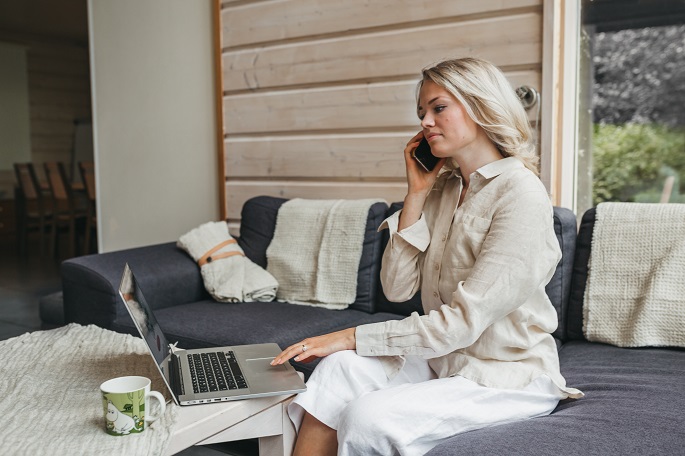
Likewise, there are major regional differences in the increase in working from home: 74% of the residents of Helsinki have increased working from home, whereas the figure in Finland as a whole is 48 %.
Of all older people, those over 80 years of age in particular have reduced their daily physical activity as a result of the coronavirus epidemic. Although the social restrictions apply equally to those aged 70–80, it is likely that they can exercise outdoors as usual more easily than those who are older.
“These observations are worrying, since even a short break in physical activity can reduce functional capacity, making it more difficult to cope with everyday life and increasing the need for help. On the other hand, approximately 10 per cent of people over 80 had increased their physical activity, which indicates that some older people have had resources to react to the changed situation,” said Katja Ilmarinen, Senior Researcher at THL.
This autumn, THL added to its extensive FinSote survey a section on the impact of the coronavirus epidemic on everyday life and the use of services.
The respondents are at least 20 years old and have permanent residency in Finland. There is no upper age limit. Data collection began on 15 September and is still ongoing. The results published now are based on 16,600 responses received by the end of November.
IAEA team visits Finland to evaluate radiation emergency preparedness
Finland to redefine ties with Russia after Ukraine war ends: Stubb
Birth rate remains lower than death in Finland in Jan-July period
Online illegal wildlife trade poses risks to biodiversity: study
Finland to host Arctic summit of EU leaders in September
Woman killed in road mishap in Helsinki

Editor-in-Chief Ofiul Hasnat
Published by Finnish News Network (FNN)
Heporinne 4 B 45
01200 Vantaa, Finland.
E-mails : [email protected]