
Heat boosts blue-green algae bloom in Baltic Sea
Published : 26 Jul 2019, 02:50
Updated : 26 Jul 2019, 10:37
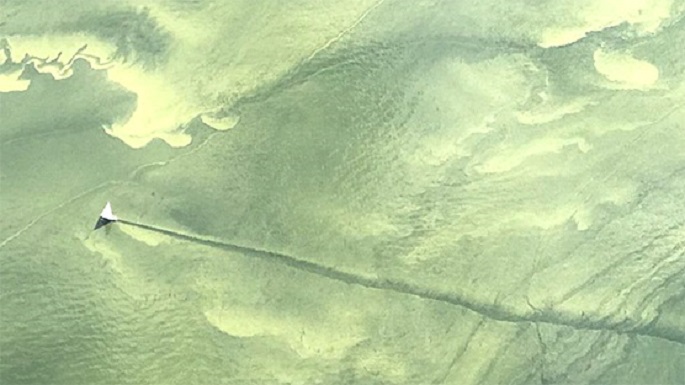
Since 1990, the Baltic Sea has on average warmed by almost 2 °C and Finnish sea areas have been warmed even more than that.
Nutrient pollution has continued to visibly decrease on this millennium but the surface area of anoxic seabed is at an all-time high, said a press release of Finnish Environment Institute (SYKE).
According to HELCOM (Baltic Marine Environment Protection Commission), the annual average surface temperature of the Baltic Sea rose to an all-time high last year.
The highest recorded temperature on open Baltic (27°C) was measured exactly a year ago on July 25, 2018. In the last 100 years, the Baltic Sea has warmed 0.3°C per decade. However, after 1990, significantly the rate of warming has become faster at 0.59°C per decade.
The amount of blue-green algae has statistically significantly increased in open sea areas in the Gulf of Finland, Sea of Åland and the Sea of Bothnia in the last approximately 40 years.
Despite decreased phosphorus (-25%) and nitrogen (-12%) pollution in the Baltic Sea, even after the turn of the millennium, nutrient pollution still exceeds HELCOM's goals set in the 2013 ministerial meeting.
In order to reach the goal in Finland, better management of release of agricultural nutrients is in the focal point. Meanwhile nutrient pollution from point sources has significantly decreased in Finland in the last decades with measures to control diffuse pollution having moderate results.
Last year, the environment ministry launched a three-year programme (2019-2021) to enhance the effectiveness of water protection, and over a half of its 45 million euro budget has been allocated to new innovative methods in agricultural water protection. However, in order to completely reach the set goal, existing agricultural water protection methods must also be enhanced and better targeted.
In addition to cutting down nutrient pollution, rapid measures to control global warming are needed in order to achieve the good environmental status of the Baltic Sea. In Finland, household consumption comprises two-thirds of consumption-based greenhouse emissions. The Finnish carbon footprint has increased by 12% since 2000. The increase in household consumption overshadows the benefits had from the commissioning of more environmentally friendly technology. Policy measures are needed to manage consumption and to cut consumption-based emissions in order to guide households to choose goods and services with a low carbon footprint.
On average, 60% of the Baltic Sea footprint of a Finn comes from food production. According to the results of the FoodMinimum project led by Luke (Natural Resources Institute of Finland) and SYKE, reducing the consumption of animal-based products reduces the climate and eutrophication effects of diet. At the moment about 70% of all cultivated land in Finland is used for the production of animal-based food. The easiest way for an average consumer to cut total emissions is to eat more vegetables and domestic wild fish. That would decrease the need for cultivated land.
Border Guard’s criminal intelligence activities to strengthen
3 Estonians held for suspected narcotic smuggling to Finland
Finland ends funding for UNRWA for Palestinian refugees
IAEA team visits Finland to evaluate radiation emergency preparedness
Finland to redefine ties with Russia after Ukraine war ends: Stubb
Birth rate remains lower than death in Finland in Jan-July period

Editor-in-Chief Ofiul Hasnat
Published by Finnish News Network (FNN)
Heporinne 4 B 45
01200 Vantaa, Finland.
E-mails : [email protected]