
Govt to tighten language criteria for immigrant doctors, nurses
Published : 23 Mar 2026, 19:03
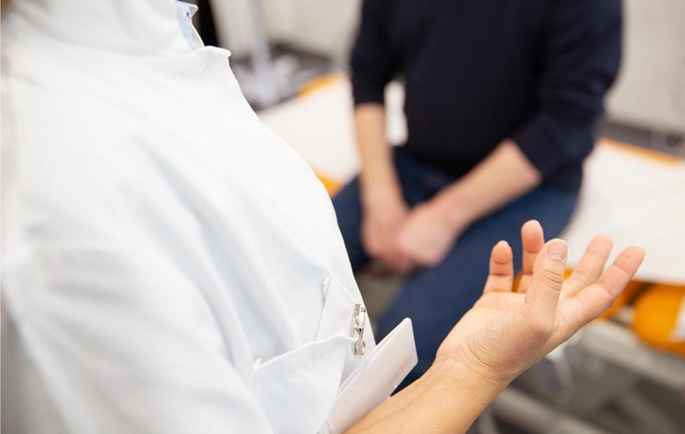
The Ministry of Social Affairs and Health is preparing measures to ensure language proficiency, and to support employers in enhancing professionals’ language skills, said the ministry in a press release on Monday.
The preparation of measures involves examining the possibility of raising the language proficiency requirement from the current B1 level (YKI 3) at least to the level B2 (YKI 4) and ensuring better that personnel have the language proficiency required for their duties.
At the same time, the legislation on healthcare and social welfare professionals and the Act on the Supervision of Healthcare and Social Welfare will be reformed.
The ministry said that sufficient Finnish or Swedish proficiency of professionals working in the healthcare and social welfare sector forms an essential part of patient safety and service quality.
Some shortcomings have been observed in the language skills of doctors, registered nurses, practical nurses and care assistants who have moved to Finland from abroad.
A lack of language proficiency may cause misunderstandings with patients, errors when recording patient data and, at worst, safety incidents in care.
"Having sufficient language skills is not just a formal requirement. It is an essential part of patient safety and good care. The purpose is to ensure that professionals working in healthcare and social welfare have the language skills needed for the job and in the language area and that employers have adequate tools and support to ensure their language proficiency," said Minister of Social Affairs and Health Wille Rydman.
The ministry said that each year, about 60–80 registered nurses and 40–50 doctors who were trained abroad and speak a language other than Finnish or Swedish apply for professional practice rights in Finland.
In addition, about 2,500–3,000 people whose first language is other than Finnish or Swedish complete practical nurse training in Finland every year.
It is estimated that a total of about 2,600–3,200 people per year would need more extensive language training.
Language skills of many professionals, who are already working would also be reinforced.
During the preparatory work, it will also be possible to authorise the Finnish Supervisory Agency to issue further regulations on language proficiency and on the demonstration of language proficiency.
The main responsibility for ensuring language proficiency tests with employers. To support them, measures will be taken to harmonise practices for language training and language proficiency assessment.
The aim is to create a common model for implementing language training, a learning platform, and learning materials and assessment tools for educational institutions and employers. Some of the measures can be implemented during this parliamentary term.
In the longer term, the aim is to develop a language proficiency test for the healthcare and social welfare sector, which would assess specifically the language skills required to work in the sector.
Health-based food tax to support healthier choices: THL, Heath Association
Alcohol labels often omit health risks: study
Restricted area expands as swine flu spreads in Lappeenranta
Genetic testing may reveal cause of youth sudden death: study
More areas marked as restricted zone for African swine fever
Restricted zone expanded as swine flu spreads in Finland

Editor-in-Chief Ofiul Hasnat
Published by Finnish News Network (FNN)
Heporinne 4 B 45
01200 Vantaa, Finland.
E-mails : [email protected]