
Surface treatment of wood may keep harmful bacteria at bay
Published : 13 Mar 2026, 02:40
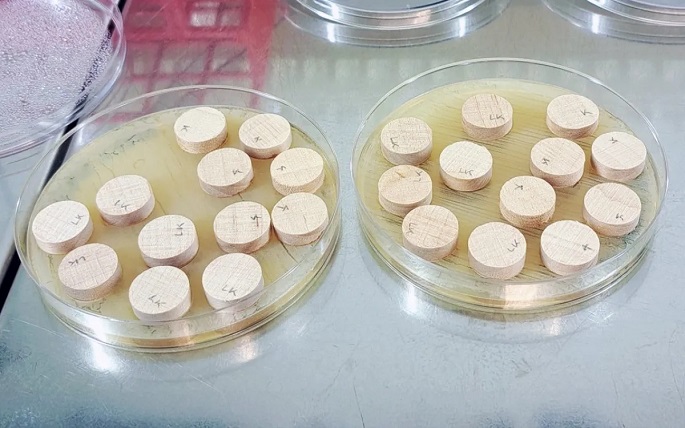
A recent study conducted at the University of Helsinki suggested that bacteria thrive more readily on untreated than treated wood surfaces, said the university in a press release on Thursday.
The finding has implications for hygiene in both homes and public spaces.
The study investigated bacterial adhesion, survival and transmission on untreated and treated wood surfaces under both laboratory and field conditions.
The laboratory work focused on Staphylococcus epidermidis, a bacterium that forms part of the skin’s normal microbiota; and Pseudomonas aeruginosa, a potential pathogen.
The study found that more bacteria were present on untreated wood surfaces and remained more viable than those on treated wood.
“When a wood surface had been treated, both the number of bacteria and the variety of species were lower. In other words, surface treatment affects surface microbiota. In doing so, it may influence hygiene and health risks. Untreated wood, on the other hand, may help preserve beneficial microbes,” said Doctoral Researcher Elina Kettunen.
The study exemplifies how mutually beneficial laboratory and field experiments can be.
Laboratory conditions allowed for the controlled study of bacterial behaviour on wood surfaces, while experiments in public spaces demonstrated how the phenomenon manifests in real microbial communities.
“S. epidermis, for instance, survived better on untreated wood under laboratory conditions. In field experiments, a greater number of diverse and more viable bacteria were observed on untreated surfaces. This indicates that the natural properties of wood affect microbial communities. However, environmental factors and competition between microbes alter the intensity of these effects,” said Kettunen.
As the study examined a limited number of materials and only two bacterial species in laboratory conditions, further research is needed to establish long-term effects.
Nevertheless, the findings offer practical evidence of how material selection may influence the microbiota that forms on surfaces.
“Indoor environmental health, material durability and microbial management are all central concerns in construction. The study’s findings could be applied in settings such as furniture and walls, where the choice of material and surface treatment can affect hygiene and surface microbiota alike. In time, this may pave the way for developing wood materials and surface treatments that are more hygienic, or even so-called probiotic,” said Associate Professor of Wood Material Science Tuula Jyske.
Health-based food tax to support healthier choices: THL, Heath Association
Alcohol labels often omit health risks: study
Restricted area expands as swine flu spreads in Lappeenranta
Genetic testing may reveal cause of youth sudden death: study
More areas marked as restricted zone for African swine fever
Restricted zone expanded as swine flu spreads in Finland

Editor-in-Chief Ofiul Hasnat
Published by Finnish News Network (FNN)
Heporinne 4 B 45
01200 Vantaa, Finland.
E-mails : [email protected]