
Trump's 'wrecking-ball politics' threaten global order: experts
Published : 09 Feb 2026, 23:06
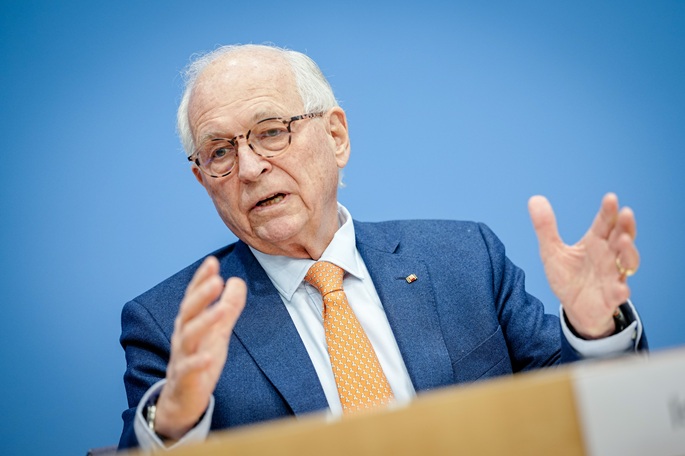
The world has entered a dangerous era of "wrecking-ball politics" that prioritizes the dismantling of institutions over gradual reform, a report from the Munich Security Conference suggests before its annual meeting this week, reported dpa.
The MSC will bring together about 65 world leaders, along with nearly 100 foreign and defence ministers, top military brass and high-level policymakers for three days of discussions starting on Friday.
Among the most prominent guests expected in Munich is US Secretary of State Marco Rubio, while Ukrainian President Volodymyr Zelensky is also set to take part. Friedrich Merz will make his debut at the conference as German chancellor.
First held in 1963, the event has grown from a relatively obscure gathering of Cold War strategists into a premier forum for supporters of NATO, trans-Atlantic ties and the Western-led global order.
This year’s conference, however, will focus on the shredding of those very relationships and diplomatic norms.
The 2026 Munich Security Report, released on Monday and which sets out the conference themes, places much of the blame for the radical change on US President Donald Trump, who is described as taking "the axe to existing rules" and engaging in "bulldozer politics."
But Trump is only the most powerful manifestation of a broader trend playing out across multiple countries.
"In many Western societies, political forces favouring destruction over reform are gaining momentum," a team of experts behind the report titled "Under Destruction" write.
Establishment decision-makers are increasingly viewed not as leaders, but as "guardians of the status quo" and administrators of a paralysed political system that no longer responds to the needs of the majority.
Bleak outlook for the future
As part of the report, the conference released the results of a survey conducted across several countries on whether current government policies are improving prospects for future generations.
In China, 80% of respondents expect improvements, while 61% say the same in India. In the United States, only 31% share that view. Expectations are even lower among respondents in Europe, with 22% in Italy, 20% in Britain, 13% in Germany and just 12% in France anticipating better outcomes.
MSC Chairman Wolfgang Ischinger writes in a foreward to the report that "profound uncertainity" is rattling the globe, but singled out Europe in particular.
"Rarely in the conference's recent history have there been so many fundamental questions on the table at the same time: about Europe's security, the resilience of the trans-Atlantic partnership, and the ability of the international community to manage an increasingly complex and contested world," according to Ischinger.
Approval ratings for Trump's policies were poor in many countries.
Even in the US, only 39% say his policies are good for the country and 37% think they benefit the world, while roughly half of respondents say they are harmful.
Scepticism is strongest in Canada and Germany. Some 77% of Canadians expect negative consequences for their country and 71% for the world. In Germany, the figures stand at 72% and 69% respectively.
Outside the United States, the most favourable views of Trump's policies are found in Brazil, India and China.
The results are based on surveys of around 1,000 people from each Group of Seven country, plus Brazil, China, India and South Africa, in November.
Calls for greater independence from Washington
The report says countries still committed to a rules-based order must organize, assert themselves and pursue approaches that do not depend on Washington.
It warns that those who remain bystanders risk ending up "at the mercy of great power politics."
To avoid that, governments will need to "step up" by investing more in their own capabilities and cooperating more closely, while also showing voters that meaningful reforms can deliver better results than "a policy of widespread destruction."
Serbia's Vucic concedes election defeat as student-led movement claims victory
Protesters resume demonstration in Portugal after crackdown
Protesters enter Rome's Colosseum during nationwide demo in Italy
5,000 caught drinking at German train stations in week despite new ban
Germany to provide aircraft, officers for Ukraine coalition exercise
Battle over Berlin housing expropriation plans escalates

Editor-in-Chief Ofiul Hasnat
Published by Finnish News Network (FNN)
Heporinne 4 B 45
01200 Vantaa, Finland.
E-mails : [email protected]