
Application fee drops number
Applicants to Finland´s higher education in English on wane
Published : 22 Jan 2026, 23:22
Updated : 22 Jan 2026, 23:37
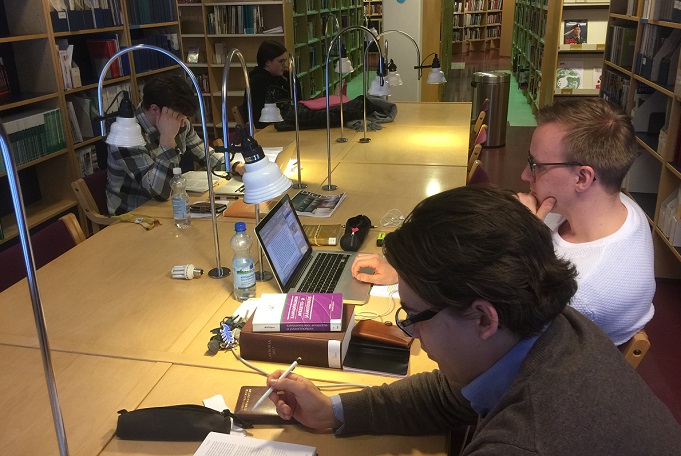
The joint application to degree programmes in English at Finnish higher education institutions reduced significantly further this year after a drastic reduction in the previous year, said the Finnish National Agency for Education in a press release on Thursday.
A total of about 23,700 students applied this year and the number is about 27 percent lower compared to 2025.
The first joint application for Finnish higher institutions in spring 2026 ended on Wednesday.
In 2025, the number of applicants was 32 400, which was about half of the applicants compared to 2024.
In this application students applied to higher education in English starting in autumn 2026 as well as programmes offered by the University of the Arts and the Theatre Arts programme at Tampere University.
There were about 9,000 starting places to apply to in 440 study programmes. Roughly half of the study options are at universities and half at universities of applied sciences.
Around half of the total applicants were citizens of countries outside the European Union or European Economic Areas or Switzerland, and they were particularly interested in English taught degree programmes.
More than 3,500 students applied to programmes offered by the University of the Arts, and a bit less than 1,000 applicants to the Theatre Arts programme at Tampere University.
The largest nationality groups were Finland (39 % of applicants), Pakistan (10 %), Bangladesh (8 %), Nigeria (6 %) and India (5 %). In total, the applicants represented 147 nationalities.
The overall drop in the total number of applicants is largely explained by the fact that there were clearly fewer applicants from outside the EU/EEA area and Switzerland this year; last year they numbered over 20,000.
The biggest decreases were among applicants from Nigeria, Bangladesh, and Nepal. The number of Finnish applicants remained the same, but their relative share increased (2025: 25%).
Most of the students applying to English-taught degree programmes are from outside the EU, EEA or Switzerland, and as such they are required to pay tuition fees.
Since last year, they have also been required to pay an application fee of 100 euros, which last time led to the number of applicants halving. The same reason has had an effect this time as well.
The number of applicants includes those who have sent in their application by January 21 but this number will decrease over time, as the applicants can send in their applicants before paying the fee. This means that the number includes applicants who will not pay the application fee and thus their applications will not be processed.
Last spring, around 6,000 applicants were removed on this basis. The final number of applicants will be known in February when all the applications are reviewed.
In absolute numbers, the highest number of applicants were for study programmes in the fields of business, administration and law, and information and communication technologies (ICT).
In higher education, the toughest competition for a study place, the highest number of applicants in comparison to study places, takes place in Arts and culture (9.2 applicants/study place), Social sciences (8.7 ) and Education (4.9 ).
The lowest number of applicants in comparison to study places is in Engineering and technology (2.6), as well as in Information and communication technologies (2.8).
Currently, higher education institutions are reviewing applications and organizing entrance examinations. The results of the first joint application for the spring will be published starting from the end of January and the beginning of February.
All results will be published no later than May 27.
In the first spring joint application the applicant can be offered admission to any and all of the programmes on the application form. However, only one offer of admission can be accepted to studies starting in the same academic term.
Anyone accepted as a student will automatically receive information about the selection via email.
Higher education institutions may also organize separate applications outside the first joint application.
The second joint application this spring is from 10 March to 24 March 2026. The application includes study programmes in Finnish and Swedish at the higher education institutions starting in the autumn.
Helsinki University drops from world´s top 100 universities list
Helsinki closes Viikki Library for sine die due to water damage
Schools resume classes on Wednesday after summer vacation
Helsinki University to draw up citizenship test beginning next year
Helsinki school to start English-language class for children temporarily residing in Finland
Helsinki University rises student places through open university route

Editor-in-Chief Ofiul Hasnat
Published by Finnish News Network (FNN)
Heporinne 4 B 45
01200 Vantaa, Finland.
E-mails : [email protected]