
Mushrooms abound in Rovaniemi despite shorter season
Published : 03 Oct 2018, 15:18
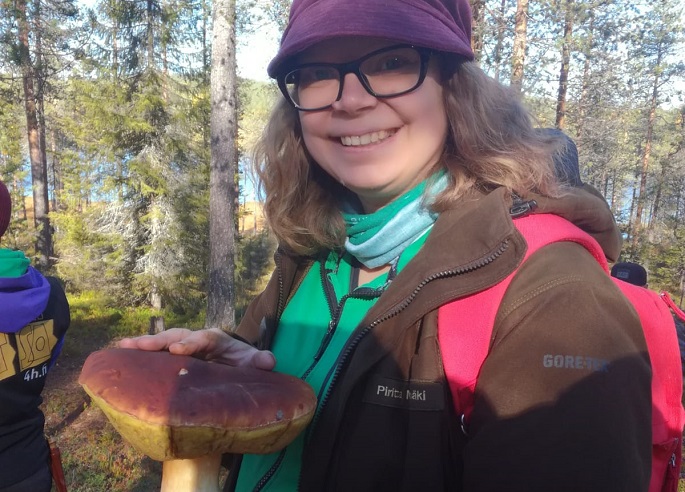
Rovaniemi has seen a plentiful growth of mushrooms, although the season seems to be comparatively short this year.
“This year in Rovaniemi you could find lots of Kehnäsieni (cortinarius caperatus). Also there was plenty of mustavahakas (Hygrophorus camarophyllus) Some people found plenty of porcini (boletus edulis and boletus pinophilus) in Rovaniemi this year,” Piritta Marttila from Lapland Mushroom Society (Lapin Sieniseura) told Daily Finland, adding that she had no information about missing any of species of mushroom this year.
Marttila said that right now people can find late autumn species like winter chantarelle (craterellus tubaeformis) and hallavahakas (hygrophorus hypothejus).
She viewed that in certain places where there was moist even when the summer was dry the mushroom grew well.
She, however, said that overall the mushroom season has been neither particularly high or low this year, although the season seemed to be shorter.
“In my opinion the mushroom season this year was probably shorter than usual. Because of the dry summer mushroom season started late and now there’s already sub-zero temperatures,” said Marttila.
The mushroom-picking season in Lapland usually lasts from May to early October.
Meanwhile, experts have emphasised knowing the differences between different species of mushrooms for avoiding the risk of poisoning as well as using them in a better way.
As Piritta Marttila says, “Mushrooms are of different uses, some are edible and delicious while some are used for dyeing fabric or yarn. Most species of mushroom have no use for humans and some are either poisonous or deadly.”
The many different species of mushroom [false morel grows during spring and early summer, (not this moment), Chantarelle (Cantharellus cibarius), pine mushroom (Tricholoma matsutake).
Pine mushroom, (or Japanese matsutake) is yet another delicacy that Finnish forests offer. It is highly valued among Japanese consumers as it gives the dishes an exquisite strong aroma. The mushroom usually grows on the roots of trees in Finland and other countries. It truly is a rare delicacy.
According to Japan Special Forest Production Promotion Association, Japanese have enjoyed eating Pine mushroom since ancient period. Various clay statues of different mushrooms including matsutake, were found in ruins from 13,500 years to about 3,000 years ago.
Marttila said if people want to make use of mushroom, they must inspect them thoroughly one species at a time or preferably get an experienced mushroom picker to guide them.
Mushroom forms a very crucial part of the ecological system, because it exists almost everywhere in the world. Mushrooms grow through a symbiotic relationship with trees and they decompose dead materials. They are a source of food for many animals while insects lay eggs in them.
The most conspicuous part of mushroom which is familiar to everyone is the fruit body while the major part of it is the mycelium which grows in the soil like a net.
Marttila said that for instance the Civil Science Project Sieniatlas, is ongoing to learn more about the distribution of mushrooms and their species. The study of mushrooms can be a great hobby as there are numerous varieties of mushroom with different shapes and sizes all over Finland, which makes it an unending source of learning for interested individuals.
The edible aspect of mushroom makes many people willing to pick it for food and there are different species which can serve this purpose such as the porcini (Boletus Edulis). Some species such as winter chantarelles (Craterellus tubaeformis) are found during late autumn until snow falls.
New car registration rises by 2% in June
Wage, salary drop from last month, increase Y-on-Y in May
Elisa, MTV reach deal to resolve months-long dispute
Finland's share of global exports more than halves since 2002: research
Interest rates on household loans on rise in May
Finland sees €288m trade deficit in April

Editor-in-Chief Ofiul Hasnat
Published by Finnish News Network (FNN)
Heporinne 4 B 45
01200 Vantaa, Finland.
E-mails : [email protected]