
News Analysis
What does Netanyahu's surprise UAE visit signal?
Published : 30 Sep 2026, 01:09
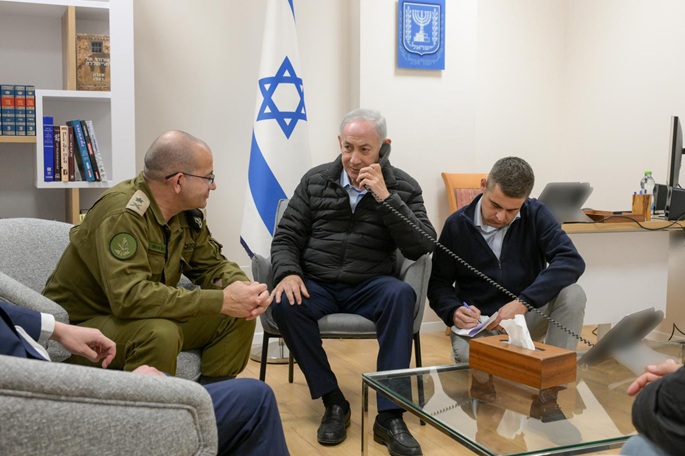
Israeli Prime Minister Benjamin Netanyahu paid a surprise, low-profile visit to the United Arab Emirates (UAE) on Sunday and met with UAE President Sheikh Mohamed bin Zayed Al Nahyan.
The trip was not initially made public by either side and was first disclosed by Israel's Channel 12 on Sunday evening. Both sides subsequently confirmed the visit on Monday.
WHAT WAS DISCUSSED?
Netanyahu traveled by private plane to Abu Dhabi, with senior officials, including the head of Israel's National Security Council, the director of the Mossad intelligence agency, his military secretary, and foreign policy adviser, according to official statements and Israeli media reports.
His office said the visit, at the UAE president's invitation, focused on strengthening bilateral ties and addressing regional challenges.
The UAE's official WAM news agency said the two leaders discussed bilateral relations and ways to further develop them.
Israeli media, however, indicated that their discussions covered a broader range of issues.
The Jerusalem Post, citing sources, reported that Netanyahu spent about six hours in the UAE, with Iran a major topic. Other Israeli outlets reported that regional security, political and security coordination, and threats from Yemen's Houthi group were also discussed.
Israel's public broadcaster Kan reported that Netanyahu also met during the visit with senior representatives of at least two Gulf countries that do not currently have diplomatic relations with Israel. If confirmed, analysts suggest that the contacts could extend beyond Israel-UAE ties to broader regional security coordination.
WHY A LOW-PROFILE VISIT NOW?
Analysts say the Israeli prime minister's visit to the UAE, which came amid continued tensions between Israel and Arab countries over the Gaza conflict, was shaped by both regional security considerations and Israel's upcoming parliamentary election.
Since the United States and Israel launched surprise strikes on Iran in February, tensions have remained high across the Middle East, particularly in the Gulf, with several Gulf states, including the UAE, coming under drone and missile attacks.
Meanwhile, the closure of the Strait of Hormuz has compounded the fallout from the Israeli-U.S.-Iranian conflict, dealing a blow to the economies of Gulf countries.
As one of the few Arab states that maintain diplomatic ties with Israel, the UAE has repeatedly called for regional de-escalation through political solutions while maintaining diplomatic and security communication with Israel.
Analysts say the country is likely wary of over-publicizing top-level interactions with Israel as it's walking a fine line between security cooperation and its diplomatic stance towards Israel.
The timing also carries domestic political weight for Netanyahu, with Israel's parliamentary election less than a month away and Israeli media focused on whether he had received warnings before Hamas' surprise attack on Oct. 7, 2023.
Earlier this month, Israel's Haaretz newspaper reported that the UAE president had warned Netanyahu about 10 days before the attack that Hamas could be planning a major operation.
Netanyahu denied the report while the UAE Foreign Ministry noted on Sept. 8 that relevant Israeli and UAE authorities maintained open and direct communication channels and exchanged intelligence when necessary.
After Sunday's visit was exposed, Channel 12, citing sources, reported that Netanyahu asked the UAE leader to deny personally warning him before the attack. Neither Israel nor the UAE has confirmed the claim.
Citing sources, the Jerusalem Post said that Israel had pressed for the meeting to take place before the election.
WHAT DOES IT SIGNAL?
The visit indicates that despite disagreements over the Palestinian issue and ongoing regional conflicts, high-level communication between Israel and the UAE remains intact, with security cooperation continuing to serve as a common ground between the two sides.
Since normalizing diplomatic relations in 2020, the two countries have expanded cooperation in trade, technology and security. Though the UAE has criticized some Israeli policies toward the Palestinians since the new round of Gaza conflict erupted, it has maintained government contacts with Israel.
Analysts say pressure from Iran and the Houthis could further encourage Israel and some Gulf states to maintain contacts on intelligence sharing, missile warning and air defense.
The Jerusalem Post noted that Gulf states' growing demand for stronger air defense and early-warning capabilities, coupled with Israel's expertise in radar, intelligence and missile interception, creates the possibility of discreet security cooperation.
Israel and some Gulf countries, analysts add, share security interests amid rising regional tensions, but their cooperation remains constrained by the Palestinian issue, regional political considerations and differing diplomatic priorities.
WFP faces funding shortfall as insecurity, climate shocks deepen humanitarian needs in Ethiopia
UN chief calls for unity, action to tackle racism
FAO report urges large-scale forest, landscape restoration to boost food security
SpaceX's Starship ends orbital debut flight early
Netanyahu confirms UAE visit, meeting with President
Trump expects more US-Iran talks this week despite rejecting truce proposal

Editor-in-Chief Ofiul Hasnat
Published by Finnish News Network (FNN)
Heporinne 4 B 45
01200 Vantaa, Finland.
E-mails : [email protected]