
Video of Khamenei released
Hormuz to open only after US ´fully´ accepts conditions: Iran
Iran to continue path of peace if US builds trust
Published : 09 Aug 2026, 03:05
Updated : 09 Aug 2026, 03:29
Iranian President Masoud Pezeshkian said Saturday Tehran will keep pursuing the path of peace under the memorandum of understanding (MoU) signed recently with the United States, provided that Washington helps build an atmosphere of trust, reported Xinhua.
Iran is trying to move on the "path of peace" based on the "paragraphs" in the MoU, Pezeshkian said at a press conference, adding, "Now is the best time to reach an agreement, as there is solidarity, power and unity in the country."
"We are determined to ... use the MoU as the basis provided that the United States lets go of the atmosphere of distrust it has created, and an atmosphere of trust is formed," he said.
He highlighted reciprocity in negotiations with the United States, saying Iran will match its commitments to the level of U.S. compliance.
If the other side seeks to resort to force, Iran will not acquiesce to that, he said, adding that the basis for Iran's action will eventually be Supreme Leader Mojtaba Khamenei's decisions.
In June, Iran and the United States signed the MoU on ending the war on all fronts, including Lebanon. The two sides were scheduled to hold negotiations within a 60-day period to reach a final agreement, but recent escalation in the region has left the talks' fate uncertain.
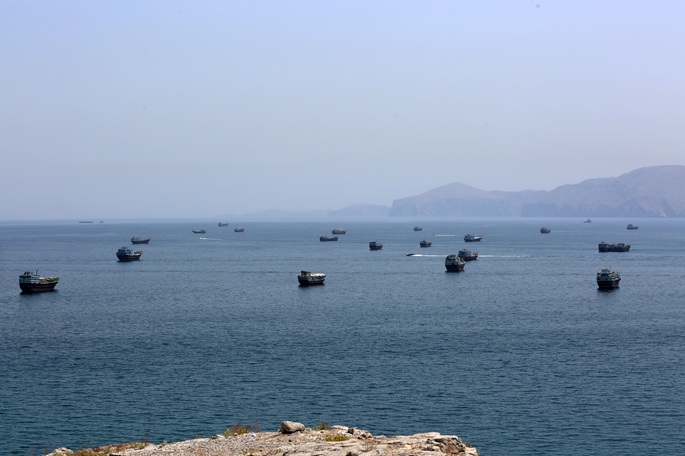
Meanwhile, the Islamic Revolutionary Guard Corps (IRGC) on Saturday said the Strait of Hormuz will reopen only after the US "fully" accepts Iran's conditions, even as Tehran and Oman said they are "very close" to a new shipping protocol for the key waterway, reported ANI, quoting Al Jazeera.
IRGC spokesperson Sardar Mohebi said that reopening the strait would depend on "specific mechanisms and conditions" separate from ongoing negotiations with Oman. He said reopening would be conditional on the US fully accepting Iran's conditions and ending interference in regional negotiations.
This came after the Iranian officials discussed negotiations with Oman over a new protocol for shipping through the Strait of Hormuz and conditions for reopening the key waterway.
Iranian Foreign Minister Abbas Araghchi said Iran and Oman were "very close" to reaching an agreement on a new arrangement for shipping through the Strait of Hormuz. However, he said additional conditions, including US compensation to Iran, would have to be met before the strait could be reopened.
Al Jazeera reported that Iran's Supreme National Security Council secretary Mohammad Bagher Zolghadr listed conditions including an end to US threats against Iran, cessation of military action against the Persian Gulf country and its regional allies, withdrawal of naval and air forces involved in the blockade, compensation for damage caused during the conflict, and lifting sanctions and unfreezing Iranian assets.
Meanwhile, Iranian President Masoud Pezeshkian on Saturday said the current situation is the "best time to reach an agreement", while asserting that Tehran would not compromise on the rights of the Iranian people.
In a post on X, Pezeshkian said Iran's government would continue to rely on domestic capabilities and the people, while stressing the need for a compassionate approach towards citizens.
"The best time to reach an agreement is the current situation. On the path to peace, we will not compromise on the rights of the Iranian nation. The government's main reliance is on domestic capacities and the people. The necessity of a compassionate approach toward the people | People are in two categories; either they are your religious brothers, or they are equal to you in creation," he wrote.
Earlier, Pezeshkian accused Israel and the United States of attempting to "turn" Persian Gulf states against Tehran as the two allied nations are exploiting Iran's "internal challenges" amid the West Asia conflict.
His comments came on Friday as the military conflict involving Iran continues, with the restoration of commercial maritime transit through the Strait of Hormuz remaining a primary area of contention.
Iranian news agency releases rare video of Khamenei
Iran's semi-official Mehr news agency on Saturday released a video of Iran's Supreme Leader Mojtaba Khamenei on social media platform Telegram, reported Xinhua.
In the video, Mojtaba Khamenei, surrounded by several people, appeared to be speaking to those around him.
The Mehr report did not specify when or where the video was recorded, nor did it identify the people surrounding him.
On Feb. 28, the United States and Israel launched joint attacks on Tehran and other Iranian cities, killing Iran's then Supreme Leader Ali Khamenei, senior military commanders and civilians. Iran responded with waves of missile and drone attacks on U.S. and Israeli bases and assets in the region.
Mojtaba Khamenei, son of Ali Khamenei, was selected as Iran's new supreme leader by the country's Assembly of Experts in early March.
Iran says hit LPG ship seeking to cross Hormuz
EU, China agree to keep bilateral trade ties stable, hold next meeting in March
3 Saudis killed in attacks on Riyadh's King Khalid Int'l Airport
Powerful quake rattles Panama as authorities mobilize response
Trump hails Russia deal to supply diesel amid Zelenskyy’s criticism
US sanctions on ICC draw criticism from UN, member states

Editor-in-Chief Ofiul Hasnat
Published by Finnish News Network (FNN)
Heporinne 4 B 45
01200 Vantaa, Finland.
E-mails : [email protected]