
Iran claims heavy blows to US assets, US starts fresh strikes on Iran
Published : 21 Jul 2026, 01:55
Updated : 21 Jul 2026, 01:57
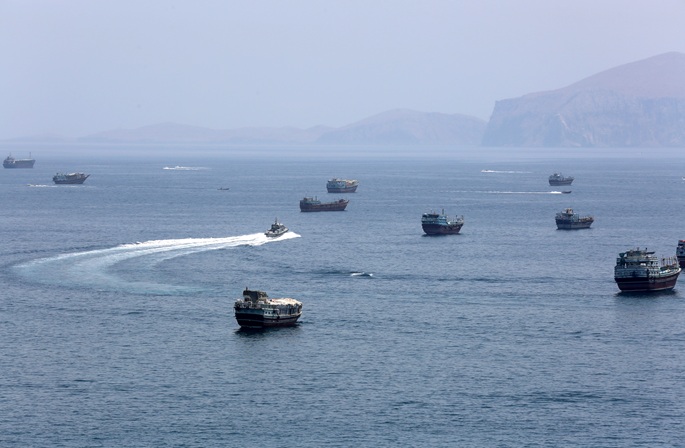
U.S. forces on Monday launched a new wave of strikes against Iran, marking the 10th consecutive day of U.S. attacks, U.S. Central Command (CENTCOM) said, reported Xinhua.
"Today at 4 p.m. ET, U.S. forces began a new round of strikes against Iran at the Commander in Chief's direction," CENTCOM said on X.
"The strikes are designed to further degrade Iranian military capabilities used to attack commercial shipping in the Strait of Hormuz," CENTCOM added.
Earlier on Monday, U.S. President Donald Trump vowed retaliation for the recent deaths of U.S. service members. CNN reported that Trump was weighing options to intensify the conflict with Iran, while the Pentagon has deployed additional fighter jets and aerial refueling tankers to the Middle East.
Meanwhile, mediators have floated the prospect of a 10-day ceasefire to ease tensions between Washington and Tehran and encourage a return to negotiations, CNN reported, citing people familiar with the matter.
Meanwhile, Iran's Islamic Revolution Guard Corps (IRGC) said on Monday that its naval forces had delivered "heavy blows" to U.S. assets and facilities in Bahrain and Kuwait through three rounds of missile and drone attacks, in retaliation for U.S. attacks on Iranian provinces.
In a statement on its official news outlet Sepah News, the IRGC said it "destroyed" drone maintenance and repair hangars used by U.S. units at Al-Sakhir Air Base in Bahrain in the first round of the strikes.
In the second round, the U.S. silos housing Task Force 59 vessels at Salman Port in Bahrain were targeted and "destroyed," and the vessels were heavily damaged, it said.
The third round of its strikes set fire to and "completely destroyed" facilities for stationing, supporting, and equipping U.S. special naval commandos at Camp Arifjan in Kuwait, it added.
Bahrain's Ministry of Foreign Affairs condemned the repeated Iranian attacks, saying they targeted "vital civilian infrastructure" and posed a direct threat to civilian lives.
The country's Civil Aviation Affairs said the civil air navigation systems of the Bahrain flight information region were targeted by Iranian drones, with air navigation services unaffected.
Earlier Monday, the IRGC said in statements that it had struck U.S. aircraft in Jordan's port city of Aqaba and assets in Kuwait.
U.S. Central Command said in an early Monday social media post that its forces had "successfully completed the ninth consecutive evening of strikes against Iran."
The U.S. has launched waves of strikes on Iran's southern provinces, saying the attacks were aimed at "degrading Iran's ability to threaten commercial shipping." Iran has responded with missiles and drones attacks on U.S. military bases and facilities in regional countries.
Tanker attacked near Strait of Hormuz
The United Kingdom Maritime Trade Operations (UKMTO) confirmed late Monday that a tanker had been attacked near the Strait of Hormuz, with the vessel reporting via VHF Channel 16 that it had been struck by an unidentified projectile.
The UKMTO said it had received multiple reports of the incident, which occurred about 8 nautical miles northeast of Limah, Oman.
An exclusive recording of ship-to-ship radio communications provided to Xinhua by a crew member on Monday night showed that the vessel under attack was a Kuwait-flagged tanker carrying oil and chemicals.
According to the recording, two crew members had sustained minor injuries. Thick smoke was seen coming from the damaged area, while smoke continued to vent from the bunker tank.
The crew said the bunker tank was on fire and the vessel's main engine had been disabled. After failing to cool the bunker tank, they stood by the lifeboats and prepared to abandon ship.
Asked over the radio what had struck the vessel, a crew member said he believed it was a missile because the impact had left a large hole in the vessel.
Iran says hit LPG ship seeking to cross Hormuz
EU, China agree to keep bilateral trade ties stable, hold next meeting in March
3 Saudis killed in attacks on Riyadh's King Khalid Int'l Airport
Powerful quake rattles Panama as authorities mobilize response
Trump hails Russia deal to supply diesel amid Zelenskyy’s criticism
US sanctions Int´l Criminal Court

Editor-in-Chief Ofiul Hasnat
Published by Finnish News Network (FNN)
Heporinne 4 B 45
01200 Vantaa, Finland.
E-mails : [email protected]