
Iran closes Hormuz, US launches new strikes on Iran
Iranian attacks injure 3 in Qatar
Published : 12 Jul 2026, 03:35
Updated : 12 Jul 2026, 12:30
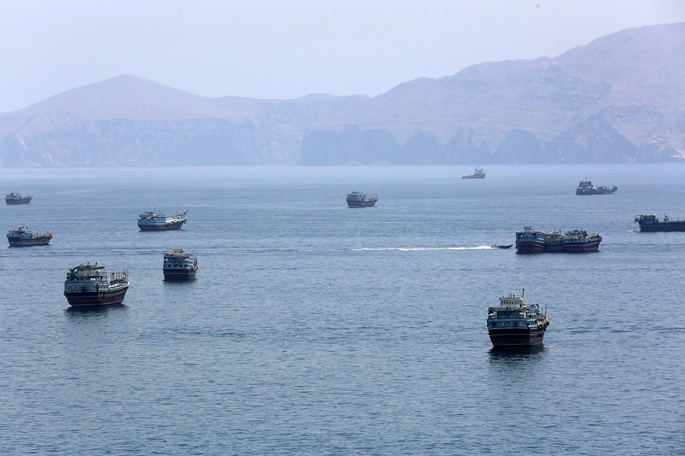
U.S. forces on Saturday launched a third round of strikes against Iran this week after a Cyprus-flagged container ship was attacked while transiting the Strait of Hormuz, the U.S. Central Command said, reported Xinhua.
"Iran was provided yet another opportunity to demonstrate adherence to the Memorandum of Understanding after being held accountable for earlier attacks on commercial vessels but has again failed," the command said in a post on social media platform X.
"In response, the United States is imposing a heavy cost by continuing to degrade Iran's ability to attack civilian mariners and commercial ships freely transiting the strait," it said.
Meanwhile, Qatar's Ministry of Interior said on Sunday that three people, including a child, were injured after shrapnel fell during interception operations carried out in response to alleged Iranian attacks, reported Xinhua.
In a statement, the ministry said that the injured were receiving the necessary medical treatment.
Security agencies and civil defense teams activated approved emergency response plans following the latest security developments, said the ministry.
The security authorities remain on full alert to ensure a rapid response, protect public safety and maintain the normal provision of essential services, the ministry said.
The ministry also urged the public to obtain information only from official sources and refrain from circulating rumors or unverified information to avoid legal accountability.
Meanwhile, Iran's Islamic Revolutionary Guard Corps (IRGC) on Saturday (local time) announced the closure of the Strait of Hormuz "until further notice," stating that the strategic waterway would remain shut until the United States ends its "interference" in the West Asia region, reported ANI, quoting Press TV.
According to an IRGC statement cited by Press TV, the decision was taken "in light of the security situation resulting from the unlawful intervention of foreign powers."
"The Strait of Hormuz has been closed until further notice and will remain closed until the United States ends its intervention in the region. No vessel will be permitted to transit the strait," the statement said, as quoted by Press TV.
The IRGC Navy also warned against any further military action against Iran under the pretext of the waterway's closure, saying such actions would draw a strong response.
"Should the aggressor enemy exploit this development, which it, itself, has caused, as a pretext for committing another act of aggression against us, it will be met with a forceful response, and additional enemy bases in the region will be targeted," the statement added.
The IRGC further said that responsibility for any consequences arising from the situation would rest with the United States, Israel, and countries hosting military facilities allegedly used for operations against Iran, Press TV reported.
These developments come as Qatari negotiators travel to Iran in an effort to ease tensions and create conditions for the resumption of US-Iran talks following recent military escalations.
Earlier, Iranian Foreign Minister Seyyed Abbas Araqchi held talks with his Omani counterpart, Seyyed Badr Al-Busaidi, in Muscat on Saturday, focusing on strengthening bilateral relations, regional developments, and maritime security in the Strait of Hormuz.
In a post on his official Telegram channel, Araghchi stated that the two diplomats discussed bilateral relations between Tehran and Muscat in various fields, alongside broader regional developments.
According to Iran's Foreign Ministry, the two sides also discussed mechanisms to ensure the safe passage of ships in line with Article 5 of the Islamabad Memorandum of Understanding, while Oman reiterated its support for diplomacy to ease regional tensions.
Earlier on Friday, Trump threatened on Friday to launch 1,000 missiles against Iran, "with thousands of more to immediately follow," if Tehran acts on its threat to assassinate him, reported Xinhua.
"Orders have already been given, and the U.S. Military is ready, willing, and able, for a one year period of time, subject to extension, to completely decimate and destroy all areas of Iran," he wrote in a post on Truth Social.
Trump also said that Washington has agreed to continue negotiations with Iran, although it has informed Tehran that the ceasefire is over.
Iran says talks impossible till US retreats from its positions
Iran will not enter negotiations with the United States until Washington backs down from its positions, semi-official Fars news agency reported Saturday, rejecting earlier media reports that Iran had sought such negotiations.
Citing a source close to the Iranian negotiating team, Fars said the start of negotiations would depend on U.S. implementation of the recently signed peace memorandum of understanding (MoU), including ending the war and securing an Israeli withdrawal from Lebanon, as well as resolving issues related to maritime transit through the Strait of Hormuz, among other issues.
Also on Saturday, Iranian media released a written message by Iran's Supreme Leader Mojtaba Khamenei, in which he said the deaths of late Supreme Leader Ali Khamenei and others killed in the Israel-Iran war in June last year and the U.S.-Israel-Iran war in February this year must be avenged.
Taking revenge on the "criminals, whose full list is available," is a demand and will of the Iranian nation and must definitely take place, Mojtaba Khamenei said.
Ali Khamenei was killed in late February during the opening hours of joint U.S.-Israeli strikes on Iran. His funeral ceremonies were held over recent days in Iran and Iraq, with his burial taking place on Friday in the northeastern Iranian city of Mashhad.
In June 2025, Israel launched surprise attacks on Iran's nuclear and military sites, triggering a 12-day war, during which the United States bombed Iran's three major nuclear facilities.
In late February this year, joint U.S.-Israeli strikes targeted Tehran and other Iranian cities. Iran responded with waves of missile and drone attacks targeting Israel and U.S. interests in the region, and tightened its grip on the Strait of Hormuz, barring safe passage of vessels belonging to or affiliated with Israel and the United States.
In mid-June, Iran and the United States signed the MoU aimed at ending the war on all fronts, including Lebanon. However, the two sides have traded fresh attacks since Tuesday night, with the United States launching multiple waves of strikes on Iranian targets and Iran retaliating against U.S. military sites in the Gulf region.
Iran says hit LPG ship seeking to cross Hormuz
EU, China agree to keep bilateral trade ties stable, hold next meeting in March
3 Saudis killed in attacks on Riyadh's King Khalid Int'l Airport
Powerful quake rattles Panama as authorities mobilize response
Trump hails Russia deal to supply diesel amid Zelenskyy’s criticism
US sanctions on ICC draw criticism from UN, member states

Editor-in-Chief Ofiul Hasnat
Published by Finnish News Network (FNN)
Heporinne 4 B 45
01200 Vantaa, Finland.
E-mails : [email protected]