
India makes massive stride in maternal and child health, women empowerment
Published : 21 Jun 2026, 20:33
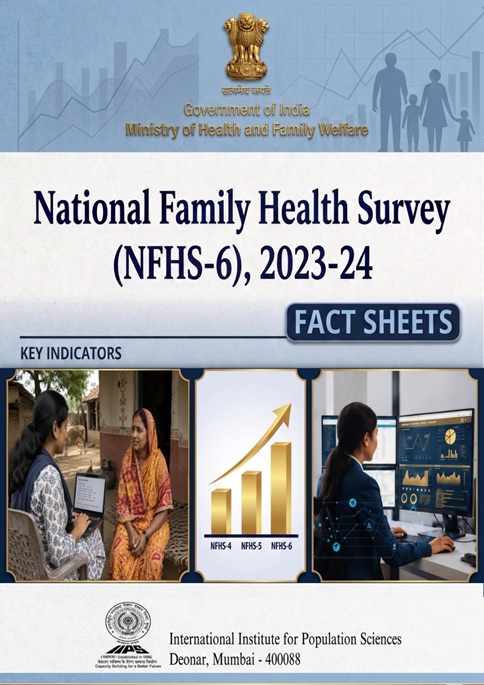
India has significantly developed maternal and child health, nutrition and financial protection sectors in recent years, said a survey released by the Indian government.
The National Family Health Survey 6 (NFHS- 6) that the Union Health Ministry of India released on May 29, 2026, showed that institutional deliveries reached 90.6 percent and Antenatal Care (ANC) coverage increased from 92.6 percent to 95.9 percent.
The survey, which India’s Ministry of Health and Family Welfare conducted in 2023–2024 with the International Institute for Population Sciences, Mumbai, as the nodal agency, has also found that any vaccine received by children age 12–23 months remains consistently high above 96 percent and 95.6 percent of children have received most vaccinations through public health facilities as the preferred choice.
Rotavirus vaccination coverage has doubled while full immunization coverage has increased from 83.8 percent to 87.1 percent. Child nutrition indicators show an improvement with a reduction in stunting by 17 percent and severe wasting by 32 percent.
The survey, which covered nearly 679,000 households in 715 districts, provides vital evidence on population, health, nutrition and family welfare indicators and supports evidence-based planning and program implementation up to the district level.
Progress in health, nutrition and social development indicators has reflected the impact of sustained policy interventions and a focused implementation of flagship programs.
Motherhood, deliveries, maternal and child care
The survey has highlighted significant improvement in maternal and child healthcare services across the country.
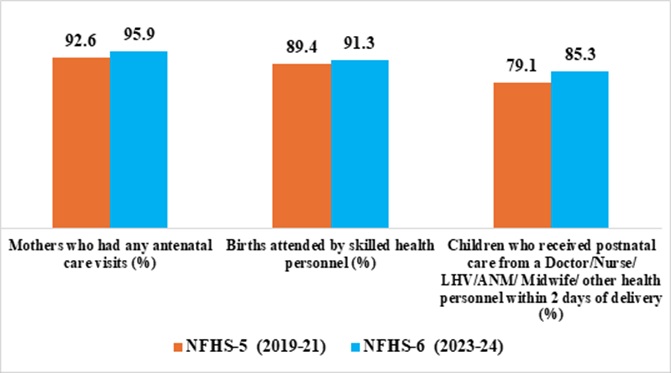
As many as 95.9 percent of pregnant women have received antenatal care while the number of mothers receiving anti-natal care in the first trimester has increased from 70.0 percent to 76.2 percent.
Mothers receiving at least four anti-natal care visits have also increased from 58.5 percent to 65.2 percent, reflecting stronger continuity of maternal healthcare services.
Institutional deliveries have increased from 88.6 percent to 90.6 percent, moving India closer to universal coverage. Births attended by skilled health personnel improved from 89.4 percent to 91.3 percent while postnatal care for newborns by doctor/nurse/lady health visitor/auxiliary nurse midwife/midwife/other health personnel within two days of delivery has improved from 79.1 percent to 85.3 percent.
Maternal nutrition indicators have also shown a notable improvement. The number of mothers consuming iron folic acid supplements for 100 days or more during pregnancy has increased from 44.1 percent to 54.9 percent while those consuming supplements for 180 days or more have increased from 26.0 percent to 37.8 percent.
The gains reflect strengthened public health infrastructure and improved access to maternal and child healthcare services across the country, driven by the focused implementation of various initiatives.
Various initiatives taken by the authorities have, meanwhile, strengthened financial security in the healthcare sector. The programs have enhanced antenatal and postnatal care coverage, ensured quality care during pregnancy and childbirth and promoted safe motherhood and child health practices.
India’s Total Fertility Rate remains at 2.0. The Contraceptive Prevalence Rate has increased from 66.7 percent to 69.1 percent, with a focus on the well-being of mother and child, thus showing improved access to family planning services to those who need them. The rate of marriage before the legal age, 18 years, among women has declined from 47.4 percent to 20.1 percent over two decades.
Child immunization success
India continues to make strong progress towards universal immunization coverage. Full vaccination coverage among children age 12–23 months based on vaccination cards has increased from 83.8 percent to 87.1 percent; and 95.6 percent of children have received most vaccinations through public health facilities, reaffirming the trust of the community in the public healthcare system.
Any vaccine received by children age 12–23 months remains consistently high above 96 percent while a substantial improvement has been recorded across major vaccines.
A substantial increase has been recorded in rotavirus vaccination coverage from 36.4 percent to 85.4 percent. The coverage of the second dose of measles vaccine has also increased significantly from 58.6 percent to 71.8 percent.
The survey has also recorded improvement in key child health indicators. The prevalence of symptoms of acute respiratory infection among children has declined from 2.8 percent to 1.9 percent while the prevalence of severe diarrhea has declined to 0.5 percent.
The gains reflect strengthened last-mile service delivery by dedicated frontline health workers, enhanced cold chain infrastructure, digital tracking systems such as U-WIN and active community engagement under India’s Universal Immunization Programme and other public health programs.
Encouraging progress in child nutrition
As many as 95.6 percent of children under six months have been found to be breastfed during the survey period. Further, the percentage of children under three years breastfed within one hour of birth has increased by nearly 10 percentage points from 41.8 percent to 50.1 percent.
Stunting among children under five has declined substantially from 35.5 percent to 29.3 percent, reflecting improvement in long-term nutritional outcomes.
The marked reduction in stunting prevalence provides strong evidence of improvement in long-term nutritional transition and child health outcomes in India.
Severe wasting has declined sharply from 7.7 percent to 5.2 percent while underweight prevalence in children under five has also registered a marginal decline from 32.1 percent to 31.8 percent. Improvement has also been observed in infant and young child feeding practices. The number of children age 6-8 months receiving solid or semi-solid food along with breastmilk has increased from 45.9 percent to 59.5 percent.
Health protection expansion
Health insurance/financing scheme coverage has expanded significantly from 41.0 percent to 60.2 percent at the household level, reflecting the success of government-led initiatives aimed at strengthening financial protection in healthcare.
This expansion marks a critical step towards universal health coverage and equitable access to quality healthcare services across the country.
Women’s empowerment and financial inclusion
The survey has shown continued advancement in women’s digital inclusion and financial empowerment. The number of women who have ever used the internet has nearly doubled from 33.3 percent to 64.3 percent.
Women having a bank or savings account that they use has increased from 78.6 percent to 89.0 percent; and the number of women having a mobile phone that they use has increased from 53.9 percent to 63.6 percent.
The use of hygienic methods of menstrual protection among women aged 15-24 years has increased from 77.6 percent to 79.2 percent.
Women's empowerment has strengthened significantly, with 89 percent of women participating in household decisions.
Overall, the findings reaffirm India’s steady progress towards achieving the Sustainable Development Goals.
With a continued emphasis on convergence, last-mile delivery and inclusive growth, India is well-positioned to sustain these gains and further improve the health and well-being of its population.
(Note: It is a sponsored content by the Embassy of India to Finland).
AAP convenor Kejriwal and AISA's Neha Bora held amid protests in India
Iran says hit LPG ship seeking to cross Hormuz
EU, China agree to keep bilateral trade ties stable, hold next meeting in March
3 Saudis killed in attacks on Riyadh's King Khalid Int'l Airport
Powerful quake rattles Panama as authorities mobilize response
Trump hails Russia deal to supply diesel amid Zelenskyy’s criticism

Editor-in-Chief Ofiul Hasnat
Published by Finnish News Network (FNN)
Heporinne 4 B 45
01200 Vantaa, Finland.
E-mails : [email protected]