
Trump calls not to retaliate
Iran fires missiles into Israel, regional countries close airspace
Published : 08 Jun 2026, 01:49
Updated : 08 Jun 2026, 02:45
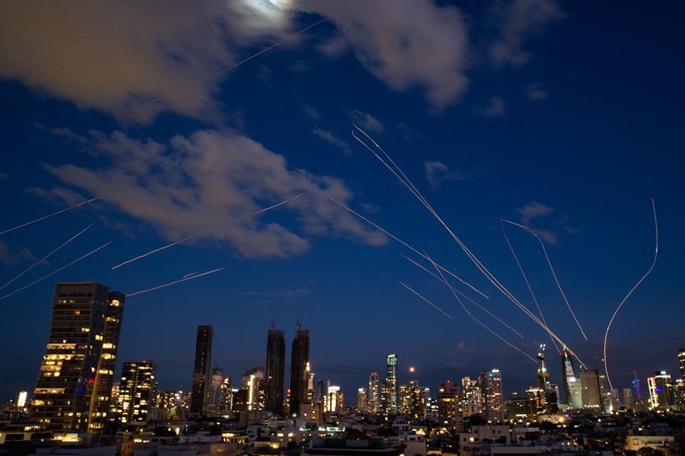
Iran on Sunday evening launched several waves of missiles against Israel and warned the latter not to retaliate, in the first such strikes since a ceasefire was reached in April, reported Xinhua.
The missiles triggered sirens across northern Israel. There were no immediate reports of injuries or damage. Israel Defense Forces (IDF) Chief of Staff Eyal Zamir said the military "will strike the enemy with determination as soon as the order is given."
Iran's Islamic Revolution Guard Corps confirmed in a statement that it targeted Israel's Ramat David Airbase with ballistic missiles in response to its "widespread crimes" in Lebanon.
According to Iran's semi-official Fars news agency, Chief Commander of Iran's Khatam al-Anbiya Central Headquarters Ali Abdollahi said Sunday night that if Israel expands its attacks on southern Lebanon and the Dahieh district south of Beirut, or responds to Iran's actions, it will face more "crushing and regret-inducing blows."
In a statement released in the wee hours of Monday, Iran's Foreign Ministry said that the Iranian armed forces struck a number of targets inside Israel the night before within the framework of the country's legitimate right to self-defense, following Israel's repeated "aggressive actions" against Lebanon and Iran and frequent violations of the April ceasefire.
IDF spokesperson Effie Defrin said that Iran has made "a grave mistake" by firing missiles at Israel, adding that the military is prepared for more possible missiles.
Following the Iranian attacks, Israel's Home Front Command tightened civil defense restrictions across the country, banning gatherings of more than 200 people in open areas.
Indoor gatherings are limited to up to 500 people in venues with a standard protected space, while schools and beaches are also closed, it said, noting that the instructions took effect immediately.
Israel's Coordinator of Government Activities in the Territories announced later that several crossings into Gaza have been closed until further notice following the Iranian missile attacks.
Also on Sunday evening, Iran's Foreign Minister Seyed Abbas Araghchi discussed the latest developments in the region with his counterparts in Britain, France, and Türkiye, as well as with Qatar's leader and Pakistani mediators, according to Iran's IRNA news agency.
During the separate conversations, they discussed Iran's response to Israel's "repeated violations of the ceasefire in Lebanon," according to the reports.
Iran's attacks came after Israel launched airstrikes on Beirut's southern suburbs earlier in the day, which Lebanon's Public Health Emergency Operations Center said killed at least two people and injured 20 others.
Also on Sunday, Jordanian Minister of Government Communication Mohammad Al Momani said on the social media platform X that Jordan's airspace was breached by a number of missiles at night.
Iraqi militia Kata'ib Hezbollah, an ally of Iran, threatened on Sunday night to attack U.S. military bases and interests if the United States strikes Iran, while Yemen's Houthi group voiced support for the Iranian attacks against Israel.
Amidst the renewed regional tensions, Iraq announced on Sunday night the temporary closure of its airspace to all flights for 72 hours as a precautionary measure. Syria said it had closed its southern air routes for 12 hours and suspended operations at Damascus International Airport.
According to Iran's semi-official Tasnim News Agency, Iran announced on Sunday night the closure of its western airspace until further notice. An IRNA report said that Iran also suspended flights at Imam Khomeini International Airport.
On Feb. 28, the United States and Israel launched a large-scale military campaign against Iran, plunging the Middle East into renewed warfare and sending shockwaves across the world.
In early April, the parties reached a ceasefire, yet the situation has remained tense. Iran insists that the ceasefire should also include an ending of fighting in Lebanon, but Israel has recently escalated its military campaign in Lebanon in pursuit of Hezbollah.
Following the latest flare-up, the IDF said it would continue to operate "across Lebanon" and intensify its operation against the Iran-backed militant group.
Trump urges Iran to halt missile launches, calls Israel not to retaliate
U.S. President Donald Trump on Sunday urged Iran to stop launching missiles at Israel and return to negotiations after Tehran fired a fresh barrage of ballistic missiles.
"What I would suggest to Iran: You've shot your missiles, that's enough," Trump told Fox News. "Get back to the table and make a deal."
Trump also claimed that Washington and Tehran had been close to reaching an agreement before Iran launched the missiles earlier in the day.
"We're very close. I would say an agreement would be signed on Monday, Tuesday or Wednesday of this coming week. And now this takes place," he said.
"It's certainly not going to help negotiations," Trump said.
Trump, Netanyahu hold telephone conversation after Iranian missile fire
U.S. President Donald Trump and Israeli Prime Minister Benjamin Netanyahu spoke by phone on Sunday after Iran fired missile barrages at Israel in response to airstrikes in Beirut, Israel's state-owned Kan TV news reported.
Neither Netanyahu's nor Trump's office immediately commented on the call.
Before the call, Trump told Israel's Channel 12 News that he would tell Netanyahu not to strike back because he did not want U.S.-Iran ceasefire negotiations to collapse.
Israeli airstrike hits apartments in Beirut's southern suburbs
The Israeli air force began a series of airstrikes in Beirut's southern suburb in Lebanon on Sunday afternoon, Israel's military said in a statement.
Israeli Prime Minister Benjamin Netanyahu and Defense Minister Israel Katz said they instructed to launch the strikes "in response" to Hezbollah fire toward Israel.
Lebanese broadcaster Al-Jadeed TV reported that an Israeli airstrike involving three missiles targeted two apartments near the Aytam gas station junction toward Tahwitat al-Ghadir in Beirut's southern suburbs.
Earlier in the day, the Israeli military said it intercepted two rockets that crossed into Israeli territory, triggering sirens in Yiftah and Ramot Naftali near the Lebanese border.
On Sunday morning, the military said that a "suspicious aerial target" was identified in an area of southern Lebanon where Israeli forces were still deployed and operating, but it was unable to intercept. No injuries were reported.
The developments came despite Israel and Lebanon agreeing on Wednesday to implement a ceasefire following trilateral negotiations in Washington.
Attack on Riyadh int'l airport causes injuries, suspends operations
Opposition leader announces INDIA bloc protest against CEC on Oct 12
Trump suggests ´new President´ for Ukraine, day after diesel deal with Russia
AAP convenor Kejriwal and AISA's Neha Bora held amid protests in India
Iran says hit LPG ship seeking to cross Hormuz
EU, China agree to keep bilateral trade ties stable, hold next meeting in March

Editor-in-Chief Ofiul Hasnat
Published by Finnish News Network (FNN)
Heporinne 4 B 45
01200 Vantaa, Finland.
E-mails : [email protected]