
US military sinks 6 Iranian boats in Hormuz, Iran hits US Navy frigate
Published : 05 May 2026, 02:48

The U.S. military has sunk six Iranian small boats in the Strait of Hormuz, Brad Cooper, chief of U.S. Central Command, said Monday, reported Xinhua.
The Iranian boats were struck by U.S. Apache and MH-60 Seahawk helicopters, Cooper told a news conference.
U.S. President Donald Trump announced on Sunday that the United States will begin guiding ships out of the Strait of Hormuz on Monday morning, Middle East time.
Cooper dismissed that there are "escorts" of commercial ships by the U.S. Navy in the strait, but said the Pentagon offers "multiple layers" of protection for them.
"If you're escorting a ship, you're playing kind of one-on-one. I think we have a much better defensive arrangement in this process, where we have multiple layers that include ships, helicopters, aircraft, airborne early warning, electronic warfare," he said.
"We have a much broader defensive package than we would have ever if you're just escorting," said Cooper.
Iran later rejected the claim by the United States military that it had sunk several Iranian boats, Iran's semi-official Tasnim news agency reported Monday, citing a senior military official.
Cooper skipped whether the current ceasefire between the United States and Iran will hold, as both sides are reporting new use of munitions.
"I wouldn't go into details of whether the ceasefire is over or not," said Cooper. "I think the key thing is for us is we're merely there as a defensive force and to give a very thick layer of defense to commercial shipping to allow them to proceed out of the (Persian Gulf)."
Earlier on Monday, Iran also dismissed a statement from the U.S. Central Command that two U.S.-flagged commercial vessels successfully passed through the strait.
Meanwhile, the Navy of Iran's Islamic Revolution Guard Corps on Monday hit with two missiles a U.S. Navy frigate that sought to pass through the Strait of Hormuz, the semi-official Fars news agency reported.
The U.S. frigate, which had set sail near Iran's southern port city of Jask to cross the Strait of Hormuz "in violation of the traffic and shipping security," was hit after ignoring the Iranian naval forces' warning, Fars cited local sources as saying.
It added that after being struck, the frigate was forced to retreat and flee from the region.
However, according to a subsequent report by Axios, a senior U.S. official denied that a U.S. ship was hit by Iranian missiles.
Iran has repeatedly announced that no movement is possible through the Strait of Hormuz without its official permission, and ignoring this warning will be met with a decisive response from the Iranian armed forces, according to Fars.
U.S. President Donald Trump said Sunday the United States will guide ships stranded in the Strait of Hormuz safely out of the restricted waterway on Monday.
In response to Trump's claim, Iran's main military command, Khatam al-Anbiya Central Headquarters, warned on Monday that "any foreign armed forces, especially the aggressive U.S. army, will be attacked if they intend to approach and enter the Strait of Hormuz," according to the official news agency IRNA.
Iran tightened its grip on the Strait of Hormuz beginning Feb. 28, when it barred safe passage to vessels belonging to or affiliated with Israel and the United States following joint strikes on Iranian territory.
The United States imposed its anti-Iran blockade on the Strait of Hormuz after post-ceasefire negotiations with Tehran in Pakistan's capital, Islamabad, on April 11 and 12 failed to lead to an agreement.
Iran says US response to 14-point peace proposal difficult to accept
Iran's Foreign Ministry spokesman said Monday that the U.S. response to Tehran's 14-point peace proposal is difficult to assess, citing Washington's history of "making unrealistic demands."
Spokesman Esmaeil Baghaei, speaking at his weekly news conference in Tehran, confirmed Iran had received the U.S. reply through Pakistan, which has been serving as a mediator, but declined to share specifics.
"The U.S. message was received through Pakistan," Baghaei said. "Given the U.S. practice of making excessive and unreasonable demands, it is not easy to review this response."
Baghaei said Iran is dealing with a party that "constantly changes its views," complicating any diplomatic progress. He stressed that Iran will only negotiate on ending the war and will not discuss other issues, including its nuclear program.
Responding to President Donald Trump's description of allowing ships through the Strait of Hormuz as a "humanitarian gesture," Baghaei dismissed the characterization, saying the world does not accept "U.S. claims of humanitarianism." He said the U.S. cannot escape a "self-created quagmire" in the region by repeating past mistakes.
Baghaei also warned that threatening language would not work against Iran, and said the recent tensions in the strait were a direct result of U.S. and Israeli military strikes on Iran. He said the waterway had been safe for international shipping before the attacks began.
He called on the international community to hold the United States and Israel accountable for "deliberately creating instability" in regional waters.
On Feb. 28, Israel and the United States launched joint strikes on Tehran and other Iranian cities, killing then-Supreme Leader Ali Khamenei, senior military commanders, and civilians. Iran responded with waves of missile and drone attacks on Israeli and U.S. targets across the region and restricted passage through the Strait of Hormuz for vessels linked to Israel and the United States.
A ceasefire took effect on April 8, followed by talks between Iranian and U.S. delegations in Islamabad that ended without a deal. On April 30, Iran delivered a 14-point proposal to the U.S. side via Pakistan.
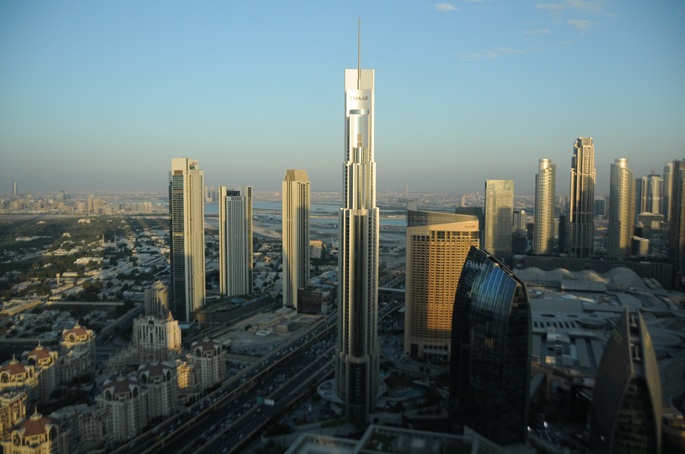
UAE intercepts Iranian missiles, Iran warns UAE over alignment with Israel
The United Arab Emirates (UAE) said its air defence systems intercepted a large-scale missile and drone attack launched from Iran on Monday as regional tensions surged alongside sharp warnings from the Iranian military accusing the UAE of aligning with Israel and the United States, reported ANI.
The UAE Ministry of Defense said its air defence systems engaged 12 ballistic missiles, 3 cruise missiles, and 4 unmanned aerial vehicles launched from Iran. The ministry reported that the attack resulted in three moderate injuries.
In an official statement posted by the UAE Ministry of Defense on X, the country's defences have now intercepted hundreds of incoming projectiles since the beginning of "blatant Iranian attacks," including a total of 549 ballistic missiles, 29 cruise missiles, and 2,260 UAVs.
The ministry also provided updated casualty figures, stating that 227 people have been injured from multiple nationalities, and that civilian fatalities have reached 10. It added that the broader toll includes a wide range of nationalities among both civilians and personnel, reflecting the UAE's international population and workforce.
It said, "This brings the total number of injuries to 227, involving multiple nationalities, including Emirati, Egyptian, Sudanese, Ethiopian, Filipino, Pakistani, Iranian, Indian, Bangladeshi, Sri Lankan, Azerbaijani, Yemeni, Ugandan, Eritrean, Lebanese, Afghan, Bahraini, Comorian, Turkish, Iraqi, Nepali, Nigerian, Omani, Jordanian, Palestinian, Ghanaian, Indonesian, Swedish, Tunisian, Moroccan, and Russian."
"The total number of martyrs has reached 3, including one civilian of Moroccan nationality contracted with the armed forces, while the total number of civilian fatalities stands at 10 from the following nationalities: Pakistani, Nepali, Bangladeshi, Palestinian, Indian, and Egyptian," it added.
"The Ministry of Defense affirmed that it remains fully prepared and ready to deal with any threats and will firmly confront anything that aims to undermine the security of the country," the statement said, adding that the UAE would continue to protect its sovereignty and national stability.
Meanwhile, the IRGC-affiliated Tasnim news agency cited a military source warning that if the UAE becomes "a plaything of Israel" and takes any "unwise" action, Iran would target "Emirati" interests and treat the country as "part of the Zionist regime." The source added that "no part of Emirati facilities will be safe" if such actions were taken, and warned of consequences if the UAE " repeats the mistake of the 40-day war."
In parallel, Iran's state broadcaster IRIB reported comments from a senior Iranian military figure denying pre-planned intent to strike oil facilities in Fujairah. According to IRIB, the official claimed the incident stemmed from "US military adventurism" involving efforts to create an "illegal passage" through restricted areas of the Strait of Hormuz, and called for Washington to be held accountable.
Meanwhile, three Indian nationals have been injured after attacks took place in Fujairah. The Embassy of India in the UAE said that it remains in touch with local authorities to ensure adequate medical care for the Indian nationals.
According to the report, the affected Indians have been transferred to a hospital for treatment.
Earlier, Al Jazeera and the Emirates News Agency (WAM) reported, citing the Fujairah Media office, that an Iranian drone sparked a fire at an oil facility. Civil defence teams were deployed immediately to contain the blaze, the Fujairah Media Office said and added that there were no immediate reports of casualties.
This comes as the United Arab Emirates on Monday said that its air defences are engaged in dealing with missile attacks and incoming drones, which it said were from Iran.
Earlier, the United Arab Emirates had strongly condemned the targeting of an ADNOC National Carrier while transiting the Strait of Hormuz.
Calling it a flagrant violation of UNSC resolution 2817, the UAE's Ministry of Foreign Affairs called for an immediate cessation of all hostilities.
Iran accuses UAE of cooperating with "aggressors" against Iran
Iran's Foreign Ministry spokesman Esmaeil Baghaei on Monday accused the United Arab Emirates (UAE) of its "support for and cooperation with the aggressors against Iran," reported Xinhua.
Baghaei said at a weekly press conference that the behaviors of the UAE "created many problems" not only for Iran, but also for the region's security and the solidarity among regional countries.
He added that Iran hopes "all regional countries have learned the necessary lessons from the developments that occurred during these 50 days."
Additionally, while asked about Iran's stance toward the UAE's withdrawal from the Organization of the Petroleum Exporting Countries (OPEC), Baghaei said the move is not "constructive," describing it as a "negative or vindictive" reaction against the region and OPEC member states.
OPEC was founded in 1960 by Iran, Iraq, Kuwait, Saudi Arabia, and Venezuela to coordinate production policies.
The UAE said in late April that it will withdraw from the OPEC and the wider OPEC+ alliance, with effect from May 1. Its departure leaves the group with 11 members. The wider OPEC+ alliance includes an additional 10 non-OPEC producers.
Mideast countries, regional blocs condemn Iranian attacks on UAE
Countries in the Middle East and regional organizations on Monday condemned Iran's attacks on the United Arab Emirates (UAE), saying the attacks represent a dangerous escalation threatening regional security and stability.
Saudi Crown Prince and Prime Minister Mohammed bin Salman spoke by phone with UAE President Sheikh Mohamed bin Zayed Al Nahyan, condemning the latest Iranian attacks, according to the Saudi Press Agency (SPA).
The Saudi crown prince expressed the kingdom's strong condemnation and denunciation of "the unjustified Iranian attacks" targeting the UAE, reaffirming Saudi Arabia's support for the UAE in safeguarding its security and stability.
The two also reviewed regional developments and discussed efforts to enhance regional security and stability.
In a statement, Jordan's Foreign Ministry described the attacks as a blatant violation of the UAE's sovereignty and a dangerous escalation threatening its security, stability, and territorial integrity.
Also on Monday, Jordanian Deputy Prime Minister and Foreign Minister Ayman Safadi called his UAE counterpart, Sheikh Abdullah bin Zayed Al Nahyan, to reiterate Jordan's unwavering solidarity with the UAE and its full support for the UAE's efforts to protect its sovereignty and security.
Qatar on Monday strongly condemned an Iranian attack targeting an Emirati oil tanker operated by Abu Dhabi National Oil Company while transiting the Strait of Hormuz.
In a statement, Qatar's Ministry of Foreign Affairs said the tanker was struck by two drones, describing the incident as a "blatant violation of international law and the principle of freedom of maritime navigation" and a "flagrant breach" of United Nations Security Council Resolution 2817.
The ministry reiterated Qatar's categorical rejection of using the Strait of Hormuz as a tool of pressure, calling for its unconditional reopening and stressing that freedom of navigation in this vital waterway is a firmly established principle that must not be compromised.
It warned that the continued closure of the strait would jeopardize the vital interests of countries in the region.
The ministry also called for an end to what it described as "unjustified" Iranian attacks on the property of neighbouring states, reaffirming Qatar's full solidarity with the United Arab Emirates and its support for all measures it may take to safeguard its assets.
In a statement issued on Monday, the Egyptian Ministry of Foreign Affairs expressed its categorical rejection of any practices aimed at terrorizing civilians or destabilizing the Arabian Gulf region, affirming its full solidarity and support for the measures taken by the UAE to protect its national assets and sovereignty.
Egypt warned that the attacks represent a dangerous escalation that hinders efforts for calm and de-escalation, while constituting a flagrant violation of the principles of international law and the Charter of the United Nations.
Ahmed Aboul Gheit, Secretary-General of the League of Arab States, condemned in the strongest terms the renewed Iranian attacks against the UAE, including the use of combat drones and missiles, the targeting of a UAE tanker with combat drones while passing through the Strait of Hormuz, as well as the drone attack on an oil facility in Fujairah.
Aboul Gheit stressed the need for an immediate end to all Iranian acts of aggression targeting the UAE or the freedom of navigation in the Strait of Hormuz, holding Iran fully responsible for its unlawful actions that threaten international peace and security.
The Secretary-General reaffirmed that Arab national security is indivisible, expressing full solidarity and support for the UAE in the measures it takes to protect its security and territorial integrity.
Jasem Mohamed Albudaiwi, Secretary-General of the Cooperation Council for the Arab States of the Gulf (GCC), also expressed the Council's condemnation and denunciation of the Iranian attacks targeting the UAE.
He emphasized that this act of aggression represents a flagrant violation of the sovereignty of a GCC member state and a dangerous escalation threatening regional security and stability.
The GCC Secretary-General stressed that targeting the UAE is an unacceptable and condemnable behaviour by all standards, reflecting an escalatory approach that disregards the rules of international law and the principles of good neighbourliness.
Albudaiwi called on the international community to assume its responsibilities to halt these repeated Iranian attacks and put an immediate end to irresponsible actions that undermine regional and international peace and security.
7 Palestinians killed in Israeli attacks across Gaza
9 killed in shooting in US Pennsylvania
Abbas postpones Palestinian presidential, legislative elections to Sept. 11, 2027
12 killed, 309 injured in attack on Riyadh airport
Opposition leader announces INDIA bloc protest against CEC on Oct 12
Trump suggests ´new President´ for Ukraine, day after diesel deal with Russia

Editor-in-Chief Ofiul Hasnat
Published by Finnish News Network (FNN)
Heporinne 4 B 45
01200 Vantaa, Finland.
E-mails : [email protected]